

Top Filling Machine Supplier: Essential Guide to Streamlining Your Packaging Operations
2026-06-29
Every minute your packaging line stalls, profit slips through the cracks. In industries from food and beverage to pharmaceuticals, the right filling machine doesn't just boost speed—it redefines accuracy and hygiene. But the real game-changer? Choosing a supplier who understands your workflow, not just your order sheet. That's where INTOP Machinery steps in: a partner that combines engineering precision with on-the-ground support to turn bottlenecks into breakthroughs. This guide breaks down what truly matters when selecting a filling machine manufacturer, so you can make a decision that scales with your ambitions.
Unmasking the Hallmarks of a Reliable Filling Machine Partner
Reliability isn’t just about uptime stats – it’s about how a partner handles the unexpected. A machine might boast 99% OEE, but when a critical sensor fails at 2 a.m., can you reach a human who actually knows the system? The true hallmark is a support team that’s transparent about limitations and proactive with solutions. They won’t hide behind scripts or obscure service tiers.
Another overlooked trait: their willingness to challenge your assumptions. The best partners don’t just quote your spec sheet; they ask why you need that fill rate or that container shape. They might propose a simpler, cheaper approach that still meets hygiene standards, saving you thousands in over-engineered components. This kind of candor turns a vendor into a strategic ally.
Finally, dig into their long-term client relationships. Do they have customers who’ve upgraded machines four times in a decade? That’s a sign of trust, not just a good sales pitch. Ask to speak with someone who’s run their equipment for five years. Their candid feedback will reveal more about reliability and after-sales care than any polished brochure.
Decoding the Technology Behind Precision Filling
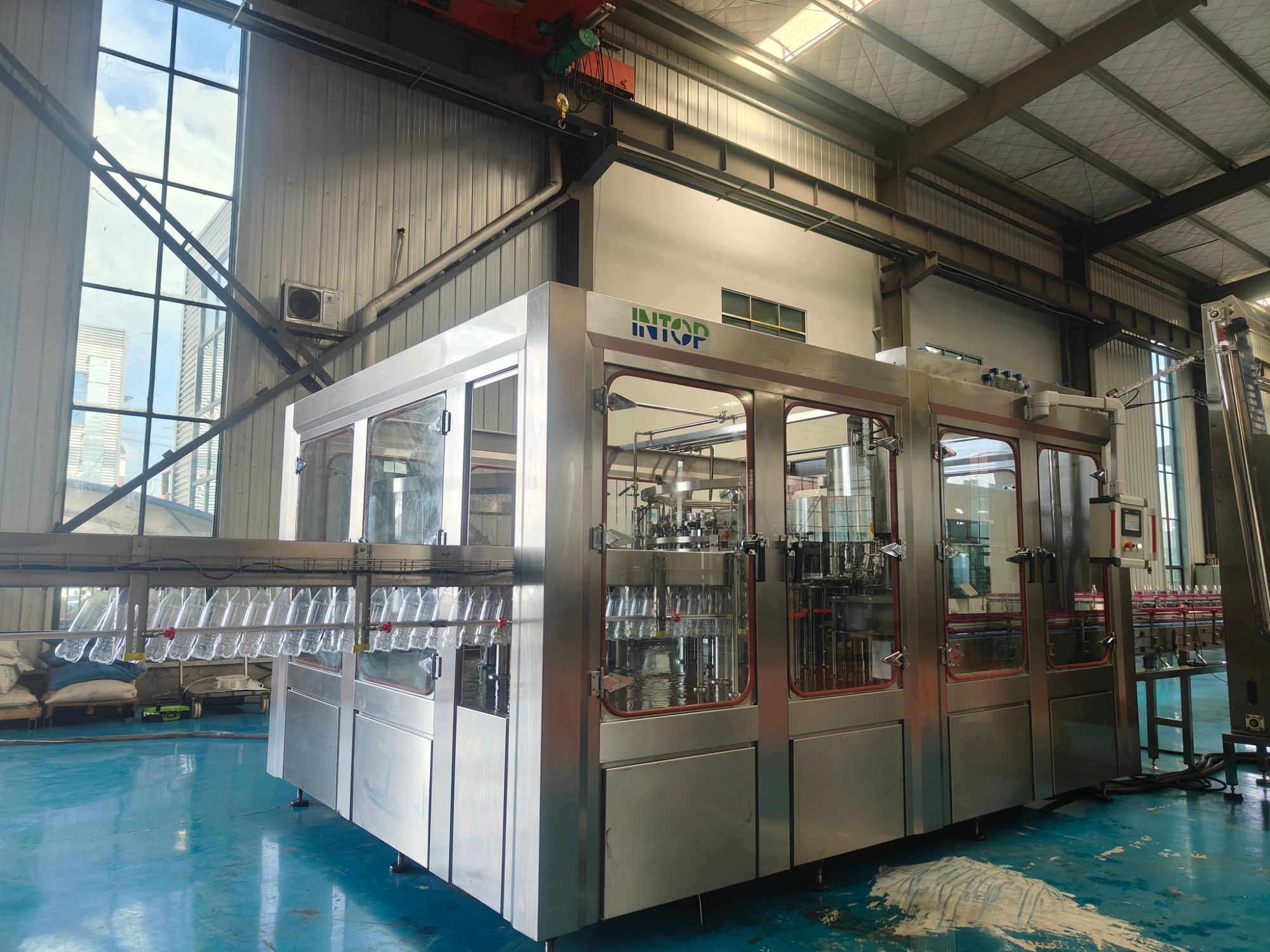
At the heart of every modern filling line lies a sophisticated interplay of sensors, actuators, and real-time control algorithms that ensure each container receives exactly the right amount of product. Unlike the rudimentary timed-flow systems of decades past, today's precision filling relies on mass flow meters, servo-driven pumps, and laser-based level detection to compensate for variations in viscosity, temperature, and container geometry. These systems continuously self-calibrate, comparing target weights against tenth-of-a-gram measurements hundreds of times per second, and adjusting valve dwell times or nozzle positions almost instantaneously. The result is not just volumetric accuracy but a dynamic adaptation to product behavior—crucial when handling shear-sensitive pharmaceuticals or carbonated beverages that foam unpredictably.
The real magic, however, happens beneath the stainless steel surfaces. Embedded controllers run predictive models that factor in historical batch data, ambient humidity, and even pipeline pressure fluctuations to anticipate fill deviations before they occur. For high-value products like perfumes or injectable biologics, every microliter counts, so filling heads often incorporate dual-check weighers and vision systems that verify cap placement and seal integrity in parallel. Networked into broader manufacturing execution systems, these machines generate granular audit trails, enabling root-cause analysis of any outlier and supporting serialization mandates. It’s a realm where mechanical engineering merges with data science, transforming a once purely volumetric task into an intelligent, self-optimizing process.
What truly sets the latest generation apart is the embrace of modular, recipe-driven architecture. Instead of relying on fixed cams or hard-plumbed circuits, quick-change modules allow a single filler to switch from 100-milliliter bottles to 20-liter pails in minutes, summoning the appropriate nozzles, conveyors, and safety protocols from a digital library. Cleaning, too, has become a programmable sequence—clean-in-place routines that whirl detergent and sterilant through every product-contact surface without disassembly. This flexibility not only curtails downtime but also decouples production lines from single-SKU dependency, letting manufacturers respond to volatile demand without sacrificing the repeatability that 24/7 operations demand.
Tailored Systems: When Off-the-Shelf Just Won’t Cut It
Custom-built solutions are not about luxury; they’re about necessity when standard products create more problems than they solve. Every business has its quirks—unique workflows, legacy integrations, or uncommon compliance demands—that mass-market software simply can’t handle gracefully. Trying to force an off-the-shelf package into a role it wasn’t designed for often leads to a patchwork of workarounds, rising inefficiencies, and user frustration. At some point, the cost of adapting the business to the tool overtakes the investment in building something that actually fits.
The tipping point usually comes when off-the-shelf options stop saving time and begin stealing it. Consider a logistics company where standard shipping modules can’t process their specific rate cards, or a hospital where generic patient management systems can’t map to their care protocols. In these scenarios, a tailored system isn’t just an upgrade—it’s the only way to avoid operational drift. Purpose-built software aligns with existing processes instead of forcing retraining, reducing error rates and letting teams focus on work that adds value rather than on battling the tool.
Tailoring doesn’t always mean starting from scratch, though. Often, the smartest approach is a modular combination of proven components topped with custom layers for the truly distinctive parts of a business. This keeps costs in check while delivering a system that feels native to how people actually work. The result is rarely flashy, but it runs quieter, support calls drop, and what used to be a daily annoyance becomes a background function. In the end, when off-the-shelf keeps falling short, the real risk isn’t building something tailored—it’s sticking with a misfit that weighs down progress.
Seamless Integration: Elevating Your Line Without the Headaches
Bringing new capabilities into an existing product lineup usually means wrestling with incompatible APIs, reworking core logic, and chasing down obscure bugs that spiral into delays. Instead of the typical multi-month integration slog, the right approach strips away the friction by leveraging pre-built adapters that map directly to your current architecture—no hidden dependencies, no forced updates to your stack.
What makes this integration genuinely seamless is that it respects your operational tempo. You can stage updates incrementally, validate components in isolated environments, and roll back instantly if something unexpected occurs. The tools involved are modular enough to drop into the background, so your team stays focused on the bigger picture: delivering a more capable, polished product without the late-night firefighting that normally comes with it.
The Hidden Costs of Skimping on After-Sales Support
Trimming after-sales support might seem like a quick win for your budget, but the cracks appear where you least expect them. A customer left hanging after a purchase isn't just a one-time loss—they become a walking cautionary tale, warning friends, family, and strangers online. That quiet erosion of trust costs far more than the service call you skipped.
The real sting comes from opportunities that vanish without a sound. When a client feels abandoned, you lose the easy upsell, the referral that would have required zero marketing spend, the renewal that was almost guaranteed. Worse, your team gets bogged down addressing preventable complaints instead of building relationships, turning what should be a growth engine into a defensive, reactive scramble.
Over time, the damage shows up in data that makes leadership uneasy: climbing churn rates, shrinking average customer lifetime value, and a reputation that makes acquiring new customers exponentially harder. The money you thought you saved gets spent many times over trying to win back a market that’s learned to associate your brand with silence after the invoice is paid.
Future-Proofing Your Investment: Adapting to Market Shifts
Markets never stand still, and neither should your portfolio. Sticking rigidly to a single strategy, especially one that performed well in the past, can leave you exposed when conditions change. The real challenge isn’t just identifying trends—it’s building a framework that allows your investments to evolve without requiring constant, nerve-racking overhauls. This means embracing diversification not as a one-time decision but as a dynamic process, where asset classes, sectors, and even geographies are re-evaluated without the noise of short-term headlines.
One underappreciated layer of adaptation lies in liquidity. In shifting markets, having the flexibility to move quickly often beats waiting for the perfect analytical setup. That doesn’t mean chasing momentum blindly, but rather structuring your holdings so that a portion can be redeployed when genuine dislocations appear. Think of it as intentional slack in the system—cash or cash-like instruments that aren’t idle but are instead positioned to capture value when others are forced to sell.
Finally, pay attention to the incentives baked into the products you use. Many investment vehicles are designed to profit from activity, not necessarily from your long-term success. By choosing structures that reward patience and align with your actual time horizon, you reduce the drag of hidden costs and behavioral traps. It’s a quieter form of adaptation, but over time, it separates those who merely react to market shifts from those who truly benefit from them.
FAQ
Look for a detailed understanding of your product viscosity, container shapes, and production volume. A knowledgeable supplier will ask specific questions about your line speed and integration needs instead of pushing a one-size-fits-all model.
It minimizes manual interventions and standardizes fill accuracy, cutting down overfills and rejects. Properly matched machines sync with conveyors and cappers, preventing slowdowns at the start and end of runs.
Foaming liquids can cause inaccurate fills, abrasive pastes wear out standard nozzles fast, and chunky items clog valves. A supplier who evaluates these traits beforehand helps avoid expensive rework.
It lets you swap out components like filling heads or dosing systems as your product line evolves, keeping capital costs manageable rather than replacing entire units when needs shift.
Frequent seal failures, inconsistent fills that trigger rework, and high spare part demand inflate long-term expenses. Also, poor support means longer downtimes, eating into the initial savings.
Ask for average response times in your region, whether they stock critical parts locally, and if they offer hands-on training. Solid service turns a major breakdown into a brief pause instead of a week-long stall.
For small batches, frequent changeovers, or specialty products where consistent speed is less critical than flexibility. Semi-automatic units often recoup investment faster when daily output doesn't justify full automation.
Conclusion
Finding a filling machine partner goes far beyond comparing spec sheets—it’s about identifying a company that understands your production goals and refuses to cut corners. The most dependable suppliers prioritize robust engineering and transparent communication, ensuring that precision filling technology doesn’t just meet today’s tolerances but consistently delivers batch after batch. When standard configurations fall short, a truly reliable partner won’t force a one-size-fits-all solution; instead, they’ll engineer a tailored system that fits your product viscosity, container shapes, and throughput demands without making the line more complex than it needs to be.
Yet the machine itself is only half the story. A seamless integration into your existing setup requires a supplier who maps out every connection point—conveyor alignment, data handshakes, and safety protocols—before any hardware arrives. Overlooking after-sales support might save on the initial quote, but it often leads to costly downtime when a single sensor malfunctions or a seal needs replacing. The forward-thinking suppliers reinforce their equipment with responsive service teams, remote diagnostics, and readily available spares. They also design systems adaptable to evolving market trends, whether you’re shifting to sustainable packaging formats or scaling output to meet seasonal spikes, so your investment stays agile rather than obsolete.
Contact Us
Contact Person: Laura
Email: [email protected]
Tel/WhatsApp: +86 13957758832
Website: https://www.intopmachinery.com