

Reefer Container Manufacturer: Driving Cold Chain Innovation in 2024
2026-05-20
The global cold chain is evolving faster than ever, and at the heart of this transformation lies a critical component: reefer containers. In 2024, innovation isn’t just about keeping things cold—it’s about smarter, greener, and more reliable solutions. Worldbase is redefining what it means to be a reefer container manufacturer, blending cutting-edge technology with practical expertise to meet tomorrow’s demands today. Dive in to discover how the industry is shifting and why Worldbase is leading the charge.
Smart Reefers: Where IoT Meets the Cold Chain
The cold chain has always been a delicate balance of precision and risk. Now, smart reefers are rewriting the rules. These aren't just refrigerated containers with a thermostat; they're data hubs on wheels. Embedded sensors track temperature, humidity, and even the ripeness of perishable cargo in real time. If a shipment of avocados starts to warm up mid-route, the system doesn't just log a warning—it automatically adjusts cooling levels or alerts logistics managers before a single fruit spoils. This shift from reactive to proactive control means fewer losses and fresher deliveries, whether it's vaccines crossing continents or berries heading to a grocery shelf.
But the real magic of smart reefers lies in their ability to talk. Through IoT connectivity, they feed live data into cloud platforms that give fleet operators a God's-eye view of their entire cold chain. Every container becomes a node, sharing information about location, door openings, fuel levels, and even predictive maintenance needs. A dispatcher in Rotterdam can reroute a truck in Texas because the reefer's compressor is showing early signs of wear. This interconnectedness turns cold chain logistics into a living, breathing network—one that doesn't just transport goods, but actively safeguards them across thousands of miles.
Yet for many in the industry, the greatest value is in the details. Smart reefers generate streams of granular data that help businesses spot patterns they never knew existed. Which shipping lanes consistently expose cargo to temperature swings? How do those fluctuations correlate with customer complaints three months later? By mining this information, companies redesign packaging, adjust packing procedures, and even renegotiate carrier contracts with hard evidence. The result is a cold chain that doesn't just move products—it learns, adapts, and improves with every journey.
The Shift to Natural Refrigerants and What It Means
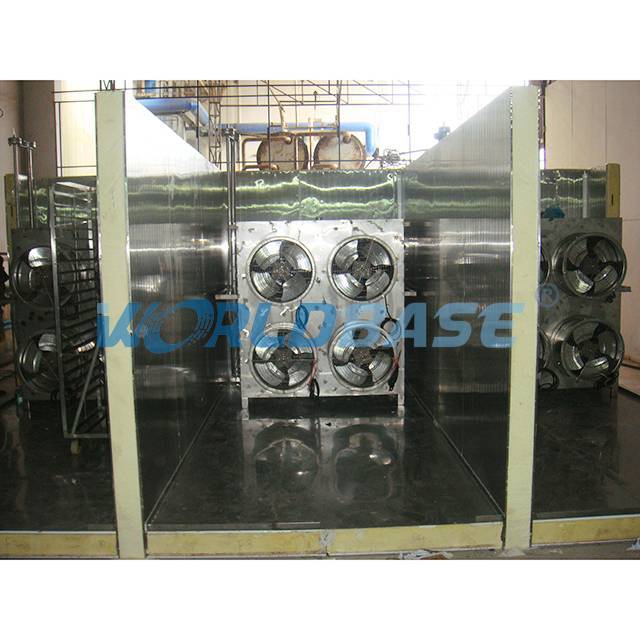
For decades, synthetic refrigerants like CFCs and HFCs were the invisible workhorses of modern cooling. But their devastating impact on the ozone layer and climate forced a reckoning. Now, the industry is pivoting back to nature’s own toolbox—substances like ammonia, carbon dioxide, and propane. This isn't just a regulatory checkbox; it's a fundamental rethinking of how we balance performance with planetary boundaries. The shift is accelerating not only because of mandates like the Kigali Amendment, but because engineers and businesses are rediscovering that natural refrigerants can be surprisingly efficient, often with lower long-term costs and simpler system designs.
What does this mean for the average supermarket, building owner, or equipment manufacturer? It means re-learning old rules. Carbon dioxide systems, for example, thrive in transcritical cycles that behave very differently from the familiar vapor-compression loops. Technicians need new skills, safety protocols are tightening (propane is flammable, ammonia is toxic), and upfront investments can feel steep. Yet the payoff is resilience: natural refrigerants sidestep the volatility of synthetic gas prices and future-phase-down schedules. They’re abundant, dirt-cheap in most cases, and carry global warming potentials that hover near zero. The transition is messy, but it’s carving out a niche for smarter, greener cooling that doesn't just chase the next chemical fix.
Beyond the technical details, the move to natural refrigerants signals a broader cultural shift in how industries approach sustainability. It’s a quiet admission that synthetic chemistry sometimes creates more problems than it solves, and that the solutions we need may already exist in the air we breathe or the ground beneath us. Early adopters are finding that marrying age-old principles with modern controls yields systems that are both reliable and forward-looking. The real meaning of this shift? It’s not about swapping one fluid for another—it’s about designing a future where cooling no longer comes at the expense of the climate it’s meant to combat.
Ultra-Efficient Insulation No One Is Talking About
Most people default to fiberglass or foam panels when they think about insulation – it’s what the hardware store sells, after all. But tucked away in research labs and niche high-performance builds is a class of materials that makes conventional options look like tissue paper. These aren’t just “a bit better”; they offer three to ten times the thermal resistance per inch. The surprising part? They’ve been around for decades, yet few architects or contractors even mention them.
Take silica aerogel, for instance. Originally developed for NASA missions, it’s a ghostly substance that’s over 90% air trapped in a silica network. At R-10 per inch, it outperforms standard fiberglass by a large margin, while being nearly weightless. Then there are vacuum insulated panels, which strip out almost all gas conduction and achieve R-values north of R-30 per inch. The catch isn’t cost anymore – it’s the industry’s slow-moving habits and a lack of installer training.
What really gets missed is how these materials unlock design possibilities we’ve written off as impractical. Super-insulating a retrofit without losing floor space? Suddenly doable. Building a passive-level enclosure in a slim wall profile? A reality. The conversation needs to shift from “moonshot” to “this is available right now” – because these solutions are sitting on shelves, waiting for the right project to show what they can do.
Predictive Maintenance That Stops Failures Before They Start
Imagine a factory floor where machines quietly signal their own wear and tear long before a breakdown. This isn’t science fiction—it’s predictive maintenance at work. By weaving together real-time sensor data, historical performance logs, and subtle operational patterns, systems can spot the earliest whispers of a problem. A vibration that’s just a bit off, a temperature rise no human would notice—these become actionable insights rather than hidden threats.
What sets this approach apart is its ability to learn from the rhythm of the machinery itself. Instead of relying on fixed schedules or reactive repairs, algorithms continuously adapt, recognizing the unique “heartbeat” of each asset. The result: maintenance happens exactly when needed, not a day too early or too late. This shift doesn’t just prevent costly downtime; it reshapes how teams allocate resources, moving from firefighting to strategic planning.
The ripple effects go far beyond the repair bay. When a pump in a remote plant can predict its own failure, logistics chains don’t stutter, and customer commitments stay solid. It’s a quiet revolution—one that turns maintenance from a cost center into a precision instrument, building resilience into operations without fanfare.
Why Modular Design Is the Next Big Thing in Reefer Tech
The reefer industry has long relied on monolithic, single-purpose refrigeration units that are difficult to adapt or upgrade. As supply chains grow more complex and sustainability demands intensify, the rigidity of these traditional systems is becoming a costly bottleneck. Modular design turns this model on its head by offering a flexible building-block approach—where cooling capacity, control systems, and power sources can be swapped, stacked, or expanded independently. This shift isn’t just about convenience; it’s about future-proofing cold chain logistics against a backdrop of rapid technological change and unpredictable market needs.
What makes modular refrigeration so compelling is how it directly tackles the twin pressures of cost and environmental responsibility. Instead of replacing an entire unit when one component fails or becomes obsolete, operators can simply upgrade the affected module. This extends the lifespan of the asset and dramatically reduces electronic waste. Moreover, modular systems allow for right-sizing capacity on the fly—adding extra cooling modules during peak season or for high-value cargo, then scaling back to save energy when demand drops. That kind of operational agility was unimaginable with conventional reefers.
Beyond the hardware itself, modularity opens the door to smarter, data-driven cold chains. Each module can be equipped with its own sensors and connectivity, feeding performance data into a centralized interface. This granular visibility helps predict failures, optimize maintenance schedules, and even adjust temperature setpoints dynamically based on real-time conditions. As the industry inches toward autonomous logistics, modular reefer tech provides the scalable, interoperable foundation that closed-box systems simply cannot match.
Solar-Assisted Cooling: A Game-Changer in Remote Shipping
Keeping perishables fresh without reliable grid power has always been a massive headache for remote shipping routes. Diesel-guzzling reefers are expensive to run and prone to breakdowns, but solar-assisted cooling flips the script. By tapping into abundant sunlight, these systems slash fuel consumption and maintenance costs while providing steady temperature control, even in off-grid locations. The result is fewer spoiled shipments and a much lighter environmental footprint.
What makes this tech particularly clever is how seamlessly it integrates with existing cold chain logistics. Thin photovoltaic panels mounted on container roofs feed banks of high-efficiency batteries, which then power ultra-low-energy compressors throughout the journey. Instead of roaring generators, you hear little more than a soft hum. Port operators in developing regions have been quick to adopt the approach, as it reduces their reliance on erratic local power grids and cuts operational noise in densely populated harbour areas.
Beyond the obvious cost savings, there’s a bigger picture at play. Remote fishing communities and smallholder farmers can finally tap into international markets without worrying about their produce wilting mid-transit. Solar-assisted cooling turns what was once a barrier into a springboard, unlocking economic opportunities in places where traditional refrigeration simply wasn't an option. For the millions who move perishable cargo across oceans and backroads, this isn’t just an upgrade — it’s a quiet revolution reshaping the way we think about cold transport.
FAQ
This year, manufacturers are focusing on intelligent cooling systems that adjust temperatures in real time based on cargo type and external conditions. They are also introducing advanced insulation materials that reduce heat transfer by nearly 30% compared to older designs, helping maintain stable environments during long transits.
IoT integration now allows operators to track not just location but also internal humidity, door openings, and even vibration levels through compact wireless sensors. These data streams feed into predictive analytics platforms, giving supply chain managers a live picture of cargo conditions and enabling quick adjustments before minor fluctuations turn into spoilage risks.
Several firms are making waves this year. Maersk Container Industry has been refining its Star Cool line with energy-saving compressors, while Carrier Transicold is expanding its use of eco-friendly refrigerants. Additionally, a newer player like Singamas is experimenting with photovoltaic roof panels that could power onboard electronics, cutting reliance on external electricity sources.
These containers slash fuel consumption by demanding less power from vessel generators or terminal grids. With the global fleet moving toward electrification, highly efficient units can meaningfully lower overall emissions. Some models now achieve up to 40% better energy performance than the standard benchmarks set a decade ago, directly contributing to shippers’ Scope 3 reduction targets.
Real-time monitoring lets crews intervene the moment parameters deviate from setpoints. For example, if a sensor detects a gradual rise in temperature inside a load of pharmaceuticals, an alert triggers a remote diagnostic check. This can lead to preemptive maintenance before a full breakdown occurs, protecting high-value shipments and avoiding costly insurance claims.
Manufacturers are adopting high-strength, corrosion-resistant alloys for frames and panels, along with multi-layer protective coatings that withstand salt spray and rough handling. Inside, redesigned airflow channels prevent frost buildup and ensure even cooling over thousands of miles, reducing stress on cooling units and extending container life well beyond the typical 12-year cycle.
They are ramping up production with modular assembly lines and regional fabrication hubs to shorten lead times. Some are exploring standardized, stackable designs that optimize vessel space, while others offer leasing models that make it easier for smaller producers to access advanced equipment. This rapid scaling is critical as emerging markets expand their perishables trade.
Conclusion
Reefer container manufacturers are quietly reshaping cold chain logistics in 2024, moving beyond incremental tweaks to fundamentally reimagine how perishable goods stay fresh. The integration of IoT sensors into smart reefers has turned once-dumb boxes into live data hubs, allowing operators to track temperature, humidity, and even door openings in real time from halfway across the globe. At the same time, a pronounced shift toward natural refrigerants like CO₂ and propane is reducing both environmental harm and long-term compliance costs—though it requires navigating tricky technical trade-offs around system pressures and energy efficiency. Less discussed but equally critical is a new wave of ultra-efficient insulation that borrows from aerospace materials, slashing thermal leakage to levels previously thought unattainable without adding bulk.
These hardware advances are matched by smarter maintenance strategies: predictive algorithms now comb through sensor data to flag failing compressors or refrigerant leaks days before a breakdown, preventing spoiled cargo and multi-million-dollar claims. Manufacturers are also betting on modular design, letting operators swap out refrigeration units or battery packs in the field instead of hauling the entire container back to a depot. Out in remote lanes, solar-assisted cooling is proving itself a practical lifeline where grid power is unreliable, trimming fuel consumption and keeping vaccines or fresh produce viable on journeys that used to be a logistical headache. It's a moment where each piece—software intelligence, cleaner cooling, tougher shells, and modular adaptability—locks together into a system that's built for the messy realities of global shipping.
Contact Us
Contact Person: Mr Yang
Email: [email protected]
Tel/WhatsApp: +8613809083091
Website: https://en.worldbase.cn