

PTFE Gland Packing Factory: Key Factors to Evaluate Before Placing Your Order
2026-10-31
Ordering PTFE gland packing might seem straightforward until you realize how much can go wrong with the wrong supplier. Before you commit to a factory, there are a few critical factors that separate reliable manufacturers from costly mistakes. From raw material purity to compression testing and customization options, each detail affects seal performance in high-pressure or corrosive environments. At TAIFNO, we’ve seen how these overlooked evaluation points make or break long-term operations. Here’s what to check before placing your next order.
Material Purity That Actually Shows Up in the Lab Report
Purity claims get thrown around pretty loosely these days. A supplier can send you a certificate that says 99.99% and still leave out the fact that the remaining 100 ppm is mostly iron and sodium—exactly what you don't want in a catalyst or coating. The only way to know is to look at the actual lab report, line by line, not just the bold number at the top. We ask for the full elemental scan and the raw instrument data, because trace metals have a way of hiding in the fine print.
We learned this the hard way with a batch of magnesium oxide that passed the supplier's own QC but failed our incoming inspection. Their report showed a single value for purity with no breakdown; our ICP-OES run found 85 ppm of calcium and 30 ppm of chloride, enough to shift the sintering profile noticeably. Since then, every lot we ship gets tested by an independent lab, and the report includes the detection limits and the exact values for the elements that matter for your use case. If a vendor won't share that level of detail, the purity number is just a decoration.
Compression and Density: Where Leak Paths Are Born or Blocked
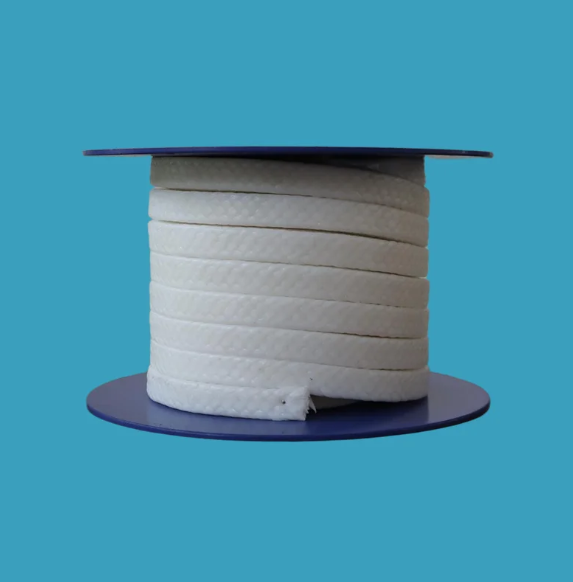
A flange face isn't as smooth as it looks. Once a gasket is placed between mating surfaces and the bolts are tightened, the material has to flow into machining marks, scratches, and slight waviness. If the applied compression doesn't force enough of the gasket to fill those gaps, tiny interconnected passages remain from one side to the other. These become the initial leak channels. How the density builds up under load—whether it rises uniformly or leaves low-density streaks—determines if that path stays open.
Pushing harder doesn't automatically close everything. Many gasket types, especially fiber-based or expanded PTFE, have an optimal compression window. Go beyond it and the material begins to crush or extrude outward from the flange. The center may get denser, but the edges can split, and internal layers can separate. Those new separations are often more direct leak routes than the original surface imperfections. Over-compression trades one set of paths for another.
What matters over time is not the maximum density reached at assembly but the residual compressive stress left after relaxation. Bolts lose tension, gasket material creeps, and temperature swings force the seal to flex. A leak path that was sealed during installation can reopen if the remaining load drops too low to keep the densified structure in contact with both faces. So the real task is to choose compression that not only blocks existing voids but also maintains enough recovery to keep them blocked as the joint moves.
Tolerance Checks That Go Beyond the Caliper
A caliper gives you a number, but it rarely tells you if the part will actually work. When I check a bore, I don't just want the diameter at the mouth—I want to know if it's round all the way down, if there's taper, if the surface has a wave that'll chew up a seal. That means pulling out a CMM or a profilometer, not just trusting a pair of jaws.
Think about something like true position on a bolt pattern. Each hole might be within its own size tolerance, but if they're all shifted by half a millimeter in the same direction, the mating part won't line up. A hand tool won't show you that. You need a machine that measures the whole feature relative to datums. That's what going beyond the caliper actually means—checking relationships, not isolated dimensions.
Testing Proof You Can Verify Before the Shipment Leaves
Every batch gets run through a live test cycle before it is crated. You don't have to take our word for it—raw readings, timestamps, and the technician's sign-off are attached to the packing list, so the numbers travel with the unit.
If you want to watch the checks happen in real time, we can open a video call from the test bench while the load is still on the dock. Most clients just ask for the full data log, but the option to look over someone's shoulder is there for a reason.
Anything that falls outside the agreed tolerance gets pulled and retested before it leaves. You'll see the failed run, the adjustment, and the pass mark—not a cleaned-up summary.
Custom Profiles Without the Usual Lead Time Excuses
Most suppliers promise custom profiles but then stall you with familiar reasons: minimum order quantities too high, tooling lead times stretched over months, or design tweaks that trigger endless back-and-forth. We built our process around cutting those excuses out. From the first CAD file you send, our team treats your profile as the next production priority—not a side project waiting for a slot in a crowded schedule.
Instead of generic stock shapes adapted to your specs, we start from your exact cross-section. That means no hidden adjustments to simplify our own tooling, no pushing you toward a “close enough” standard profile. Our in-house die design works directly from your geometry, and we test the extrusion within days—not quarters. If the first trial reveals a tolerance issue, we revise the die immediately rather than asking you to accept a workaround.
What really removes the lead time excuse is our parallel workflow: while the die is being cut, we already prepare the downstream operations—cutting to length, punching, surface finishing—based on your part drawing. So when the first profile comes off the line, it’s ready for assembly, not just for inspection. You won’t hear “that will take another six weeks” for a simple notching or coating step. Your custom profile moves through the plant as one continuous job, not a series of handoffs with built-in delays.
Field Failure Insights the Factory Should Be Willing to Share
A factory floor rarely tells the truth in boardrooms. But when a compressor seizes three months after install, or a wiring harness rubs through on a prototype nobody documented, the real story hides in the gap between what was designed and what actually left the dock. Field failure insights aren't just warranty data — they're the uncensored feedback loop that separates factories that learn from those that quietly repeat the same $40,000 mistake.
The hard part isn't collecting the data. It's convincing someone to share the ugly details without fear of blame. A good factory will admit that a batch of castings had porosity issues, that the new adhesive didn't cure properly in high humidity, or that a supplier quietly changed a heat-treat spec without telling anyone. These aren't accusations; they're forensic breadcrumbs. Without them, every downstream team just guesses.
So what should you push a factory to reveal? Ask for the non-conformance reports that never made it into the official quality metrics. Ask about the rework that happened at the line, the temporary fixes that became permanent, the customer complaints that were dismissed as 'user error.' That's where the patterns live. A factory that won't share those isn't protecting trade secrets — it's hiding from its own blind spots.
FAQ
Confirm what kind of production equipment they actually run. Some factories claim to make PTFE packing but only cut and resell imported rolls. You want a plant that braids or extrudes the packing in-house, because that is the only way they can adjust density, lubricant content, and break-in behavior to your pump conditions.
Ask for sample material from a recent production batch and run it in one pump for a full maintenance cycle. Pay attention to shaft scoring, gland temperature, and whether the packing compresses too much in the first few hours. Lab specs mean little if the packing does not settle properly under real gland load.
Absolutely. Virgin PTFE handles thermal cycling and aggressive chemicals far better than reprocessed or filled resin. Cheaper resin often leads to higher creep, faster hardening, and more frequent adjustments. A trustworthy factory should tell you exactly what grade goes into the braid and why.
Check whether their braiding tension stays uniform across the whole cross-section. Inconsistent tension creates uneven density, which leads to hot spots and uneven wear on the shaft sleeve. Also look for clean, sealed ends and even lubricant distribution. Sloppy ends or dry patches often mean the packing will leak at start-up.
Yes, and not just a generic certificate. Ask for batch-specific numbers on density, tensile strength, and compression recovery. If they hesitate or send an outdated report, treat that as a red flag. A factory with in-house testing is more likely to catch a bad batch before it reaches your pumps.
It can be, especially if your process involves something unusual like hot edible oil, strong oxidizers, or high shaft speeds. A factory that has solved similar sealing problems before will know whether you need a break-in lubricant, a harder braid structure, or a different type of PTFE filament. That kind of knowledge does not show up on a standard datasheet.
Ask about the number of braiding machines and current production backlog. If they give you a delivery date without asking about order size or specifications, be careful. You also want to know whether they can produce your required coil lengths in one piece, because splices inside a packing ring are a common cause of early leakage.
Certifications are useful only when they match your operating environment. For potable water or food contact, ask for FDA or WRAS documents that cover the exact grade you are buying. For chemical plants, a factory with ISO 9001 is fine, but you still need to verify batch consistency yourself. A wall of certificates does not replace a trial run.
Conclusion
Most buyers spend too much time comparing price per kilogram and not enough time asking what happens when the packing meets a real pump shaft. An honest PTFE gland packing factory will hand over a lab report showing actual resin purity, not just a certificate that repeats the same generic numbers. If the PTFE contains recycled filler or uneven particle distribution, that shows up in compression and density tests. Density that varies too much across a batch means the packing will seat unevenly, and that's exactly where leak paths start. So you need more than a caliper check—you need a factory that verifies dimensional consistency under load, after compression, not just fresh out of the mold. Tight tolerances on paper mean nothing if the cross-section distorts when torqued down.
Before the shipment leaves, ask for test data you can actually verify—pressure cycling, friction coefficients, thermal stability—not just a final inspection stamp. If the factory can't provide traceable batch testing, reconsider the order. Custom profiles are another quick filter. Many suppliers promise made-to-order cross-sections but then stretch lead times with tooling excuses. A factory with proper in-house extrusion and machining capability will turn custom shapes in days, not months. Finally, listen for field failure insights. A supplier that only talks about success stories and never mentions where their packing has failed under aggressive chemicals or high shaft speeds is hiding something. The best factories share failure data because they use it to improve. If they can't discuss edge cases openly, your next order might become one of those silent statistics.
Contact Us
Contact Person: Tommy Xiao
Email: [email protected]
Tel/WhatsApp: 8615651509888
Website: https://www.ptfe-factory.com