

Pot Still Manufacturer: Mastering the Art of Copper Craftsmanship for Superior Spirits
2026-05-14
In the world of fine spirits, the pot still is more than a tool—it's a statement of craft. At DYE, we don't just build stills; we sculpt copper into vessels that honor tradition while elevating flavor. Discover how our obsession with detail transforms simple wash into liquid artistry.
Copper's Role in Flavor Chemistry
Copper occupies a unique place in the world of flavor, acting as both a subtle enhancer and a potential disruptor depending on its concentration and chemical context. In trace amounts, copper ions can catalyze reactions that deepen flavor complexity, particularly in fermented products like wine, beer, and chocolate. For instance, during the aging of red wine, copper interacts with sulfur-containing compounds, reducing unpleasant reductive notes such as hydrogen sulfide (rotten egg) while preserving desirable varietal aromas. This delicate balance is often managed through techniques like copper fining, where small additions bind with thiols and sulfides, effectively “cleaning up” the wine without stripping away its character.
Beyond remediation, copper participates directly in the formation of key aroma compounds. Copper-dependent enzymes, such as polyphenol oxidases, play a role in the oxidation of phenolic compounds, generating the rich, nutty notes found in cocoa and coffee. In baked goods, copper can interact with lipids to create aldehydes and ketones—those buttery and toasty flavors that define a perfectly browned crust. Even in the realm of spirits, copper pot stills are revered not only for heat conduction but also for their ability to remove sulfurous impurities during distillation, yielding a smoother, more refined spirit. This dual action—removing off-flavors while fostering positive ones—makes copper an indispensable tool in the flavor chemist’s arsenal.
However, copper’s reactivity is a double-edged sword. Excessive copper can catalyze oxidative spoilage, leading to stale, metallic tastes in fats and oils, or accelerate the degradation of delicate aromas in citrus-based products. In beer, copper levels above certain thresholds can promote staling reactions, dulling hop character and generating cardboard-like trans-2-nonenal. Understanding these thresholds and designing processes to harness copper’s beneficial effects while mitigating its risks remains a fascinating challenge. Modern approaches, from chelation strategies to plant-based fining alternatives, are now being explored to replicate copper’s advantages without the downsides, marking an exciting evolution in how we manage this ancient yet ever-relevant element in flavor creation.
Hand-Beaten Stills: An Heirloom Approach
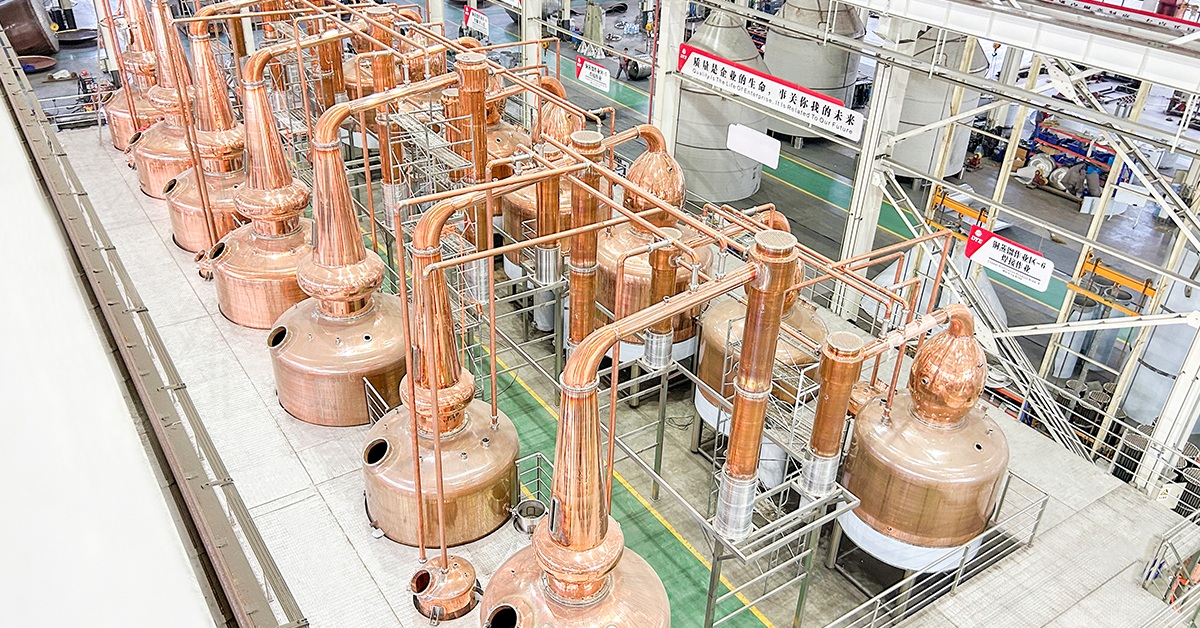
Long before mechanized assembly lines made copper stills a commodity, there were craftsmen who shaped each vessel by hand, blow by blow. The rhythmic percussion of hammer on metal was a sound passed down through generations, a legacy of patience and precision. These were not just tools; they were living extensions of the maker's skill, each dent and curve a deliberate mark of a tradition that refused to be hurried.
An heirloom still carries with it the residue of every spirit it ever produced. The copper, seasoned by years of vapor and condensation, develops a memory that influences future batches in ways no modern replica can replicate. The old masters understood that the metal itself was a collaborator, subtly shaping flavor through a slow, alchemical relationship born only from relentless hammering and fire.
Passing down such a still is like handing over a family story written in copper. It’s not merely functional equipment; it’s a testament to a time when craftsmanship was inseparable from daily life. In each hand-beaten seam, there’s a whisper of the past, inviting each new distiller to add their own chapter to a centuries-old narrative.
Custom Geometry for Spirit Character
Crafting a spirit character goes beyond standard modeling—it demands geometry that feels both ethereal and intentional. Instead of relying on generic shapes, we forge silhouettes that shift and flow, using asymmetrical curves and floating fragment arrangements. These forms suggest a presence that's barely tethered to the physical world, with every edge and contour designed to catch light in an otherworldly way.
Our approach treats geometry as a storytelling tool. We manipulate vertex density to create areas of visual murmur and sudden clarity, mimicking the way spirits might materialize or fade. Layered transparent shells and softly intersecting volumes give depth without adding clutter, letting the character feel present yet intangible. The topology intentionally avoids strict symmetry, embracing organic drift so that no two angles feel identical.
Small details matter just as much—slightly twisted normals produce glints that flicker out of sync with the scene's primary light source, while carefully weighted bevels suggest motion even in stillness. By avoiding uniform smoothness and introducing selective noise or subtle displacement, we give the geometry a living, breathing quality. The result is a spirit character that feels less like a rendered asset and more like a fleeting breath given form.
Riveting vs. Welding: Structural Poetry
Riveting tells a story of patient assembly. Each glowing rivet, hammered into place, carries the echo of a human hand—a percussive rhythm that transforms cold steel into a collective skin. The overlapping plates breathe, shifting almost imperceptibly under stress, like stanzas that leave room for interpretation. This method doesn't demand perfection; it accepts the slight give between elements, a tolerance that turns bridges and battleships into vast, flexible haikus.
Welding, by contrast, merges characters into a seamless flow. The electric arc erases boundaries, fusing atoms until two edges become one continuous thought. It is the epic form—unbroken, intense, a high-temperature pour of liquid syntax that solidifies into a single identity. There is no gap, no rivet's punctuating head; just a smooth, uninterrupted line that holds its ground as if the metal itself refused to be anything but whole.
In structural poetry, the choice between riveting and welding is a decision about the relationship between parts. Rivets acknowledge and celebrate the joint—each one a visible asterisk, a nod to the labor and the layers. Welding seeks invisibility, a silent union that speaks of fusion rather than connection. One is staccato, the other legato. Together, they compose the built world's verse, reminding us that strength can be found both in the spaces we keep and the edges we erase.
Patina as a Marker of Mastery
In the world of craftsmanship, a well-worn surface isn't a sign of decay—it's a quiet testament to time, use, and skill. Patina forms when materials are handled, aged, and cared for over years, even decades. Unlike artificial distressing, true patina can't be rushed. It emerges from the intimate relationship between maker, object, and owner, revealing a depth that no machine finish can replicate. This organic evolution signals more than age; it whispers of countless hours of practice, attention to detail, and a deep understanding of the material’s nature.
For the artisan, the ability to anticipate how patina will develop—and to work in harmony with that process—separates competence from mastery. A master woodworker knows how the oils from human hands will mellow a plane’s handle; a leatherworker selects hides and stitching that will age gracefully rather than crack. It’s this foresight, born of experience, that imbues an object with a living narrative. The patina becomes a subtle signature, a record of choices made long before the first scratch or stain ever appeared.
In an era of disposable goods and sterile perfection, patina stands as a quiet rebellion. It challenges the notion that newness equals value, instead celebrating the marks of a life fully lived. Collectors and connoisseurs seek out the glow of worn bronze, the soft sheen of aged wood, not despite their imperfections but because of them. These surfaces hold stories—of workshops, of hands, of quiet mornings and late nights—and they invite us to pause, touch, and remember that mastery is never just about making; it’s about letting time finish the work.
From Sheet to Spirit: The Maker's Timeline
It begins with a flat, unyielding surface—cold metal, rough timber, or supple leather, fresh from the supplier. At this stage, the material holds only potential. The maker’s hands hover, measuring, marking, and then making that first decisive cut. There’s a quiet rhythm in these early steps, a conversation between tool and medium that gradually shapes something more than the sum of its parts.
As hours stretch into days, the piece begins to reveal its form. Joinings are tested, surfaces smoothed, and proportions refined. This is where patience lives—the slow accumulation of detail that transforms a mere object into a vessel of intent. Each adjustment adds a layer of personality, an echo of the maker’s thought process. The timeline here isn’t measured in clock ticks but in breakthroughs and setbacks, the tactile feedback that guides a chisel or a stitch.
Finally, there’s a moment when the object transcends its material origins. A final polish, an unexpected flourish, or simply the act of stepping back and seeing it whole. It’s no longer just a thing—it carries a quiet presence, a whisper of its journey from raw sheet to spirited companion. This transformation isn’t rushed; it can’t be. It’s the maker’s timeline, unique and unrepeatable, etched into every grain and curve.
FAQ
Copper isn't just traditional; it reacts with sulfur compounds during distillation, removing unwanted flavors and yielding a cleaner, smoother spirit. Its excellent heat conductivity also allows for even heating, preventing scorching.
The shape dictates reflux – taller stills with wider necks cause more reflux, concentrating lighter, delicate flavors, while squat designs allow heavier compounds through, creating bolder, fuller-bodied spirits. Mastery lies in choosing the right form for your desired character.
Handcrafted stills carry the touch of an artisan – each seam is meticulously hammered, and the copper is worked to exact thicknesses that machines can't replicate. This not only affects thermal dynamics but also imparts a unique soul to the spirit, something mass production simply can’t emulate.
Top manufacturers source high-purity copper, often from certified mills, and rigorously inspect it for impurities. The copper's crystalline structure matters too – proper annealing during shaping ensures durability and optimal performance over years of use.
Absolutely. One advantage of copper is its malleability. Skilled craftsmen can patch, re-hammer, or even replace sections without compromising the still’s integrity. Regular maintenance, like removing verdigris, extends its life significantly.
The swan neck, connecting the pot to the condenser, acts as a flavor bridge. Its length, angle, and even the degree of taper influence vapor flow and partial condensation, subtly guiding which volatile compounds make it into the spirit – a fine-tuning element that defines a master still-maker.
Direct firing with a gas or wood flame can create hotspots that caramelize sugars in the wash, adding a layer of toasty, complex flavors – think butterscotch or toasted nuts. It's trickier to control but rewards with a spirit of unparalleled depth.
They embrace computer-aided design for precision while preserving time-honored techniques like hand-hammering. Some incorporate subtle tweaks—like internal baffles or hybrid condensers—to refine efficiency without losing the artisanal soul that defines their copper craft.
Conclusion
In the world of pot still manufacturing, copper isn't just a material—it's an active participant in flavor creation. The metal's catalytic surface strips unwanted sulfur compounds during distillation, leaving behind a cleaner, more refined spirit. Master craftsmen elevate this natural chemistry through hand-beating techniques, shaping each still with thousands of precise hammer strikes. This heirloom approach not only hardens the copper but also introduces subtle surface variations that influence vapor interaction, much like a chef's seasoned pan. The geometry is never random: a taller neck might emphasize floral notes, while a wider base encourages richer, fuller character. Every curve is a deliberate choice, tailored to the distiller's vision.
Beyond function, there's an artistry in the construction methods. Traditional riveting creates a rhythmic, almost musical joint pattern that speaks to generations of skill, while modern welding offers seamless elegance—both choices reflecting a philosophical stance on structure. Over time, the still develops a patina, a living record of use that seasoned eyes read as a maker's signature. This transformation is watched over months in a journey that begins with raw copper sheets and ends with the first drop of spirit. From initial forming to final polishing, the timeline demands patience, with each stage adding depth to the final product. It's a slow, deliberate craft where time itself becomes an ingredient.
Contact Us
Contact Person: Ada Xu
Email: [email protected]
Tel/WhatsApp: 0577-86806088
Website: https://www.dayuwz.com/