

OEM Stainless Steel Hex Bolts for Reliable Corrosion Resistant Fastening
2026-09-27
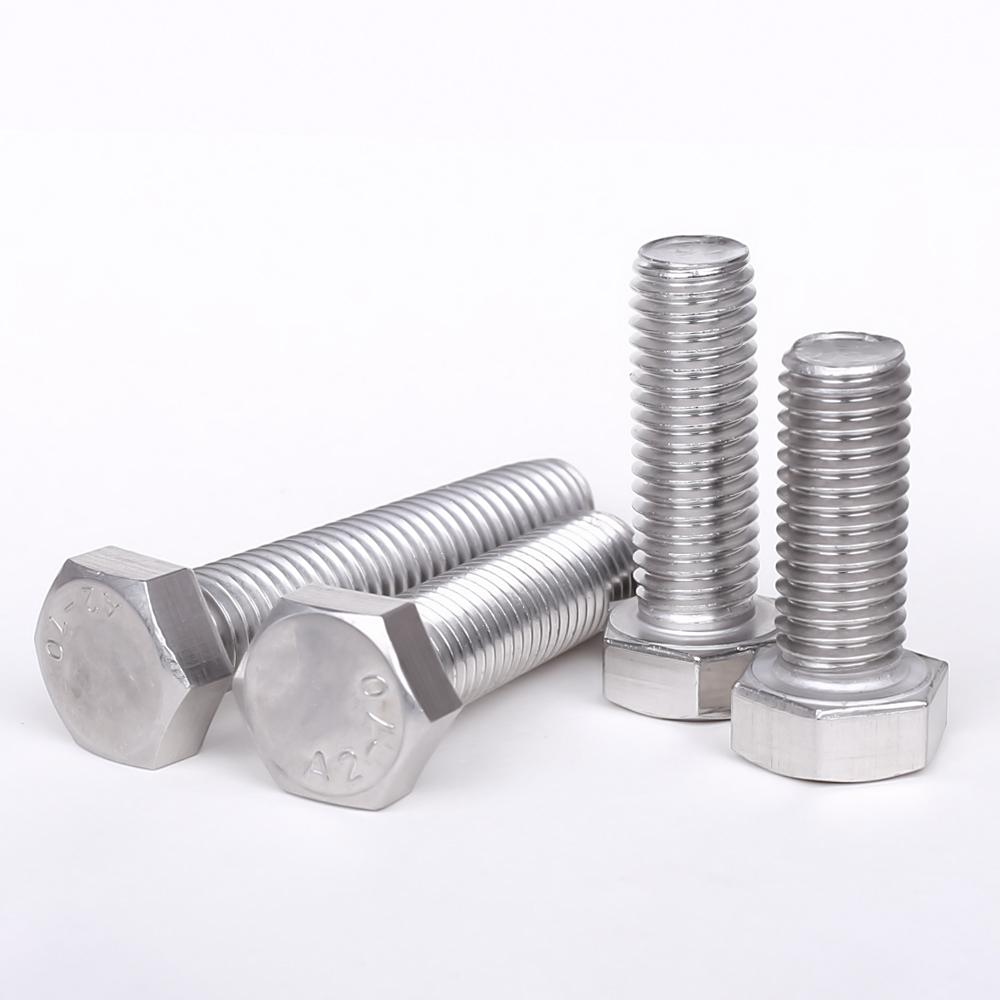
When harsh environments put every joint to the test, the fasteners you choose can make or break the whole assembly. OEM stainless steel hex bolts are often the unsung heroes behind corrosion-resistant fastening, quietly holding up where ordinary bolts give out. But not all stainless bolts are equal, and the difference shows up after months of moisture, chemicals, or salt spray. At Wanluo, we've seen too many projects cut corners here. In this post, we'll break down what makes these hex bolts a reliable backbone for demanding applications, and how the right OEM partner helps you avoid hidden weak points.
Why Standard Hex Bolts Fail Where These Stainless Steel Versions Thrive
Carbon steel hex bolts carry a hidden weakness: their protective zinc coating is easily scratched during installation, leaving bare metal exposed to moisture and chlorides. Once that thin galvanic barrier breaks, rust spreads beneath the surface, silently eating away at the threads and underhead bearing area. In marine environments or anywhere de-icing salts are present, standard bolts can lose up to 40% of their clamp load within the first year without visible warning.
Stainless steel hex bolts take a fundamentally different approach. Instead of relying on a sacrificial coating, the alloy itself forms a self-healing chromium oxide layer that regrows within hours of being scratched. This means every thread flank, every tool mark from installation, and every microscopic crevice remains protected even after repeated assembly cycles. The result is a fastener that keeps its preload in wet, acidic, or salt-laden conditions where coated carbon steel would already be flaking.
The difference shows up most clearly in disassembly. A standard zinc-plated hex bolt removed after two years outdoors often needs penetrating oil, heat, or a cutting wheel, with galling and rust seizure common even at moderate torque. Stainless versions, particularly those with a passivated finish, break free with predictable resistance and show no pitting on the load-bearing surfaces. For applications where maintenance access is limited or safety depends on consistent clamp force, that contrast is not just convenient—it is the difference between a reliable joint and a hidden failure waiting to happen.
OEM Tolerances That Keep Assemblies Tight Without Rework
Getting tolerances right at the OEM level means the difference between a line that hums and one that stalls. Instead of chasing perfection across every dimension, smart teams lock down the few interfaces that actually cause trouble, like press-fit pins, mating bosses, and snap features. By analyzing stack-ups early and assigning realistic variation to each part, they end up with assemblies that seat fully on the first try, without the telltale gaps or forced clips that trigger rework loops.
The real trick is treating tolerance as a design lever, not an afterthought. Rather than defaulting to tight, uniform bands, engineers lean on process capability data to decide where precision pays off and where a little slack is harmless. For example, a locating hole might get a position tolerance of 0.1 mm while a cosmetic edge gets 0.5 mm. This selective approach keeps parts interchangeable even when suppliers drift slightly, so the line keeps moving and nobody has to file, shim, or swap components at the last minute.
What often gets overlooked is how tolerances interact with material behavior. Plastics shrink and warp; metals spring back after forming. When the OEM specifies tolerances that account for these shifts in real operating conditions, the nominal dimensions can stay modest, yet the assembly still feels solid. That means fewer audible rattles, less stress on fasteners, and no hidden rework stations downstream, just a smooth handoff from prototype to production.
Corrosion Resistance Beyond Basic Coatings
Basic coatings often falter once the environment gets aggressive—salt spray, chemical splash, sharp temperature swings, or constant moisture will find the weak spots. A more resilient approach pairs dense barrier films with active protective mechanisms. For instance, zinc-rich primers sacrifice themselves to shield steel edges, while inhibitive pigments migrate into micro-scratches and passivate the exposed metal before rust can take hold.
Durability also depends on what happens before the first coat is applied. Proper surface preparation, such as phosphating or a silane treatment, creates a tightly bonded interface so the coating system moves with the substrate instead of peeling away. When combined with high-build epoxies or fluoropolymer topcoats, this layered strategy keeps underfilm corrosion from creeping in at welds, fasteners, and cut edges even after years of industrial exposure.
Choosing the Right Stainless Alloy for Saltwater, Acid, or Humidity
Corrosion resistance in stainless steel isn't a single guarantee—it's a careful match between alloy composition and the specific environment. For saltwater exposure, grades like 316 or duplex 2205 pull ahead because molybdenum helps fend off pitting from chloride ions, while standard 304 often struggles once salinity or temperature climbs. If you're dealing with acid, the game shifts again: sulfuric or hydrochloric demands higher nickel, chromium, and sometimes copper, pushing you toward alloys like 904L or super austenitics. Humidity alone rarely ruins stainless, but combined with airborne salt or industrial fumes, it accelerates crevice corrosion in sheltered spots, making a low-carbon variant such as 316L a smarter bet than basic 304.
The real trap is assuming all stainless grades are interchangeable. A railing near a calm freshwater lake can handle 304 without issue, but the same alloy on a coastal deck might show rust blooms within a year—not because the steel failed, but because the wrong match was made. Look beyond the label: pitting resistance equivalent number, or PREN, gives a quick read on chloride tolerance, yet it ignores acid behavior. For acidic condensate or chemical splash zones, lean on alloys with higher chromium and nickel plus molybdenum or nitrogen. And remember, surface finish matters as much as chemistry. A rough weld bead or embedded iron particle invites corrosion even on premium grades, so specifying a pickled, passivated finish is often the difference between a ten-year and a thirty-year lifespan.
Practical selection starts with defining the worst-case scenario, not the average condition. Salt spray that dries on a surface each afternoon creates a far more aggressive microclimate than continuous immersion, because chlorides concentrate as water evaporates. Humidity plus temperature cycling does the same for acid vapors in enclosed spaces. When in doubt, step up one grade and avoid the temptation to save a few dollars per pound upfront—replacement labor and downtime usually dwarf the material cost difference. Duplex alloys offer a sweet spot for many marine and chemical settings, combining high strength with corrosion resistance close to super austenitics at roughly half the nickel content, which also cushions against price swings.
Thread Geometry That Prevents Galling and Seizing
When two threaded surfaces slide against each other under high load, microscopic peaks can weld together and tear apart, leading to galling and eventual seizure. The shape of the thread itself plays a direct role in whether this damage occurs. Sharp crests and roots concentrate stress, creating hot spots that encourage material transfer. By contrast, threads with controlled radii at the crest and root distribute contact pressure more evenly, reducing the likelihood of localized welding. A well-chosen flank angle also helps: steeper flanks tend to push mating surfaces apart under load, which lowers the effective friction and limits metal-to-metal adhesion.
Another key factor is thread fit and lead accuracy. Loose tolerances allow the mating parts to rock or shift slightly, causing uneven contact patches that can initiate galling. A precision-ground thread with a consistent lead and pitch diameter ensures that the load is spread across the full engagement length instead of concentrating on a few high spots. In addition, surface finish matters more than many designers realize. A surface that is too rough provides abundant nucleation sites for galling, while an excessively polished surface may not retain lubricant. The sweet spot is a controlled, uniform finish—typically with a slight texture that holds a boundary lubricant film without acting as an abrasive.
Finally, thread geometry can be modified to include features like truncated roots, asymmetric flanks, or specialized profiles such as buttress or Acme threads for high-load applications. These shapes alter the direction and magnitude of the normal force, discouraging the stick-slip behavior that often precedes seizure. When combined with a suitable anti-galling coating or lubricant, a thoughtfully designed thread form can operate reliably across hundreds of assembly cycles without visible damage. The goal is not simply to make the threads stronger, but to shape the contact geometry so that the two surfaces glide over each other instead of tearing into one another.
From Marine Hardware to Food Processing: Where These Bolts Earn Their Keep
In the salt-crusted air of a working dock, the same bolt that holds a cleat to a teak deck also ends up clamping a stainless hopper inside a seafood packing line. The shift isn't a downgrade—it's a test of how well a fastener shrugs off corrosion, vibration, and daily washdowns. Marine hardware demands a surface that won't pit after seasons of spray, while food processing adds its own twist: crevices where brine and bacteria hide, and torque checks that happen between shifts instead of between voyages.
What makes these bolts carry over isn't a coating gimmick or a higher grade stamp. It's geometry and finish working together. A slightly rounded root profile lets cleaning fluids drain instead of pooling, and a dull passivated layer keeps galling at bay when nuts get run down by junior mechanics. You'll spot them under conveyor frames, on mixer paddles, even anchoring steam-jacketed kettles—places where a generic hardware-store bolt would either seize up or start weeping rust within a month.
The real distinction shows up in the audit room. A seafood plant's HACCP team doesn't care about tensile charts; they care about flaking chrome and snapped heads that end up in a batch. Marine surveyors want proof of alloy traceability when a stanchion base fails after a grounding. These bolts earn their keep by being boringly reliable in both worlds—no bright zinc flash, no oversized washers, just a thread form that doesn't loosen when the deck heaves or the line shudders to a stop.
FAQ
They are made from A2-70 or A4-80 stainless steel with a passivated finish, which forms a protective oxide layer. This resists rust and pitting even after repeated exposure to salt spray or condensation.
Yes, OEM production lets you specify diameter, thread pitch, length, and head marking. We also support partial threading and special tolerances for unique assemblies.
The 316 stainless option offers excellent resistance to mild acids, detergents, and steam cleaning. Smooth surfaces and the absence of coatings that could flake make them a safer choice for hygiene-sensitive settings.
Unlike generic fasteners that often lack traceability, these bolts come with material certificates and batch testing. Threads are rolled rather than cut, improving fatigue strength and consistency.
Yes. When paired with stainless nylon-insert lock nuts or serrated flange nuts, they maintain clamp force. For extreme vibration, thread-locking patches can be added during OEM production.
You can choose black oxide, zinc plating, or a mirror polish. Each finish alters appearance and adds a secondary layer of corrosion resistance, depending on the application.
A general rule is to ensure at least 1.5 times the bolt diameter of thread engagement in the nut or tapped hole. For critical joints, use a torque chart specific to stainless steel to avoid galling.
In many cases yes, but it depends on the metal pairing. Stainless fasteners can accelerate corrosion on aluminum or zinc if an insulating washer or anti-seize compound is not used. We recommend a polymer washer for mixed-metal assemblies.
Conclusion
Standard hex bolts often give out long before the assembly does, especially anywhere moisture, chemicals, or temperature swings are part of daily life. Rust creeps under cheap platings, threads gall under torque, and sloppy tolerances force rework on the line. OEM stainless steel hex bolts are built to close those gaps at the source. The alloy choice matters more than a coating: 316 stainless holds up in salt spray, while 304 handles most humid or mildly acidic environments without pitting. Thread geometry is cut or rolled to keep engagement smooth, so you can drive them hard without seizing. That means less fighting with a wrench and fewer stripped heads or snapped shanks.
Tight OEM tolerances are what let these bolts drop into place and stay put without rework. Head dimensions, shank diameter, and thread pitch are held within narrow bands, so torque values translate the same across a batch. In marine hardware, food processing lines, or chemical washdown areas, that consistency is the difference between a scheduled shutdown and an unplanned one. The corrosion resistance isn't a thin surface treatment that flakes off; the stainless alloy itself resists oxidation throughout the part. From saltwater pump housings to dairy equipment, these hex bolts keep joints tight and clean longer, cutting maintenance cycles and replacing the old routine of rusted fasteners with something that actually lasts.
Contact Us
Contact Person: Shane
Email: [email protected]
Tel/WhatsApp: 8613357785029
Website: https://www.wanluohardware.com