

OEM Silicone Water Bottle Customization Ideas for Your Brand
2026-10-16
If your branded bottle still looks like a generic promo item, it’s time to rethink your approach. OEM silicone water bottle customization gives you far more room to play than you might expect—textures, shapes, sleeves, and colors that actually carry your identity. Qunhao works with brands to push past the usual logo slap and create bottles people want to keep using. Here are ideas to help you do the same.
Let Your Brand Colors Flow Into Every Bottle
Color isn't just decoration on a bottle—it's the first handshake your brand offers. When your signature hues wrap around the glass, they carry your story before a single sip. From deep matte blacks to vivid citrus gradients, every shade becomes a quiet promise of what’s inside.
Consistency across every bottle builds recognition that feels effortless. A shelf full of your colors creates a visual rhythm shoppers can spot from across the aisle. Whether you lean into soft pastels or bold metallics, letting those tones bleed from cap to label turns ordinary containers into a family of unmistakable silhouettes.
Your palette should move like liquid—adapting to limited editions, seasonal releases, or regional lines without losing its core identity. When brand colors flow naturally through each bottle, packaging stops being a cost and starts working as your loudest silent salesperson.
Beyond the Round Bottle: Silicone Shapes That Stand Out
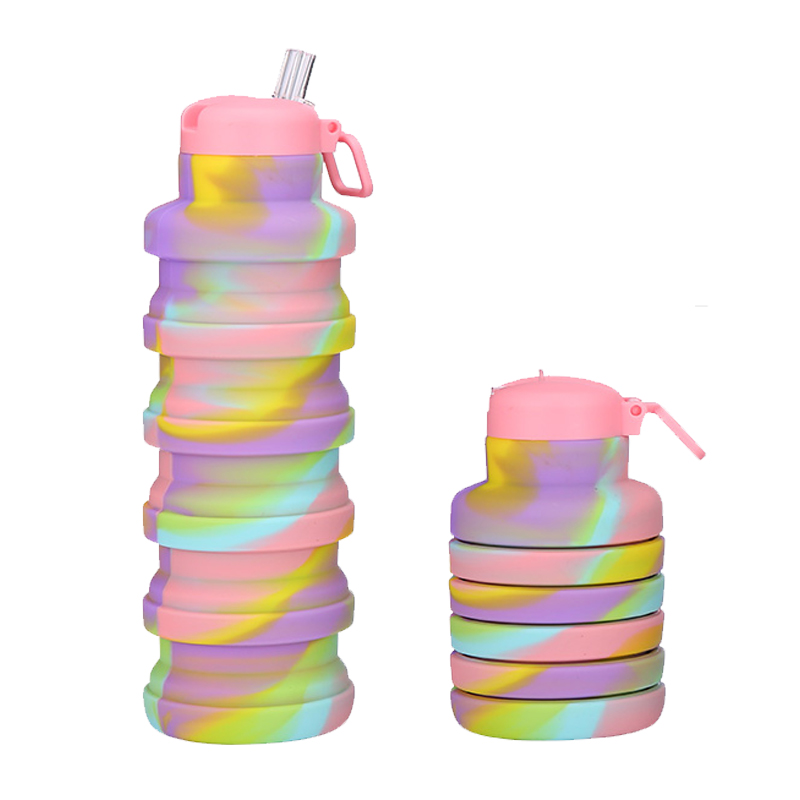
Round bottles have long been the default, partly because they're easy to mold and label. Silicone, though, doesn't follow that logic. It can be shaped into ovals, wedges, teardrops, and even soft-edged cubes. A flat side keeps the container from rolling off a nightstand or vanity, while a curved back fits naturally into a palm. These profiles are not just decorative; they solve small everyday annoyances that round designs quietly accept.
Some shapes appear when silicone is paired with a rigid base or collar. A triangular footprint tucks neatly into a shower caddy, and a slim rectangular form slides into a laptop bag without creating a bulge. Because the material compresses, bottles can also widen at the bottom for sturdiness and narrow at the top for a cleaner pour. The neck position can shift away from center, making it easier to reach the last bit of product. That kind of freedom lets a bottle feel more like a tool made for a specific place than a generic container.
Surface details add another layer. Raised ribs and dimpled panels emerge naturally from silicone molding, giving fingers something to hold onto when hands are wet or soapy. Colors can wrap around corners and indentations without seams, so the shape reads clearly from across the room. The effect is a collection of objects that look intentional rather than mass-produced, and that visual distinction is often what draws people away from the familiar round bottle.
Tactile Branding: Raised Logos and Textured Grips
There is a quiet logic in the way a thumb finds the raised emblem on a metal cap, or how fingertips settle into the grooved rubber of a tool handle. Tactile branding does not ask for attention with colour or contrast; it works through pressure and memory. A raised logo becomes a signature you can read with your eyes closed, while a textured grip turns an ordinary object into something that feels intentional, almost personal.
This approach moves beyond surface decoration. When a product’s tactile features are designed with care, they begin to function as a secondary interface — a way of communicating trust, quality, or performance without a single written word. The raised edge of a button, the subtle roughness on a dial, the embossed pattern on a bottle’s shoulder: each detail reinforces the brand’s presence through touch, creating a relationship that lasts longer than a glance.
The real value appears in repeated use. Over time, the texture becomes associated with the action, and the brand is remembered not as an image but as a sensation. This kind of branding doesn’t compete for visual space; it earns a place in the hand. And once a customer’s fingers know the difference, they rarely forget it.
Modular Caps and Straps for a Personalized Carry
Caps and straps are the kind of details that quietly change how a bag feels. A quick swap turns the same shell into a shoulder carry for a laptop run, then back into a crossbody for a weekend walk. Hardly anyone notices the attachment points until they want to use them.
The materials matter more than the mechanism. A heavy cotton strap ages well but gets stiff in rain; a seatbelt-style nylon one stays slick and easy to slide. Brushed zinc caps hide scuffs better than glossy ones, and they don't scream for attention. You pick the combo that fits your routine, not someone else's product photo.
That flexibility means the bag doesn't fight you when needs shift. No extra hardware dangling, no unused loops, just the option to change the carry style without buying another bag.
Choosing Silicone That Meets Food-Safety and Eco Standards
Not all silicone is created equal, and if it’s going anywhere near food, the details matter more than the label. Look for platinum-cured silicone rather than peroxide-cured, since it leaves behind fewer chemical byproducts and tends to have less odor. A quick sniff test can tell you a lot: food-safe silicone should not smell plasticky or chemical-heavy, even when warm.
Certifications help cut through the guesswork. In the U.S., FDA 21 CFR 177.2600 is the baseline for repeated food contact, while LFGB certification from Germany is often considered stricter because it tests for migrating substances under more demanding conditions. If the product claims to be “food grade” but can’t name a standard, that’s usually a sign to keep looking.
On the eco side, pure silicone is safer than plastic in many ways — it doesn’t shed microplastics, it withstands heat without degrading into harmful chemicals, and it can last for years instead of months. However, cheap fillers can undermine both safety and sustainability. High-quality silicone should feel supple and return to its shape when pinched; if a white film appears after stretching, fillers are likely present. Choose brands that openly discuss their material sourcing and durability, because a product designed to last is the most practical kind of eco-friendly.
Limited Edition Designs That Spark Collecting Habits
There's a particular kind of excitement that comes with owning something that won't be restocked. Limited edition designs tap into that feeling by making each release feel like a small event, not just another product drop. The appeal often has less to do with the object itself and more with the story behind the short production run—whether it's a collaboration, an anniversary, or a single batch of hand-finished pieces.
Designers who understand collecting habits know that details matter more when the supply is finite. A numbered plate, a slightly unusual colorway, or packaging that feels like a keepsake can turn a practical item into something people want to preserve. These choices encourage repeated purchases across a series, as fans start to see the individual releases as chapters in a larger narrative.
The habit forms quietly. One limited drop leads to another, and soon the buyer starts following launch calendars and setting reminders. What begins as a one-time treat can evolve into a ritual of anticipation, where the chase is almost as satisfying as the acquisition. In that sense, scarcity isn't just a marketing lever—it becomes a shared language between maker and collector.
FAQ
Think about molded textures that match your brand story, like a grip pattern inspired by tire treads or a subtle honeycomb finish. You can also experiment with two-tone color splits, frosted translucent sleeves, or custom carabiner clips that double as bottle openers.
Go with a soft-touch matte finish for grip and a premium feel, but ask for a sample first because some matte coatings can show scuffs faster. If your audience is more outdoorsy, a slightly ribbed or dotted texture hides wear and tear while giving extra hold.
Add a contrasting silicone boot or a braided paracord handle in your brand colors. Even a small debossed pattern around the base or a custom lid color can make the bottle feel designed rather than just printed.
For collapsible models, a printed logo can crack when the bottle is squished, so a molded-in color block or a debossed emblem is more durable. If you still want a sleeve, make sure it's removable and made from the same silicone grade to avoid fit issues.
Translucent silicone shows liquid levels and gives a modern, airy look, but logos need to be adjusted for contrast. Opaque silicone hides scratches better and makes bright brand colors pop, yet it can feel heavier visually.
Yes, consider a stainless steel inner liner with a silicone outer wrap, or a bamboo lid paired with a silicone body. The material contrast creates a memorable tactile experience and lets you play with laser engraving on the harder parts while keeping the silicone soft.
Skip the plain polybag. Use a recyclable cardboard tube with a die-cut window that shows the bottle's texture, or a simple cotton drawstring bag printed with a single-syllable brand message. Include a small card explaining how to clean the silicone without trapping odors.
A unique spout shape, like an angled tip or a wide-mouth chug cap, makes the bottle feel engineered rather than generic. Color-matching the lid to the bottle body or adding a subtle logo deboss on the top can also turn a functional part into a brand touchpoint.
Conclusion
Color is the fastest way to make a water bottle feel like an extension of your brand. Instead of defaulting to a plain tint, work with a supplier who can match your exact Pantone, run marbled or gradient effects, or even create two-tone bodies where the cap, strap, and bottle each carry a different shade of your palette. The result is a product that photographs well and stays recognizable on a crowded shelf. Shape is just as powerful as color. Silicone molds open up options beyond the standard cylinder—think faceted edges, subtle hourglass curves, or bottles that echo a mascot or product silhouette. These forms don't need to be extreme; a slight geometric twist can make your bottle feel designed rather than generic. Once the silhouette is right, texture takes over. Raised logos, debossed patterns, or ribbed grip zones give your bottle a tactile identity that people notice even before they read a label.
Practical details often decide whether a branded bottle gets used daily or forgotten in a drawer. Modular caps and straps let you offer different carry styles—carabiner clips, wrist loops, wide-mouth lids, or straw tops—so the same bottle body can serve office commuters, gym-goers, and travelers. This flexibility also helps you refresh the product line without retooling the entire mold. Material choices matter just as much. Specify food-grade silicone that is free of BPA, phthalates, and other harmful additives, and look for certifications that confirm the bottle can handle hot and cold liquids without leaching or odor retention. Eco-conscious buyers increasingly expect this, and it gives your brand a credible quality story. Finally, consider limited runs. Seasonal colorways, numbered batches, or collaborations with local artists can turn a simple bottle into something people collect and share. Small-batch releases create urgency and give your best customers a reason to come back for the next drop.
Contact Us
Contact Person: Cecilia
Email: [email protected]
Tel/WhatsApp: 8619057488653
Website: https://silwatbottle.com