

MNO Core Network Solution Suppliers Drive Next-Gen Connectivity Innovations
2026-05-13
Behind every seamless 5G experience is a core network built to handle relentless innovation. As MNOs push toward ultra-reliable, low-latency connectivity, the suppliers powering these advances become pivotal. Among them, IPLOOK is quietly reshaping the landscape—turning complex network demands into scalable, future-ready solutions. This shift isn’t just about faster speeds; it’s about rethinking how mobile core infrastructure drives next-gen connectivity from the ground up.
The architects behind tomorrow’s networks
Networks don’t just happen—they’re pieced together by people who obsess over latency, redundancy, and the quiet hum of a well-routed packet. These architects aren’t the ones in the spotlight, but their fingerprints are all over the infrastructure that lets a video call feel like a face-to-face chat or a financial trade clear in microseconds. They blend an old-school respect for the OSI model with a restless itch to break it when it gets in the way.
What sets them apart isn’t just technical chops; it’s their willingness to sit with ambiguity. They’re the ones sketching out capacity plans on napkins, then translating those sketches into BGP communities and anycast topologies that hold up under load. The best ones don’t just think about packets—they think about failure domains, about the weird edge case where a DNS resolver gives up, about how to make a network so boringly reliable that nobody notices it exists.
Increasingly, these architects are also contending with a world that demands networks think for themselves. They’re layering automation on top of protocols that predate the iPhone, writing scripts that nudges traffic away from softening links before a human even blinks. It’s a discipline that marries decades-old RFCs with the chaos of real-world fiber cuts and cloud APIs, and the people who do it well tend to be the ones who can explain telemetry data as easily as they can justify a new PoP location over coffee.
Beyond speed: redefining core network intelligence
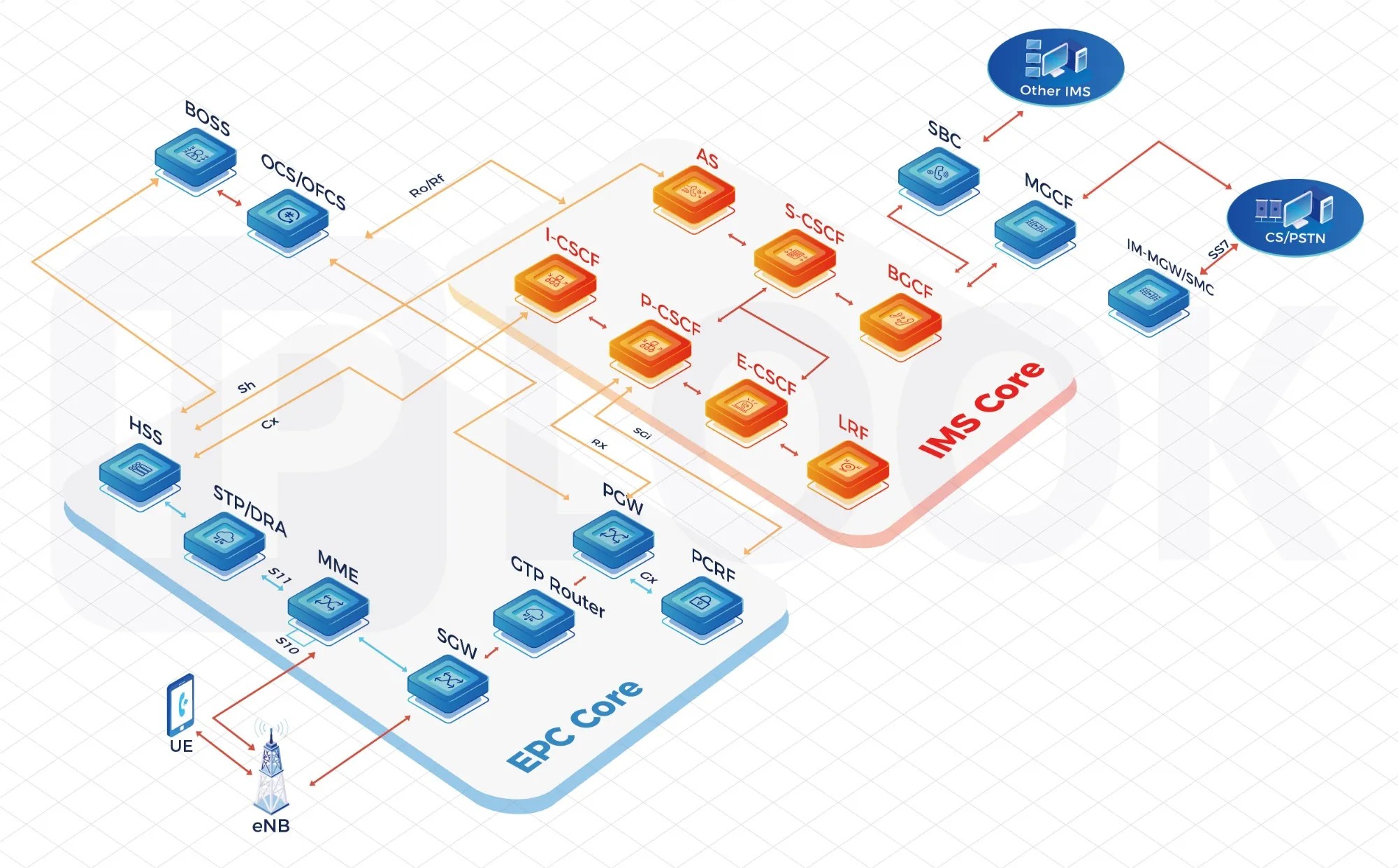
The conversation around core networks has long been dominated by a singular metric: speed. But in an era where applications demand more than just raw throughput, we need to rethink what intelligence means at the heart of connectivity. It’s no longer enough to push packets faster; modern core networks must act as predictive, self-adjusting systems that understand service intent, allocate resources in real time, and preemptively resolve issues before they cascade into failures.
This shift calls for embedded intelligence that moves beyond reactive monitoring. The core now needs to perceive subtle shifts in traffic patterns, automate scaling decisions based on user behavior, and orchestrate end-to-end slices without human intervention. It’s about weaving machine learning models directly into the control plane, enabling decisions that are not only faster but fundamentally smarter—balancing load, prioritizing critical services, and maintaining resilience in ways static architectures never could.
Ultimately, redefining core network intelligence means designing for adaptability as a first principle. Instead of rigid configurations, networks begin to exhibit a form of operational cognition, learning from every flow and continuously refining their response. This transforms the core from a simple conduit into a proactive engine that shapes experience, security, and efficiency simultaneously. Speed becomes a byproduct of intelligence, not its goal.
How suppliers are enabling truly seamless connectivity
Suppliers are weaving connectivity into the fabric of everyday devices with a focus on interoperability that didn't exist a decade ago. By adopting open standards and collaborating across industries, they ensure that sensors, controllers, and cloud platforms speak the same language without clunky middleware or constant reconfiguration. This shift means that a thermostat can seamlessly interact with a security system from a different brand, or that factory equipment can be monitored and adjusted through a single interface regardless of the original manufacturer.
Behind the scenes, edge computing and intelligent data routing are reducing the latency that once made real-time applications feel disjointed. Instead of sending every byte to a distant server, suppliers embed processing power directly into network nodes and devices, allowing decisions to be made locally and only relevant insights to be pushed upward. This not only speeds up response times but also preserves bandwidth and keeps operations running even when the wider internet stumbles.
Power management is another quiet revolution. Long battery life was once the enemy of constant connectivity, but newer low-power protocols and energy-harvesting techniques mean sensors can stay online for years without maintenance. Suppliers are baking these capabilities into their hardware from the start, so that connectivity becomes invisible—always there, never a burden.
From hardware to cloud-native: a silent transformation
Not too long ago, launching a software service meant wrestling with metal. Teams spent days—sometimes weeks—provisioning physical servers, running cables, and manually configuring RAID arrays. The rhythm of deployment was slow, punctuated by the hum of cooling fans and the occasional late-night hardware failure. It was a world where capacity planning felt more like fortune-telling, and scaling meant ordering more boxes, not spinning up instances. That tangible, heavy reality has quietly faded into a distant memory for many, replaced by something far less visible but infinitely more agile.
Today, the infrastructure that powers most modern applications exists as code, ephemeral and abstracted. Containers and orchestration platforms have dissolved the dependency on physical location, allowing entire systems to be described in YAML files and replicated with a single command. This shift wasn’t marked by a single bold announcement; it seeped in gradually, as cloud-native principles reshaped how we think about resilience, scalability, and even team culture. The transformation is silent because it’s no longer a choice—it’s simply how things are built, often without a second thought to the bare metal that once anchored every deployment.
The invisible backbone of Industry 4.0
The machines hum, the data flows, but something else keeps Industry 4.0 running—its invisible backbone. Without it, the promises of smart factories and real-time analytics would collapse into a pile of disconnected sensors and wishful thinking. This silent layer isn’t flashy, but it determines whether your digital transformation actually delivers or just drains your budget.
What actually holds this whole system together? It’s not the cloud alone or the latest AI algorithms. Think deeper: stable, low-latency connectivity that doesn’t buckle under the weight of a thousand devices pinging at once. Edge computing nodes that make decisions when a millisecond’s delay means a faulty batch. Interoperable protocols that let a ten-year-old CNC machine talk to a brand-new robotic arm without a single engineer losing their mind. These are the uncelebrated parts that make “seamless” actually look seamless.
Forget the glossy vendor demos for a minute. Production lines that truly adapt overnight don’t happen because of a dashboard. They happen because someone bothered to map the data architecture properly, set up redundant communication paths, and made peace between OT and IT teams. That’s the real backbone—the messy, human, deeply technical work that nobody tweets about. Without it, Industry 4.0 is just a PowerPoint deck with a lot of arrows.
Breaking vendor lock-in without compromising performance
Relying on a single cloud provider or proprietary system can feel safe until you try to leave. The hidden costs and technical barriers often trap teams in a cycle of ever-increasing dependence. Breaking free starts with designing for portability from day one, not as an afterthought. Open standards, containerized workloads, and multi-cloud compatible tooling give you the freedom to move without rebuilding everything from scratch.
Performance fears are the number one reason people stay locked in. They assume that portability means accepting slower response times or higher latency. That trade-off isn’t necessary. Modern abstraction layers, smart caching strategies, and cloud-agnostic deployment pipelines deliver the same speed you’d get from native services. You can achieve sub-millisecond latency and high throughput while keeping your options open.
The real secret is testing your escape plan regularly. Run part of your workload on an alternative provider or a different storage backend, not as a migration drill, but as a normal part of operations. This keeps your engineering team honest and your architecture genuinely portable. When vendor terms change or a better option emerges, you can switch in hours, not months. That’s the performance metric that matters most.
FAQ
They provide the backbone infrastructure that allows mobile operators to deploy advanced networks like 5G and beyond. Their solutions handle critical functions such as session management, authentication, and data routing, enabling higher speeds, lower latency, and support for massive device connections.
Many are shifting toward cloud-native, software-defined architectures that allow for greater flexibility and scalability. This includes containerizing network functions and using AI/ML for automated operations, which accelerates the rollout of new services and reduces costs.
They make possible features like network slicing, which creates multiple virtual networks on a shared physical infrastructure, each optimized for specific use cases like autonomous vehicles or smart factories. Edge computing integration is another key offering that reduces latency for real-time applications.
Major players include Ericsson, Nokia, Huawei, and ZTE, along with newer entrants like Mavenir and Affirmed Networks. Differentiation often comes from their ability to offer open, interoperable platforms, strong R&D in AI-driven orchestration, and deep partnerships with hyperscalers.
Integration with existing legacy systems is a major hurdle, along with managing the complexity of multi-vendor environments. Security concerns in a more distributed architecture and the need for skilled personnel also pose significant adoption barriers.
The 5G standalone core is built independently from 4G, fully leveraging cloud-native principles. It drastically improves spectral efficiency, supports ultra-reliable low-latency communication, and enables advanced mobility features that enhance user experience and open new revenue streams.
They design energy-efficient hardware, optimize software to reduce power consumption, and promote virtualization that lowers the need for dedicated physical appliances. Many also enable smarter network management to dynamically scale resources, cutting overall energy use.
Conclusion
Mobile network operators are no longer just consumers of off-the-shelf equipment; they depend on a new breed of core network solution suppliers who are quietly re-engineering the fabric of global connectivity. These suppliers act as the true architects behind tomorrow’s networks, embedding intelligence into every layer of the core. It’s no longer a race for raw speed—next-generation cores are being rewired to think, predict, and adapt in real time. By fusing AI-driven automation with distributed architectures, they deliver a type of connectivity so fluid that users slip between networks, devices, and services without a flicker of interruption. This invisible orchestration is the linchpin of Industry 4.0, where factory floors, autonomous logistics, and smart grids rely on a response-time and reliability that legacy systems never could provide.
Underpinning this shift is a profound but silent transformation: the move from rigid, hardware-centric models to cloud-native, software-defined frameworks. What used to require months of physical rollouts now materializes in minutes through microservices and containerized network functions. Crucially, suppliers are dismantling the old vendor lock-in nightmares without sacrificing a shred of performance. They are championing interoperable, open standards that let operators mix and match components from different vendors, accelerating innovation cycles and slashing costs. The result is a core network that doesn’t just connect—it learns, evolves, and scales with the demands of enterprises that can no longer afford to wait. In this new landscape, the supplier isn’t just a vendor; it’s a strategic partner sewing the invisible backbone that holds tomorrow’s digital economy together.
Contact Us
Contact Person: Shimmy
Email: [email protected]
Tel/WhatsApp: 85253392231
Website: https://www.iplook.com