

Low-Power Generator Sets: A Professional Guide to Reliable Power Solutions
2026-07-31
When the grid fails or you're far from civilization, reliable electricity isn't a luxury—it's a necessity. Low-power generator sets have quietly become the backbone of backup power, camping adventures, and off-grid living, but making sense of the options can feel overwhelming. From fuel efficiency to noise levels and portability, the choices matter more than you think. That's where Hichai Power steps in, turning complexity into clarity with solutions built for real-world reliability. In this guide, we'll walk you through what really counts when choosing a low-power generator, so you can power your life without compromise.
Understanding Low-Power Generators: More Than Just Emergency Backup
Low-power generators often get pigeonholed as a last resort for blackouts, but their real value stretches far beyond keeping the lights on during a storm. These compact units are increasingly finding their way into everyday life—powering camping trips, outdoor movie nights, or tailgate parties where a whisper-quiet companion makes all the difference. Unlike their industrial cousins, they’re designed to be portable and fuel-sipping, so you spend more time enjoying and less time fussing over cords and gas cans.
Another overlooked perk is how they bridge the gap for hobbyists and remote workers. A small generator can run a laptop, charge tool batteries, or keep a mini-fridge humming at a weekend workshop miles from the nearest outlet. It’s the kind of quiet enabler that doesn’t demand attention but expands what’s possible away from the grid. The shift in thinking is subtle but powerful: it’s not just about backup—it’s about freedom.
Even for homeowners, these generators play a daily role that rarely gets headlines. They handle the odd jobs like pumping out a flooded basement after heavy rain, running a power washer for deck cleaning, or keeping aquarium pumps active during brief outages. Over time, they become a low-maintenance household asset rather than emergency gear gathering dust. The real story is that they’ve quietly graduated from safety net to utility player, changing how we imagine portable power.
Where Compact Units Excel: Everyday and Niche Applications
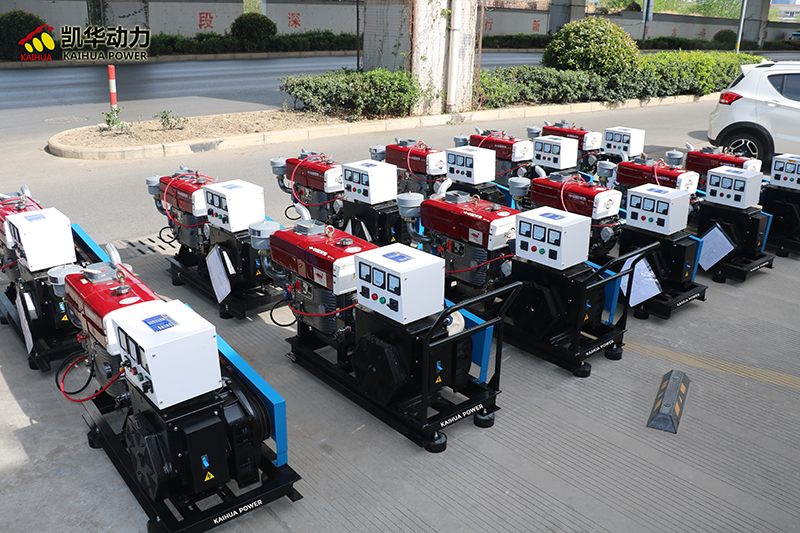
There’s a quiet revolution happening in the way we use everyday machines. Compact units have stepped out of the shadow of their full-sized counterparts, proving that smaller can often mean smarter. They don’t just save space—they reshape how we interact with tools, appliances, and technology in spaces where every inch counts.
In daily life, their footprint makes them indispensable. Think beyond the cliché of a tiny apartment washer-dryer combo. Consider the slim profile of an under-desk treadmill that turns a cramped home office into a movement-friendly zone, or a compact induction cooktop that converts a kitchen corner into a functional cooking station. These aren’t compromises; they’re clever adaptations that blend into tight urban living without demanding major renovations.
Then there are the niche roles where compactness isn’t just a perk—it’s non-negotiable. Field researchers pack portable spectrometers into backpacks, mobile veterinarians carry handheld ultrasound devices to farm calls, and off-grid enthusiasts rely on pocket-sized solar chargers. Away from mains power and wide-open spaces, it’s the compact, self-contained gear that becomes the backbone of reliable, flexible operation, quietly enabling work and play far from the beaten path.
Picking the Perfect Model: Features That Make a Difference
When evaluating options, it's easy to get lost in a sea of specifications that sound impressive but rarely translate into real-world benefits. You want to look beyond just the headline numbers and focus on what actually improves your daily experience. Small design choices, like a quiet keyboard that doesn't disrupt your flow or a display that remains crisp under weird lighting, often matter more than a marginal bump in processing power. The right device should feel like an extension of your habits, not a constant annoyance.
Durability doesn't always show up in a spec sheet, but it's one of the most underrated features when choosing between models. A slightly heavier build can mean better hinges that won't loosen over several months, or a finish that doesn't pick up every fingerprint the moment you open the lid. Battery life is another area where the advertised runtime rarely matches what you'll actually get—pay attention to how the device handles moderate multitasking, not just looped video playback in a lab.
Software integration and ongoing support are the quiet differentiators that separate a tool from a temporary gadget. A clean interface without pre-installed clutter saves hours of tweaking, and consistent updates that don't break compatibility ensure your device stays reliable long after the initial unboxing. These factors rarely make it into flashy comparisons, yet they're what you'll appreciate most when you're deep into a project and everything just works without a hitch.
Maximizing Lifespan: Simple Service Habits That Pay Off
Over the years, I've noticed that the longevity of any piece of equipment often comes down to the small, almost mundane tasks that are easy to skip when life gets busy. It's not about costly upgrades or obsessive maintenance schedules; it's the quiet consistency of cleaning filters, tightening loose screws, and wiping down surfaces after use. These habits require barely any time, yet they prevent the gradual buildup of wear that leads to major breakdowns.
One habit that has repeatedly proven its worth is simply paying attention to how things sound and feel during operation. A slight vibration that wasn't there before, a faint squeak, or a change in performance can be early warnings. Instead of ignoring these signs, I've learned to address them immediately—often with nothing more than a dab of lubricant or a minor adjustment. It's astonishing how such trivial interventions can add years to a machine's life, saving thousands in replacement costs.
Beyond the mechanical side, there's a mindset of respect that seems to extend lifespan. Using tools and appliances within their intended limits, storing them properly, and giving them a quick inspection before and after use aren't radical ideas. Yet they're often forgotten in the rush of daily life. Making these practices automatic—like brushing your teeth—doesn't just preserve your possessions; it cultivates a habit of care that translates into fewer emergencies and a healthier bank balance over time.
Quiet, Clean, and Efficient: The Tech Behind Modern Sets
Modern sets have quietly shed the noisy, wasteful reputation of their predecessors. Today’s productions lean on solid-state lighting rigs that sip power while running almost silently, banishing the hum of old hot lights. LED walls and virtual production tools eliminate the need for physical set changes, drastically cutting material waste. The shift isn’t just about saving money—it’s about creating a focused, sustainable workflow where the technology itself disappears into the background, letting the story take center stage without the drag of constant interruptions.
Efficiency now means more than speed; it’s built into the very fabric of set design. Modular staging systems click together like industrial Lego, allowing crews to reconfigure spaces in minutes rather than hours. Cable-free rigging and wireless DMX controls reduce trip hazards and setup time, while intelligent power distribution systems monitor and optimize energy use in real time. These advances don’t just streamline the shoot—they fundamentally change how crew members interact with their tools, freeing them to focus on creative problem-solving instead of wrestling with outdated infrastructure.
Perhaps the biggest leap forward is the move toward a “clean” footprint, both visually and environmentally. Hybrid power solutions, from silent battery generators to solar-assisted trailers, have replaced the constant drone of diesel engines on location. On soundstages, air filtration systems built into set walls trap dust and chemical off-gassing—a detail that matters deeply for cast and crew health during long days. The result feels less like a temporary factory and more like a precision instrument, tuned to deliver flawless takes with minimal friction.
Adapting to Change: How Low-Power Units Are Evolving
In an era where efficiency is no longer a luxury but a necessity, low-power units are undergoing a quiet revolution. Gone are the days when reducing power meant sacrificing performance. Today's designs are sleeker, smarter, and more adaptive, borrowing techniques from nature and advanced materials science. Engineers are now focusing on dynamic voltage scaling and heterogeneous computing, where multiple specialized cores work in harmony, waking only when needed. This shift isn't just about squeezing more battery life out of devices—it's about rethinking how energy flows through every transistor and trace, creating systems that almost breathe with the rhythm of their workload.
The evolution extends beyond hardware into the very fabric of how these units are controlled. Firmware and software layers now play an active role, predicting usage patterns and preemptively adjusting power states. Machine learning algorithms, once too power-hungry themselves, are being trimmed down to run directly on microcontrollers, enabling real-time optimization without a cloud connection. This self-awareness means a sensor node in a remote field can hibernate for months, wake to collect data, and adjust its transmission power based on ambient conditions—all while sipping nanoamps. Such granular intelligence was unimaginable a decade ago, when low-power meant simply clocking down and hoping for the best.
Perhaps most striking is how these advancements are reshaping industries. In medical wearables, ultra-low-power units now enable continuous monitoring without frequent charging, blending seamlessly into a patient's life. In agriculture, tiny soil sensors report moisture levels for years on a single coin cell, transforming resource management. Even in data centers, low-power architectures are reducing cooling demands and carbon footprints. The evolution is clear: low-power technology is no longer just about doing less; it's about doing more with almost nothing, and in the process, it's enabling a more sustainable and connected world.
FAQ
A low-power generator set typically delivers up to 10 kW of output, designed for portable or backup use in homes, small businesses, and outdoor activities. Unlike bulky industrial units, these are compact, often quieter, and built for occasional or light continuous duty rather than round-the-clock heavy loads.
Low-power generators are ideal when you need longer runtime without relying on grid recharging, such as during extended power outages, off-grid camping, or powering tools at a remote worksite. They provide instant, sustained AC power that battery systems can't match without massive storage capacity.
Start by calculating your essential wattage needs—lights, fridge, sump pump, possibly a furnace blower. Then weigh fuel type (gasoline, propane, or dual-fuel), runtime per tank, inverter technology for clean power, and noise level if you have close neighbors. Physical portability and maintenance simplicity also matter a lot.
Yes, if they feature inverter technology. Inverter generators produce stable, clean sine wave output with low total harmonic distortion, making them safe for microprocessors and sensitive equipment. Older conventional designs may cause voltage spikes, so always check the THD rating before plugging in delicate gear.
Run it every few months with a load, use fuel stabilizer if storing gasoline, and change oil after the first 20 hours then according to the manual. Keep the air filter clean, check spark plug condition, and never let old fuel sit in the carburetor. A battery tender for electric-start models prevents dead-battery surprises.
Standard portable generators often range from 65 to 75 decibels at rated load, which is like a vacuum cleaner or city traffic. However, modern inverter models can be as low as 50–60 dB, comparable to normal conversation. Enclosed, sound-dampened designs and eco-mode throttle also cut noise, making them camp-friendly.
Absolutely. Many models come as dual-fuel or can be converted. Propane burns cleaner, stores indefinitely, and avoids carburetor gumming, but you'll typically see a small drop in maximum output—around 5–10% less wattage compared to gasoline—because propane has slightly lower energy density per unit volume.
Conclusion
Low-power generator sets have quietly stepped out from the shadow of emergency backup duty and into a wide range of roles that demand reliable, portable electricity. Far from being a last resort during blackouts, these compact units now power weekend camping trips, keep food trucks running through busy lunch rushes, and support tools on remote job sites without missing a beat. Their real strength lies in how seamlessly they fit into everyday life—small enough to stash in a van, yet capable enough to run sensitive electronics thanks to modern inverter technology. The latest models sip fuel while barely whispering, making them welcome neighbors even in noise-conscious settings. You can hold a normal conversation next to one, and the exhaust won’t choke the air, which speaks volumes about how far engineering has pushed the category forward.
Picking the right model comes down to looking past raw wattage numbers and focusing on what actually matters for your use case: clean sine wave output, parallel capability, electric start, or maybe a dual-fuel option that gives you flexibility on the go. What sets a great unit apart isn't just its spec sheet, though—it’s how easy it is to live with over the long haul. Simple habits like checking the oil, swapping the air filter, and draining the carburetor after storage can double the lifespan of a machine that would otherwise corrode into an expensive paperweight. At the same time, the industry is quietly reinventing itself. Lithium-ion battery banks now blend with generators in hybrid setups, solar integration is becoming more common, and even hydrogen fuel cells are being tested in the smallest frames. These aren't gimmicks; they're indicators that low-power generation is moving toward solutions that are not only dependable but also genuinely cleaner and more intelligent, ready for whatever the next decade demands.
Contact Us
Contact Person: Ms. Lu
Email: [email protected]
Tel/WhatsApp: 8618917899306
Website: https://www.hichaipower.com