
Laser Safety House Export: A Comprehensive Guide to Global Standards
2026-06-02
Exporting laser safety houses involves more than just shipping a metal enclosure—it demands strict compliance with global standards that vary drastically across borders. Whether you're targeting the FDA’s CDRH requirements in the U.S., the European Machinery Directive, or ISO 11553, one overlooked detail can stall your entire shipment. In this guide, we demystify the regulatory maze and show how LASERPAIR helps manufacturers navigate certifications, design, and documentation with confidence.
Navigating the Maze: Global Laser Safety Regulations for Export-Ready Housings
Designing laser housings for international markets isn’t just about sturdy construction—it’s a deep dive into a patchwork of regional safety mandates that can trap even experienced manufacturers. Each country layers its own requirements on top of broad standards like IEC 60825, adding local twists that affect everything from interlock mechanisms to warning label placement. A housing that sails through compliance in Tokyo might stall at customs in Berlin because of subtle documentation gaps, turning a straightforward export into a logistical puzzle.
The real frustration often strikes during testing phases. You might have a housing that meets Europe’s EN 60825 series with flying colors, only to discover that the U.S. CDRH demands a different classification approach for the same laser class. This isn’t just paperwork—it can force physical redesigns, like shifting aperture guards or re-engineering beam stops to satisfy divergent interpretations of accessible emission limits. Smaller markets often piggyback on these major standards but inject local certification steps that catch first-time exporters off guard.
Staying ahead means building compliance into the blueprint, not treating it as an afterthought. Successful exporters often map out a matrix of target countries early, drilling into niche requirements such as Brazil’s INMETRO certifications or South Korea’s KCs before a single prototype is milled. Partnering with test labs familiar with multi-region approvals can flatten the learning curve, transforming what looks like a regulatory maze into a repeatable pathway—and keeping those export-ready housings truly ready for anywhere.
Beyond the Beam: Why Enclosure Integrity Defines Market Access
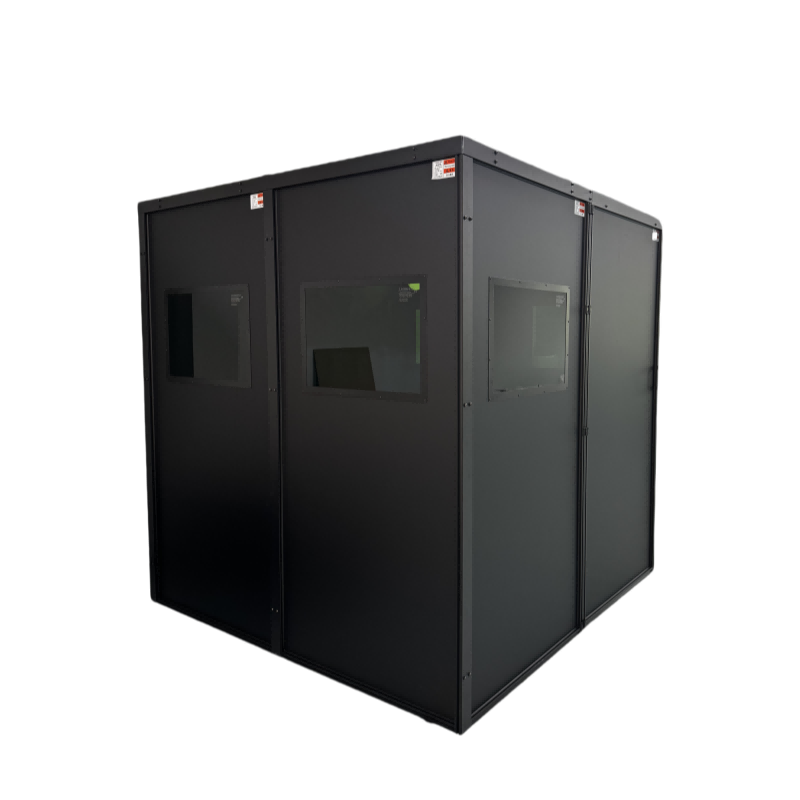
Market access for laser-based products hinges on more than just beam performance—enclosure integrity is often the deciding factor between approval and rejection. Regulators and safety standards like IEC 60825 do not simply assess laser output; they scrutinize the entire system design to prevent unintended radiation escape. A fully interlocked, light-tight housing demonstrates that safety is engineered into the product from the ground up, not treated as an afterthought. When enclosures fail to meet ingress protection or mechanical robustness criteria, even the most precise laser becomes a compliance liability, blocking entry into global markets.
The practical risks of poor enclosure design go beyond legal hurdles. In medical, industrial, or research settings, compromised seals or ill-fitting access panels can expose operators to stray reflections or direct beam access, undercutting the trust that buyers place in the brand. Certifying bodies increasingly view enclosure integrity as a proxy for overall product quality—if the manufacturer overlooked housing, what else might be insufficiently tested? This shift in mindset means that enclosure verification is no longer a box-ticking exercise but a foundational requirement for market differentiation.
Designing for enclosure integrity demands a blend of mechanical precision and regulatory foresight. Engineers must balance thermal management, user accessibility, and optical alignment with the mandate to contain radiation fully. Materials chosen for the housing must withstand environmental stressors without warping or degrading, while interlock mechanisms must fail safely under all plausible misuse scenarios. Companies that invest early in robust enclosure architecture not only streamline certification but also create a durable competitive edge—their products ship on time, incur fewer post-market modifications, and earn the label of being truly market-ready from the first prototype.
Standards Decoded: From IEC 60825 to FDA CDRH Requirements
Navigating laser product safety standards can feel like a journey through two parallel universes. Internationally, IEC 60825-1 provides a risk-based framework that classifies lasers from Class 1 (safe under normal use) to Class 4 (hazardous even for diffuse reflections). It demands rigorous labeling, interlocks, and user information—a language spoken by manufacturers shipping globally. But once a product crosses into the United States, it must satisfy the FDA’s CDRH (Center for Devices and Radiological Health) requirements under 21 CFR 1040.10 and 1040.11. While harmonized with IEC in spirit, the CDRH rules layer on additional reporting, variances, and testing nuances that often surprise newcomers.
The real art is in managing the gaps. An IEC 60825 compliance report alone won’t automatically open the U.S. market. CDRH expects manufacturers to file an initial product report, maintain records for five years, and sometimes even apply for a variance if performance deviates from the federal standard. Subtle differences in accessible emission limits, protective housing rules, and user instructions can turn a smooth IEC go-to-market into a tactical FDA puzzle. For example, some products classified as Class 1M under IEC might need extra CDRH scrutiny because the U.S. framework treats magnifying optics with a slightly keener eye.
The payoff comes in building a single test campaign that moves gracefully between both sets of requirements. By starting with IEC 60825 and then mapping the results to FDA’s expectations—using product classification guides, checklists, and direct communication with CDRH’s laser division—a team can avoid duplication and reduce time-to-market. The trick is to treat the standards not as separate hurdles but as two lenses on the same fundamental physics. When done right, the dual compliance becomes a quiet backbone of safe, competitive product design rather than a last-minute scramble.
Design for Compliance: Integrating Safety Features Without Compromising Function
Balancing safety and usability requires a deep understanding of both regulatory standards and user needs. Designers often face the challenge of incorporating safety mechanisms that can clash with a product's core functionality. For example, adding physical guards on machinery might slow down operation, while overcomplicated software safety checks can frustrate users. The key is to view safety not as an added layer, but as an integral part of the design from the start. This approach, known as "design for compliance," ensures that protective measures enhance rather than hinder the user experience.
One effective strategy is to use transparent safety features that operate in the background without requiring constant user intervention. For instance, automated shutdown protocols or intuitive error-recovery systems can prevent accidents without disrupting workflow. Another is to design safety elements that double as functional components—like ergonomic handles that also serve as pressure sensors, or warning lights that blend into the product's aesthetic. By embedding safety into the very fabric of the design, engineers can meet rigorous compliance standards without sacrificing performance or usability.
Ultimately, successful integration of safety features depends on early collaboration between compliance experts and design teams. By involving regulatory considerations during the conceptual phase, designers can anticipate potential conflicts and innovate solutions that address both safety and function. Iterative testing with real users further refines the balance, ensuring that the final product not only meets legal requirements but also delivers a seamless and intuitive experience. This proactive mindset transforms compliance from a constraint into a driver of better design.
The Hidden Pitfalls: Common Certification Hurdles and How to Avoid Them
Certification audits often trip up companies that underestimate the depth of documentation required. It's not enough to have procedures in place—auditors need clear, traceable records showing consistent implementation. A common mistake is treating documentation as a paperwork exercise rather than a reflection of real practices. When records are incomplete, inconsistent, or overly generic, red flags go up. To sidestep this, build documentation habits into daily operations, and periodically review records to ensure they align with actual workflows. Fresh eyes from internal cross-checks can catch gaps before an auditor does.
Another frequent stumbling block is misreading the standard's intent. Many organizations cling to literal interpretations, missing the underlying principles like risk-based thinking or continual improvement. For instance, simply ticking boxes on a compliance checklist without addressing why a requirement exists can lead to superficial systems that collapse under scrutiny. Avoid this by involving team members in training that goes beyond the text, encouraging discussions about how each clause applies to your specific context. When people grasp the "why," they're more likely to implement solutions that actually work—and that auditors respect.
Scope creep and overcommitment are subtle but serious traps. In an effort to impress, companies sometimes expand their certification scope too quickly or promise unrealistic timelines, stretching resources thin. This leads to half-baked processes and stressed staff. A smarter approach is to start with a manageable scope that covers core operations, master it, then expand gradually. During the certification journey, focus on genuine capability rather than speed. Realistic planning reduces the risk of nonconformities and builds a culture that sustains compliance long after the certificate is on the wall.
Future-Proofing Your Exports: Emerging Trends in Laser Safety Standards
One of the most significant shifts in laser safety standards is the move toward performance-based requirements, which focus on actual hazards rather than rigid classification schemes. Regulators in key markets are refining limits for accessible radiation and introducing condition-specific test protocols, meaning gear that passed yesterday's checks may fall short tomorrow. Keeping pace demands more than just tracking amendments—it requires embedding flexibility into your design and compliance workflows so you can adapt without scrambling.
The rise of autonomous and collaborative systems is another driver worth watching. With lasers increasingly integrated into robotics, LiDAR arrays, and industrial IoT equipment, standard bodies are grappling with complex failure modes like unintended beam paths and sensor blinding. Forward-thinking exporters aren't just meeting current IEC 60825 or CDRH requirements; they're mapping out scenarios where software glitches or multi-device interactions could create unforeseen risks—and addressing them before regulators do.
A less obvious but equally crucial trend is the convergence of laser safety with sustainability and circular-economy rules. Disposal, repair, and lifetime extension of laser products now tie directly into product safety obligations in regions like the EU. Companies that treat compliance as a static checklist often stumble here—the real edge comes from integrating material transparency, modular design for safe servicing, and end-of-life disassembly protocols into the core of your export strategy.
FAQ
A laser safety housing is a physical barrier that fully encloses a laser system, preventing access to radiation above accessible emission limits. Under international trade rules, it must meet the classification and labeling requirements of standards like IEC 60825-1, and any additional national deviations. If it can be opened without tools and still allow exposure, it may fail compliance tests.
Seemingly minor things like a missing interlock switch, a slightly misaligned warning label, or a ventilation hole that leaks laser light can trigger a non-conformity. Customs authorities and testing labs in importing countries check against exact specifications, and even one overlooked clause in a standard like ANSI Z136.1 or EN 60825 can halt the entire shipment.
IEC 60825-1 is the international bedrock, but the US CDRH enforces its own Federal Laser Product Performance Standard under 21 CFR 1040.10. In practice, CDRH often requires additional engineering controls, specific beam attenuation certifications, and a unique accession number for the product report. Relying only on an IEC test report without CDRH validation is a common and costly mistake for exporters targeting the American market.
Panels meant for maintenance are a major inspection focus. If they can be removed without a tool and expose radiation above Class 1 limits, the housing fails. Standards mandate that any access point that defeats protective housing must be interlocked or require a tool to open, with a clear warning that laser radiation is accessible. Exporters often underestimate how strictly this is enforced.
A well-structured CB Scheme report under IECEE can be a game-changer. It allows a single test to be recognized by multiple national certification bodies across more than 50 countries. However, national differences must still be addressed, so pairing a CB report with a gap analysis for the target market is far more efficient than starting from scratch each time.
A laser product is a complete unit intended for end use, while a component is a subassembly meant to be integrated into a final product. Components may have different safety responsibility chains and labeling requirements. Misclassifying a housing as part of a component when it’s actually sold as a standalone product can lead to incorrect certification and customs problems.
Beyond the obvious rework and reshipment fees, there are often demurrage charges at ports, product recall insurance premiums, and the less visible cost of lost trust with distributors. Some markets may even blacklist the importer, making future regulatory submissions harder. Legal fees from a safety incident can dwarf the cost of getting the design right initially.
The new Machinery Regulation, which replaces the old Machinery Directive, places stricter obligations on digital documentation, conformity assessment for 'high-risk' machinery, and potentially categorizes some laser systems under Annex I. Laser housings used in industrial environments may now require a notified body inspection where previously self-declaration was enough, raising the bar for CE marking compliance.
Conclusion
Exporting laser equipment means grappling with a thicket of international safety regulations, where a single oversight in housing design can block entire markets. The enclosure isn't just a physical barrier; it's a compliance passport. Regimes like IEC 60825 and the FDA's CDRH rules set exacting standards for beam containment, interlocks, and labeling, with variations that trip up even seasoned manufacturers. The real art lies in embedding protective features without throttling usability or escalating costs—an equilibrium many fail to strike, landing them in certification limbo.
Looking ahead, smart manufacturers are scanning the horizon for regulatory shifts: tighter emission limits, harmonization pushes between Asia and Europe, and cybersecurity demands for connected laser systems. Early collaboration with notified bodies, rigorous pre-testing on enclosure integrity, and a willingness to iterate designs before locking in tooling are what separate smooth market entries from costly rework. Those who treat safety certification as an evolving journey rather than a one-time hurdle will find their exports shielded against sudden rule changes and competitive pressure.
Contact Us
Contact Person: Jenny
Email: [email protected]
Tel/WhatsApp: +86 13537713281
Website: https://www.laserpair-safety.com/