

Knife Valve Manufacturer Insights for Choosing a Reliable Industrial Partner
2026-09-04
Knife valves look simple on a drawing, but the wrong manufacturer choice can quietly eat into your maintenance budget and uptime. This article breaks down the selection criteria that matter most—seat design, packing integrity, and after-sales support—so you can evaluate suppliers with confidence. We’ve drawn on DRIFCO’s hands-on experience to help you see past polished brochures and find a partner that actually keeps operations running.
What Separates a Dependable Knife Valve Builder from the Rest
A dependable knife valve builder doesn't just machine parts to a drawing—they sweat the details that never show up on a spec sheet. The seat design, for example, is often where cheap valves fail first. A builder worth trusting will use a replaceable, reinforced elastomer seat that can handle slurries and solids without tearing under gate movement. They'll also chamfer the gate edge so it clears debris instead of dragging it into the sealing area. These are small things on paper, but they mean the difference between a valve that cycles for years and one that leaks after three weeks in a paper mill.
Another tell is how they handle body construction and alignment. You can spot a solid builder by looking at the casting quality and the way the two body halves mate. No sand inclusions, no warped flanges, and a gate slot that's perfectly parallel—none of that happens by accident. It requires proper fixturing, post-machining inspection, and a willingness to scrap a body casting that's just borderline. Fly-by-night shops ship borderline castings every day. A dependable builder rejects them, even if it costs a few points of margin.
Finally, look at what happens after the valve leaves the dock. A good builder stands behind the product with real application support, not just a warranty card. They'll ask what you're actually flowing—wood pulp, mine tailings, chemical sludge—and recommend the right gate material, seat compound, and packing arrangement. If they sell you the same "general purpose" valve for every job, they're a parts pusher, not a builder. The dependable ones know their product's limits and say so before you learn the hard way.
Material Choices That Directly Impact Valve Lifespan in Harsh Media
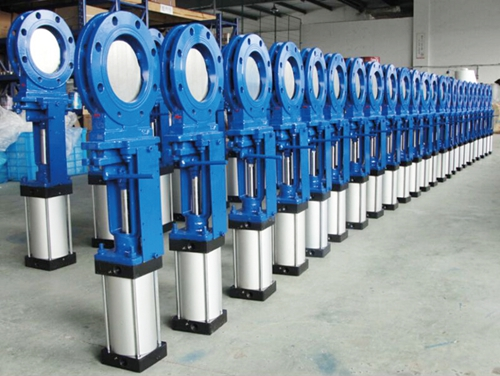
In corrosive or erosive service, the material of the valve body, trim, and seating surfaces often dictates how long the unit will survive—far more than the basic design. For instance, standard 316 stainless steel can pit within months in warm seawater or acidic chloride streams, while switching to duplex stainless or Hastelloy C-276 can extend life several times over. But resistance to uniform corrosion is only part of the story; localized attack like crevice corrosion under gaskets or stress corrosion cracking around welds can still cause sudden failures if the alloy isn't matched to the specific chemistry and temperature.
When solids are present alongside aggressive chemicals, metals alone rarely hold up. Ceramic trim or tungsten carbide coatings offer excellent abrasion resistance, but they come with brittleness and sensitivity to thermal shock. A different route is to use a PFA or PTFE lined valve, letting the polymer isolate the metal body from the fluid entirely—though maximum pressure and temperature drop sharply compared to all-metal designs. The right choice depends on whether erosion, chemical attack, or mechanical stress dominates the failure mode, and that often requires pilot testing with actual process fluid.
Temperature is the silent multiplier in these decisions. At high heat, alloy strength falls, corrosion rates climb exponentially, and elastomeric or polymeric seals may soften or degrade. A material that looks fine on a room-temperature corrosion chart can fail quickly at 200°C. Experienced engineers usually look beyond datasheets—checking field failure records, running coupon tests at operating temperature, and considering fabrication issues like weldability or post-weld heat treatment. Sometimes a slightly less corrosion-resistant but more fabrication-friendly alloy delivers a longer real-world service life simply because it avoids hidden defects during manufacturing or repair.
How Custom Modifications Reduce Downtime in Existing Lines
Most existing lines suffer downtime from a handful of repeat offenders: tool changeovers that take too long, a single aging station that jams under peak load, or manual checks that halt flow for inspection. Custom modifications target these specific points instead of forcing a full redesign. By reworking a fixture, adding a sensor, or resizing a buffer zone, the line keeps its original rhythm while the weak link is brought up to speed. This kind of surgical fix rarely requires a long shutdown to install, and often can be tested during off-peak hours before going live.
Take a packaging line as an example. The filler runs fine, but the capping station backs up because the cap chute was designed for a slightly different bottle neck. A custom adapter plate and a small vibratory bowl adjustment can eliminate that jam without touching the filler or conveyor controls. Similarly, retrofitting a motor with a temperature probe wired into the existing PLC lets operators see a bearing heating up two shifts before it seizes. These are not broad upgrades; they are focused responses to the actual failure data collected on the floor.
The result is downtime that behaves differently. Instead of surprise stoppages that spiral into overtime and missed shipments, maintenance gets a list of short, planned interventions. Operators notice that the line starts cleaner after a changeover and runs longer between interruptions. Because the modifications are local, training stays minimal and spare parts inventory does not balloon. Compared to buying a new line or doing a massive retrofit, custom tweaks often pay for themselves within a few months of avoided downtime alone.
Testing Regimes That Reveal True Pressure and Sealing Performance
Pressure testing is more than a pass-fail ritual; it is a forensic probe into how a seal behaves under stress. A well-designed regime cycles through low, medium, and high pressures, holding each stage long enough to expose slow leaks that a quick spike would miss. This staged approach uncovers creep, extrusion, and fatigue that only reveal themselves when a seal is forced to hold its shape under sustained load. By mapping pressure against time and temperature, engineers gain a true picture of sealing integrity rather than a snapshot that flatters to deceive.
The most revealing protocols incorporate dynamic pressure changes, not just static holds. Rapid decompression, pressure reversals, and thermal shock while pressurized simulate real-world abuse—the kind that causes O-rings to nibble, lip seals to fold, and gaskets to take a set. Such tests separate seals that merely survive a lab curve from those that endure field conditions. Without these harsher regimes, a seal can pass every standard test yet fail on the first day of service, especially when contaminants or vibration interact with pressure fluctuations.
Data collection must match the test's ambition. Instead of logging only the endpoint, a rigorous regime records pressure decay curves, acoustic emissions, and dimensional recovery after unloading. This reveals not just whether a seal leaked, but how it leaked—gradual permeation versus sudden blowout—and whether it springs back or stays deformed. Only by demanding this level of detail can a testing regime expose the true limits of pressure and sealing performance, turning a simple hydraulic check into a true qualification of reliability.
Reading Between the Lines of Manufacturer Lead Times and Inventory
Manufacturer lead times rarely mean what they say at face value. A quoted six-week window can hide a supplier's best-case scenario, not a promise. When procurement teams treat those numbers as fixed, they miss the real story: lead time quotations often reflect what a factory hopes to achieve if everything—material arrivals, labor availability, machine uptime—goes right. The gap between quoted and actual delivery is where cash gets tied up in safety stock or lost sales from empty shelves.
Inventory levels tell a parallel tale. A sudden buildup of finished goods at a manufacturer isn't always a sign of healthy supply. It can signal softening demand, cancelled orders being absorbed, or a deliberate shift to build ahead of a price increase. Watching how inventory moves relative to quoted lead times helps separate genuine capacity constraints from strategic posturing. When lead times stretch but inventory stays lean, real bottlenecks exist. When both rise together, demand may be cooling faster than production can adjust.
The useful signal lives in the mismatch. A supplier that quotes shorter lead times while holding high raw material inventory is often clearing space or chasing revenue, not improving throughput. Conversely, a supplier that quietly extends lead times while finished goods remain flat is likely rationing capacity among preferred customers. Reading these patterns requires tracking not just the numbers themselves, but the direction and speed of change over several quarters.
After-Sales Support Signals You Should Not Ignore
Most buyers focus on the product itself, but what happens after the sale often reveals far more about a company than any marketing page ever could. A support team that responds with vague apologies instead of concrete steps is already telling you how much they value your time. Watch for small, telling behaviors: do they ask for your order number three separate times, or do they have your history pulled up before the chat even starts? The difference isn't just about efficiency—it's about whether they see you as a transaction or a relationship.
Another signal hides in the fine print of their return and warranty policies. If a brand makes you jump through hoops to register a product, find a receipt, or contact a human being, that friction is rarely accidental. It's designed to discourage follow-through. On the other hand, companies that proactively reach out after delivery—checking if setup went smoothly or if the item arrived undamaged—tend to be the ones that won't vanish when something breaks six months later. Silence in those first few days is often louder than any promise in the brochure.
Finally, pay attention to how problems get resolved when you're not the one making the complaint. Browse community forums or third-party review sites and look for patterns: do support agents blame the customer's internet connection, suggest factory resets as a one-size-fits-all fix, or actually acknowledge known issues? A brand that hides behind scripted troubleshooting instead of owning a defect will do the same to you. The best after-sales service doesn't just answer questions—it leaves you confident that someone is still accountable after the money changes hands.
FAQ
A dependable manufacturer combines material expertise with field-proven designs. They understand that a knife valve must handle thick slurries, dry powders, and abrasive media without jamming. Look for features like a reinforced gate, replaceable seats, and a body design with no dead zones where solids can collect. Beyond the product, they should offer clear documentation, pressure-test certificates, and direct access to engineers when unusual process conditions come up.
The gate material and edge treatment are critical. Hardened stainless steel or coated gates resist scoring, while a bevelled or sharpened edge cuts through accumulated solids instead of compressing them. The seat should be replaceable, ideally with a resilient material that can absorb particle impact. Also check the chest area—if it's not purged or sealed properly, media will pack inside and eventually prevent closure.
It's often the deciding factor. Many knife valves are installed in tight piping layouts, so a manufacturer that adheres to MSS SP-81 or ISO 5752 face-to-face dimensions lets you swap valves without modifying pipework. If the dimensions drift, installation costs rise quickly. Ask the manufacturer for dimensional drawings before ordering, and verify they have actual in-house machining rather than outsourcing critical components.
Ask whether they offer bidirectional sealing as standard or only as an option. Many processes reverse flow during cleaning cycles, and a unidirectional valve becomes a leak path. Also ask about the seat replacement procedure—can it be done inline or does the valve need to be removed? The best designs use a simple seat retention system that doesn't require special tools. Finally, request footage or reports from a real pressure test, not just a catalogue graph.
A manufacturer that only offers manual handwheels may not understand automated processes. Look for support for pneumatic, electric, and hydraulic actuation, with correct torque or thrust calculations for the service. The actuator mounting should be robust, with a direct stem connection rather than a flimsy bracket. Better suppliers ask about your air supply pressure, cycle frequency, and fail-safe requirements before recommending anything.
Request documented evidence of hydrostatic or pneumatic shell tests and seat leakage tests done on the actual valve size you plan to buy. Check whether they trace raw material heats and provide material certificates for gate, body, and seat. A supplier that welcomes a third-party inspection or a factory audit usually has nothing to hide. Also ask how they handle nonconforming parts—if they can't explain their quarantine and rework process, that's a warning sign.
One mistake is choosing the lowest initial cost and ignoring the total cost of ownership. A cheap valve with a non-replaceable seat becomes scrap after the first seat failure. Another is specifying the valve size based on pipe diameter only, without checking line velocity and solids content—this can lead to premature wear or bridging. Finally, not involving the valve manufacturer early enough means they can't suggest the right chest purge, gate material, or port configuration for your actual media.
After-sales support directly affects uptime. You want a manufacturer that keeps common wear parts—seats, packing, gate guides—in stock, not one that fabricates them only after an order is placed. Ask about their response time for technical queries and whether they offer on-site troubleshooting. A manufacturer that can provide retrofit kits for existing valves, even from other brands, shows a service-oriented mindset that goes beyond moving boxes.
Conclusion
A supplier's real value often shows up before an order gets placed. Instead of asking for standard datasheets, look at how a knife valve manufacturer handles material selection when the line carries abrasive slurry or corrosive media. The alloys, coatings, and seat compounds they recommend should reflect the actual pH, temperature, and solids loading, not a generic stainless steel guess. Custom changes such as extended bonnets, purge ports, or beveled gates can look minor on a drawing but often prevent the kind of line stoppages that eat into production schedules. Equally revealing is how a builder proves performance. Hydrostatic and pneumatic seat tests at full differential pressure, plus cycle testing under grit-laden fluid, tell you more about sealing reliability than any catalog cutaway.
Lead times deserve more scrutiny than most buyers give them. A credible manufacturer quotes realistic windows based on current casting and machining loads, and they can usually say which sizes or pressure classes are kept in semi-finished inventory for faster assembly. A short promise that later stretches is worse than an honest longer one. After the sale, notice whether the supplier provides installation drawings, torque values, and replacement packing kits without a long back-and-forth. Some offer field service or remote video support during commissioning; others disappear. Those habits, along with how they handle seat and stem warranty claims, separate a dependable industrial partner from a vendor that only moves boxes. Choosing a knife valve manufacturer is less about brand prestige and more about reading the operational signals hidden in engineering and support behavior.
Contact Us
Contact Person: George
Email: [email protected]
Tel/WhatsApp: 13863633883
Website: https://www.es-fire.com