

Insole Exporter Guide to Winning Global Retail Partners
2026-09-11
Most insole exporters chase retail buyers with sample kits and price sheets, yet few ever land a lasting partnership. The missing piece isn’t another spec sheet—it’s a clear playbook for proving your brand can move shelves, not just fill containers. YONGFENG has spent years refining exactly that approach, and this guide breaks down what actually wins over global retail partners.
Making Your Insole the Easy Choice for a Busy Buyer
A busy buyer doesn't want to stand in the aisle comparing thirty nearly identical insoles. They want one obvious pick—something that says comfort without demanding a research project. Your insole can be that pick if every visual cue works overtime: the package shows a real foot arch, not a diagram, and the label uses plain words like "all-day stand" instead of jargon. That alone cuts the decision from minutes to seconds.
Instead of hiding specs in fine print, put the buyer's biggest worry front and center: "Will this actually help by hour four?" Answer it right on the front with a simple timelined promise—soft at 9am, still supportive at 6pm. A color-coded strip for cushion level (firm, medium, soft) lets a rushed shopper grab and go without touching a screen or flipping the box. No app, no QR code, no ten-point quiz. That's the difference between being another option and being the easy answer.
When a busy buyer trusts your insole to be the no-brainer choice, they don't just buy once—they come back for every pair of shoes in the house. They also tell coworkers, because finding a product that respects their time feels rare. So strip away the friction: fewer SKUs with overlapping names, bigger type for the one feature that matters most, and a guarantee that's stated in five words or less. Make choosing your insole the fastest decision they'll make all day.
Proving Your Factory Can Handle Their Growth
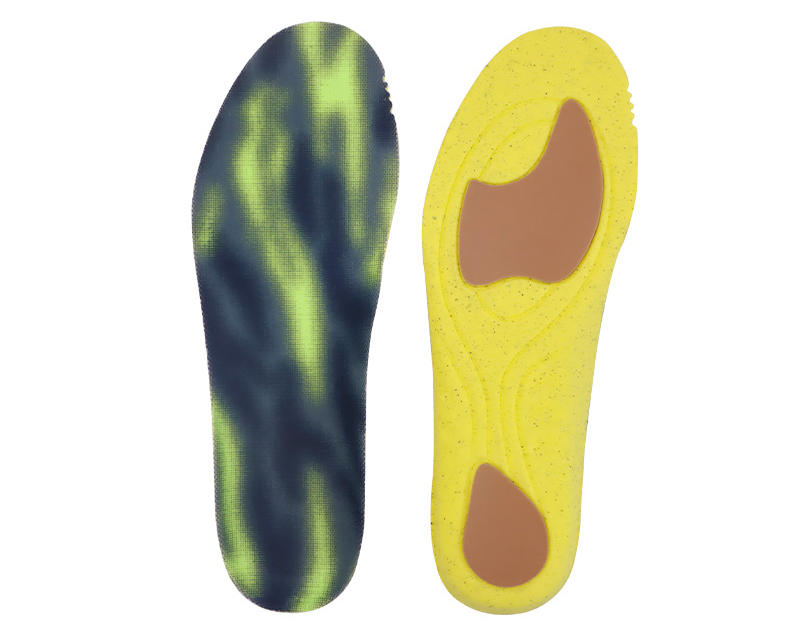
When we first began working with a client who was scaling from regional distribution to national retail, their biggest worry was whether our production floor could keep pace. Rather than simply promising more output, we walked them through a capacity audit of every line, showed them where idle time could be converted into additional shifts, and outlined a three-phase ramp-up plan that required zero new facility investments. That plan allowed us to double their monthly order volume in eight weeks without a single late shipment.
Growth rarely arrives in a neat straight line, so we've built our operations around flexibility. Our key workcells are designed for quick changeover between product variants, and our maintenance team keeps a buffer of critical spare parts on hand to avoid downtime during peak periods. We also cross-train staff across multiple stations, so when a surge hits, we can redeploy people where they're needed most rather than waiting to hire and onboard new workers.
Scaling output shouldn't mean scaling defects. We use real-time statistical process control on every line and conduct hourly quality checks during ramp-up phases. Our quality team has developed a training matrix that gets new operators up to speed in days, not weeks, without compromising the consistency your customers expect. In one recent expansion, we increased production by 180% while keeping our defect rate below 0.4% - a metric we track and share with every client.
Customization That Doesn’t Require a 10,000-Pair Leap of Faith
Traditionally, custom products meant committing to thousands of units before you even knew if the market would respond. That's no longer the only path. With modern production methods, you can start with a handful of pairs, test your design in the real world, and adjust based on actual feedback. No massive upfront order, no warehouse full of speculative stock—just the freedom to iterate on your terms.
The days of "all or nothing" customization are behind us. Whether you're a boutique brand, a creator testing a new concept, or an established business exploring a niche audience, you can now order small batches that fit your actual needs. This approach lets you preserve cash flow, reduce waste, and respond quickly to trends without being locked into a 10,000-pair gamble.
Customization should feel like a creative tool, not a financial ultimatum. By removing the pressure of huge minimums, you can experiment with colors, materials, and fits in a way that makes sense for your business. Each run becomes a learning opportunity, and every pair you produce is backed by intention rather than guesswork. That's the kind of flexibility that builds lasting brands.
Navigating Tariffs and Shipping Without Losing Your Margin
Tariff hikes and freight rate swings don't announce themselves politely—they show up as a nasty surprise on your landed cost sheet right when you thought the quarter was locked. The businesses that survive aren't the ones with the deepest pockets, but the ones that stop treating these costs as fixed line items and start treating them as variables they can actually negotiate, re-route, or design around.
One often-overlooked lever is rethinking the physical product itself. A slightly smaller box, a lighter fill material, or shifting final assembly to a country with a different trade status can shave more off your margin than any aggressive supplier email ever will. But don't chase the cheapest unit price—calculate the true door-to-door cost including duties, demurrage, and last-mile fees. Sometimes paying 8% more for a component in a tariff-free zone beats saving 5% on the part itself.
Build a shipping network that bends instead of breaks. Lock in capacity with two or three carriers instead of relying on one, and use historical data to predict rate spikes before they hit. When a tariff announcement is imminent, a short-term warehousing buffer or a temporary price adjustment communicated honestly to your best customers can protect the relationship while preserving your numbers. It's not about avoiding cost increases—it's about making sure they never quietly eat your profit.
Designing Packaging and Displays That Match Retail Expectations
Walk into any busy store and you'll see how quickly packaging gets scuffed, squeezed, or knocked sideways. Retail buyers know this, so they look for boxes and cartons that can survive being stacked six high, slid across metal shelves, and handled by rushed stock crews. A flimsy hang tag or an overhanging flap might look fine in a mockup, but on the floor it turns into a wrinkled mess that gets shoved to the back. The smartest designs use reinforced corners, matte finishes that hide fingerprints, and die‑cut windows that don't buckle under pressure. If the package can't hold its shape after a week of real‑world abuse, no amount of eye‑catching graphics will keep it in the planogram.
Displays rarely get a second chance with a store manager. They want units that assemble without tools, fit the allotted endcap dimensions to the inch, and don't require a team of three to move. Corrugated floor stands with pre‑glued bases and fold‑out shelves tend to get approved faster than elaborate multi‑piece constructions. Smart brands also think about replenishment: a display that's easy to restock from the back means the product stays looking full, which directly affects how many units sell per week. Include clear signage that names the product category and price point, because store staff won't spend time guessing where things belong.
Beyond durability and logistics, packaging has to earn its place by answering the shopper's silent questions in under two seconds. Is this for me? How is it different from the one next to it? What do I do with it when I get home? A clean hierarchy of type, honest product photography, and a concise benefit statement work better than clever puns or abstract art. When the box or display helps the retailer move inventory without adding labor, it stops being a cost and becomes a silent salesperson. That's the real expectation, even if nobody writes it on the purchase order.
Turning First Orders Into Long-Term Shelf Space
The first order is rarely the finish line; it's the opening move in a conversation that can stretch across seasons. Too many brands treat that initial purchase as a transaction to close, then wonder why the buyer never returns. Long-term shelf space isn't won by discounts alone—it's earned by what happens between the first delivery and the moment the product earns a permanent spot in the customer's routine. That gap is where repeat orders are silently decided.
One practical shift is to stop asking “How do we get them to buy again?” and start asking “What did they learn after the first use that made the product indispensable?” Send follow-ups that teach, not just sell: a usage tip that solves a real snag, a pairing suggestion that unlocks a new use case, or a simple check-in that asks if the size or format actually fits their habits. Each touchpoint should make the product feel more embedded in their daily life, not like another ad for the same thing.
The brands that hold shelf space don't chase every customer with the same playbook. They watch order intervals, flag the ones who hesitate before reordering, and step in with a reason to stay—a small customization, an early-access variant, or a reminder of a benefit they may not have noticed. Over time, that first order stops being a one-off and becomes the foundation of a relationship where buying again feels less like a decision and more like a default. That's how you turn a single purchase into long-term shelf space without ever having to ask for it directly.
FAQ
They should map out the retailer's private label needs, regional compliance marks like CE or REACH, and their typical order cycles. It’s less about pitching a product and more about showing you understand their shelf constraints and margin targets.
Focus on shorter lead times, modular customization options, and transparent communication. Many global retailers value a partner who can adjust foam density or top fabric within weeks, not months, and who sends proactive updates instead of waiting for follow-ups.
Look beyond ISO 9001. Buyers often ask for OEKO-TEX Standard 100 for materials, REACH compliance for chemical safety, and sometimes specific biomechanical testing data. Having these ready in a clean technical file saves the retailer’s sourcing team weeks of back-and-forth.
A hybrid approach works best. Present a compact catalog of proven designs to show your manufacturing capability, but lead with a private label framework that includes packaging design, barcode placement, and drop-test compliance. Retailers want minimal risk plus a sense of ownership.
Avoid racing to the bottom. Instead, break down costs to show where value sits—whether it’s anti-microbial top sheets, recycled foam cores, or moisture-wicking liners. Offer tiered pricing linked to volume but protect your baseline with a clear minimum order quantity and payment terms that keep cash flow healthy.
Packaging is a silent salesperson. Retailers notice if the insole package can hang on a peg, withstand rough handling, and communicate size and benefit in under three seconds. Suggest sustainable materials like uncoated cardboard with soy-based inks—it often aligns with the retailer’s own sustainability goals.
Send a post-delivery audit summary with photos of the packing line, share any minor defect rates and corrective actions, and schedule a quarterly review call that focuses on sell-through data rather than just reordering. This turns a transactional relationship into a joint growth plan.
Overpromising on customization and underdelivering on documentation. A retailer may ask for a specific gel insert density or a new size curve; if the exporter says yes without confirming tooling time and cost, the first production run becomes a costly lesson. Precision in quoting capabilities is more respected than enthusiasm.
Conclusion
Winning shelf space for insoles rarely hinges on the product alone. A busy retail buyer is weighing whether your line simplifies their day: clear sizing options, reliable margins, and packaging that fits existing planograms. Show them you're easy to stock, not just easy to pitch. Behind that pitch, prove your factory can absorb volume spikes without ghosting on lead times—share real capacity data, not vague promises. And when they ask about custom orthotic features or private-label tweaks, offer low-risk entry points. A 3,000-pair test run with modular tooling beats demanding a 10,000-pair commitment before they've seen sell-through.
Margins make or break the conversation once logistics enter. Present landed-cost breakdowns that account for tariff shifts and offer consolidation options—don't let freight surprises kill the deal after samples are approved. On the shelf, your packaging and display need to whisper retail fluency: barcode placement, hang-tab or shelf-ready formats, and bilingual inserts if the market calls for it. Finally, treat the first order as day one of a partnership. Follow up with sell-through data, restock suggestions, and a replenishment plan that respects their inventory cycles. Buyers don't scale with suppliers who disappear after the invoice; they scale with ones who make the next order feel obvious.
Contact Us
Contact Person: Mr Deng
Email: [email protected]
Tel/WhatsApp: +86-18926872657
Website: https://www.uniyongfeng.com/