

Industrial Sectional Door Supplier Guide to Reliable Performance and Safety
2026-08-31
You've seen the cheap doors—the ones that stick on track three months in. Industrial sectional doors don't forgive shortcuts, and neither should your supplier. This guide unpacks what separates reliable performance from costly downtime, and why safety isn't a checkbox but a culture. NORTON has spent years engineering doors that hold up under warehouse reality, not just spec sheets. Read on for the unfiltered criteria we use—and you should too.
What Makes an Industrial Sectional Door Earn Its Reputation for Reliability
A door that holds up in a busy loading bay rarely gets noticed, and that silence is the first real sign of dependability. The reputation starts with the frame: heavy-gauge galvanized steel rails, welded track guides, and panel joints that don't work loose after thousands of cycles. Instead of stamped brackets and thin edge hinges, reliable models use reinforced end plates and full-width hinge tubes that spread the load evenly. That cuts down on the small failures—twisted rollers, sagging leaves, and cracked springs—that eventually force a shutdown.
Beyond the hardware, consistent performance comes from balance and how the door shrugs off daily abuse. Torsion springs sized to the exact cable drum and door weight, not a generic range, keep lift forces smooth and predictable. Cycle-tested components, from nylon rollers to bottom weatherseals, are chosen for the actual operating speed and climate. When a sectional door earns its reputation, it's usually because the manufacturer refused to swap a proven part for a cheaper lookalike and because routine checks stay simple enough that crews actually do them.
Safety Mechanisms That Go Beyond Basic Compliance Standards
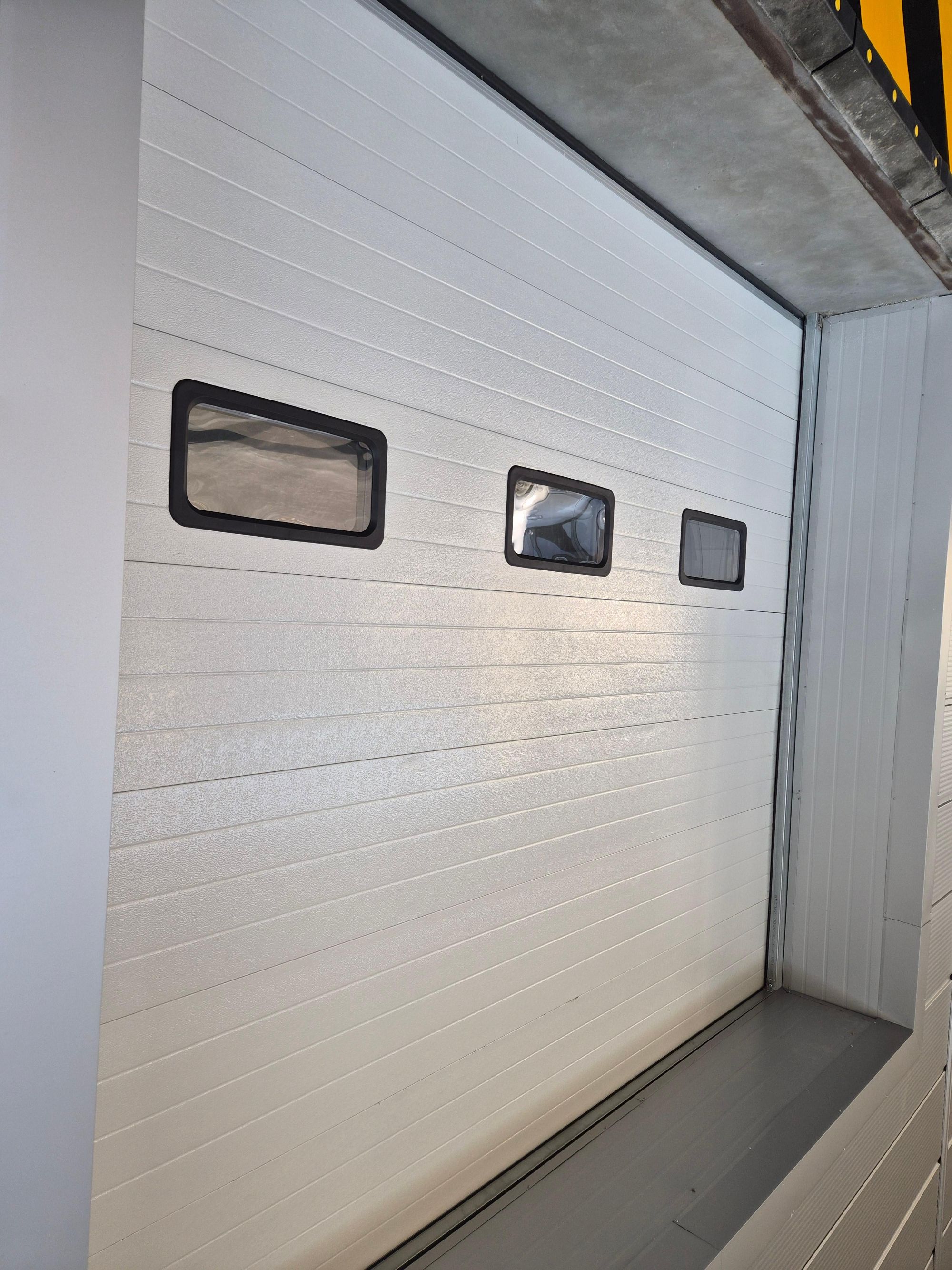
Meeting a compliance checklist rarely tells you what happens when several things fail at once. Safety mechanisms that actually protect people tend to be built around inconvenient scenarios: a sensor gives a false reading while a backup power source dips, or an operator follows the manual incorrectly under time pressure. Design teams add independent cut-off paths, cross-check signals from unrelated sensor types, and run deliberate fault-injection tests that regulatory bodies never ask for. The point is not to pass an audit but to make a serious accident require multiple, unlikely failures at the same moment.
These extra layers often show up as mechanical overrides that work without software, pressure relief points sized for twice the worst recorded load, or automatic shutdown sequences that are physically tested every few months instead of only simulated. Some manufacturers also bring in outside engineers to review failure histories and look for common-cause weaknesses that in-house teams miss. When such practices become routine, the gap between what a standard demands and what the equipment can survive grows wide enough to matter.
Selecting a Supplier with Proven On-Site Performance
When a supplier's track record looks solid on paper but falls apart under field conditions, the real cost shows up in downtime and rework. A dependable way to narrow the list is to ask for specific examples of completed work that mirror your site's constraints—tight access, existing utilities, or strict noise limits. Ask how they adjusted when something didn't go as planned, because that's where on-site performance actually gets proven.
It also helps to visit a current job rather than a polished reference site. Watching how the crew communicates, manages material deliveries, and keeps the work area safe tells you more than any brochure. The goal is to find a supplier whose daily habits on site match the promises made during the bid.
Material Choices That Determine Long-Term Strength and Wear Resistance
The long-term strength of any load-bearing component starts with decisions made at the material selection stage. While many designers focus on initial tensile or yield values, the traits that truly govern decades of service are frequently more subtle: microstructural stability, resistance to creep, and the ability to shed cyclic stresses without accumulating hidden damage. For instance, a high-carbon steel may look impressive on a datasheet, but if its grain boundaries coarsen under sustained heat or its inclusion population is poorly controlled, it will begin to degrade long before a nominally weaker, cleaner alloy would. Choosing materials with fine, stable grains and low impurity levels is not an upgrade; it is a precondition for structures that do not quietly lose capacity over time.
Wear resistance adds another layer of complexity, because it cannot be reduced to hardness alone. Two materials with identical Rockwell numbers can behave very differently in a sliding or abrasive environment. The key is to match the wear mechanism to the material’s inherent microstructure. A tool steel rich in hard carbides excels at resisting abrasive cutting, but those same carbides can act as initiation sites for spalling under impact. Conversely, a tough austenitic manganese steel that work-hardens dramatically at the surface may outperform harder alloys in high-pressure gouging scenarios. The most durable choices often come from understanding how a surface rebuilds its own protective layer through deformation, oxidation, or tribofilm formation, rather than simply maximizing a single mechanical property.
There is also a hidden interaction between strength and wear that many material selection guides overlook: the role of residual stresses and surface integrity. A material that is strong in bulk but poorly finished or improperly heat-treated can fail early through localized tensile stresses at machining marks or decarburized layers. Likewise, a coating or cladding that is metallurgically incompatible with the substrate will spall under thermal cycling even if its standalone hardness is exceptional. The best long-term performance comes from treating material selection as a system decision, where base chemistry, processing history, and surface engineering are evaluated together. Only then do strength and wear resistance become predictable over a full service life, rather than optimistic numbers in a laboratory report.
Installation and Upkeep Practices That Prolong Door Lifespan
The way a door is hung often matters as much as the materials it's made from. Taking time to get the frame square, the hinges aligned, and the gaps even keeps the slab from dragging or binding. A small misalignment at the start can turn into warped edges, cracked joints, and worn weatherstripping within a season or two. Using long screws to anchor the top hinge into the rough frame, rather than the jamb alone, gives extra stability and stops sagging before it begins.
Once the door is in place, a simple twice-a-year routine can head off most preventable damage. Cleaning the tracks and hinges keeps moving parts from grinding, while a light silicone spray on the weather seal preserves its flex. Touching up paint or finish before bare wood shows prevents moisture from swelling the core. And checking that the latch and deadbolt slide freely means you will never have to force the door, which is a quiet killer of both hardware and frame.
Custom Engineering for Unusual Industrial Layouts and Demands
Factory floors rarely match the neat rectangles shown in architectural drawings. Support columns land in the middle of planned conveyor runs, ceiling heights drop without warning over a mezzanine, and floor trenches from older processes cut across the intended path for a new tank farm. Instead of forcing a standard machine into these spaces, custom engineering starts by measuring what is actually there and mapping every obstruction, load-bearing wall, and clearance issue that could interfere with equipment movement or operator access.
Unusual demands go beyond geometry. Some industrial processes release corrosive mist that eats standard painted steel within months. Others operate in washdown zones where every electrical enclosure must shrug off high-pressure hot water and aggressive cleaning chemicals. Custom designs address these conditions through material selection, gasket placement, drainage angles, and sealed cable entries that off-the-shelf equipment simply does not offer. The result is a system built around the process chemistry and cleaning schedule, not the other way around.
The best custom engineering happens when designers spend time with the people who run the line daily. Operators know where pallets pile up, where forklifts take shortcuts, and which pumps need frequent rebuilds. Maintenance staff can point out spots where a standard guardrail would block access to a gearbox or where a lube point would be impossible to reach. Using that practical knowledge alongside laser scans and as-built drawings produces machinery that fits the existing plant as though it had always been there.
FAQ
A supplier worth trusting will show you completed projects at facilities similar to yours, not just brochures. Ask for cycle test data, the exact steel gauge on the curtain, and whether their own technicians handle installation. If they hesitate to share reference contacts from nearby plants or warehouses, keep looking.
Look for a door that includes a fail-safe brake on the drive system, photo eyes or a reversing edge on the bottom seal, and a manual release chain that works smoothly under load. The control panel should also have a clearly labeled emergency stop and a routine auto-reverse test function. Any supplier treating these as optional extras is cutting corners.
Cycle life is the big one: a door rated for at least 100,000 open-close cycles will survive a busy dock far longer than a cheap residential-style unit. Also check the opening speed under full load, wind load rating if the door faces an exterior wall, and thermal resistance if the space is temperature-controlled. Ask for the test reports instead of relying on marketing language.
Installation is more important than the door itself. Even a high-end sectional door will shake itself apart if tracks are misaligned by more than a few millimeters or spring tension is not balanced correctly. A good supplier sends factory-trained installers who verify headroom, side clearances and floor level before mounting anything, then run a full safety check with you on site.
Focus on options that change real-world use: vision panels with impact-resistant glazing for forklift areas, insulated double-skin sections for cold storage, and a high-speed operator with soft start-stop if the door goes up more than 30 times a day. Paint finishes that resist chemicals or abrasion matter in food plants and metal shops; purely cosmetic upgrades usually do not.
A busy dock door should get a visual and functional check every three months, with a full service at least twice a year. The service should cover spring tension, cable wear, hinge and roller lubrication, track alignment, photo eye sensitivity and auto-reverse force. Ask the supplier for a written checklist after each visit; if they only spray lubricant and leave, find another maintenance partner.
Instead of just looking at the bottom line, ask each supplier to itemise the door model, gauge of steel, motor duty cycle, safety devices, installation labour and warranty terms separately. Then ask what is not included: freight, disposal of the old door, permits or structural modifications. A quote that seems cheaper often leaves out the exact items that make a door safe and reliable.
Conclusion
A sectional door that holds up under constant traffic does more than open and close. It earns its reputation through reinforced panel joints, balanced spring systems, and rollers that don't bind after years of dust and vibration. But longevity means little if safety is an afterthought. Suppliers worth their name fit doors with drop-testing routines, photo eye redundancy, and cable break arrestors that catch a falling panel before it becomes a hazard—not because a checklist demands it, but because a jammed door can injure someone within seconds. Choosing a supplier, then, comes down to watching their doors work in actual loading docks and manufacturing bays, not just reading a catalog. Ask how many cycles their doors have logged in facilities similar to yours; a supplier with a record of quiet, consistent operation across three shifts will save more downtime than any warranty promise.
Materials decide whether a door shrugs off forklift impacts or starts to dent and corrode. Galvanized steel cores, polyurethane foam insulation, and stainless or nylon hinges resist the daily grind better than thinner, riveted alternatives. But even the best panels fail early if installation ignores floor slope, header clearance, or wind load. Proper tensioning, level tracks, and scheduled lubrication and cable inspections stretch service life far beyond what a hasty install allows. For unusual layouts—low headroom, sloped docks, or extreme temperature swings—custom engineering becomes the difference between a door that fits the drawing and one that fits the building. The guide’s core message is simple: reliable performance and safety come from deliberate material selection, installation discipline, and suppliers who treat your facility’s constraints as design inputs, not afterthoughts.
Contact Us
Contact Person: Cyril He
Email: [email protected]
Tel/WhatsApp: 8613969697307
Website: https://cqyqgd.en.alibaba.com/