

Halogenated Aromatic Intermediate CRO Solutions for Efficient Custom Synthesis
2026-09-12
Halogenated aromatic intermediates often make or break a custom synthesis project—too many steps, too many impurities, and timelines slip. What if your next challenge had a partner that treats every bromine, chlorine, or fluorine placement as a precision problem, not a guess? At DSL Chemicals, our CRO approach goes beyond standard route scouting: we engineer efficient, scalable pathways around halogenated cores, from early feasibility to multi-kilogram delivery. Ready to see how a focused partner can turn stubborn chemistry into a streamlined result? Keep reading.
Halogenated Aromatics: The Unsung Backbone of Targeted Drug Design
Halogen atoms—fluorine, chlorine, bromine, and occasionally iodine—rarely claim the spotlight in medicinal chemistry narratives, yet their quiet presence in aromatic scaffolds often dictates whether a candidate becomes a drug or a discarded lead. The halogen bond, a noncovalent interaction once dismissed as a niche curiosity, now underpins the rational tuning of potency, selectivity, and metabolic stability. For instance, replacing a hydrogen with a chlorine on a quinazoline core can shift a kinase inhibitor's residence time from minutes to hours, not by dramatically altering the binding mode, but by subtly reshaping the electron density that the target pocket senses. Such changes are less about brute-force affinity and more about teaching an old aromatic ring new conformational dialects.
Beyond classical halogen bonding, the strategic placement of fluorine has become a quiet obsession in fragment-based design. A single fluorine atom can act as a metabolic shield, blocking cytochrome P450 oxidation at a vulnerable para position, while simultaneously serving as a 19F NMR probe to track binding events in real time. Bromine and iodine, less common in final drug molecules, find their niche as heavy-atom anchors in X-ray crystallography or as radiosensitizers in oncology. The real artistry lies in balancing lipophilicity: each halogen adds a predictable logP increment, but the sweet spot for membrane permeability and aqueous solubility demands a case-by-case negotiation that no rule of thumb can fully capture.
What keeps halogenated aromatics from becoming a tired trope is the growing appreciation of their context-dependent behavior. The same chlorine that improves oral bioavailability in one series can trigger hERG liability in a close analog, and the para-fluorine that stabilizes a ligand's bioactive conformation may undermine its brain penetration in another. Medicinal chemists who treat halogens as modular Lego pieces quickly learn that aromatic halogenation is less like adding a functional group and more like editing a sentence: the meaning depends on surrounding words. This nuance is what elevates halogenated aromatics from a synthetic convenience to a genuine design backbone—one that rewards those willing to look beyond the periodic table's shorthand.
One Halogen, Many Outcomes: Managing Selectivity in Custom Synthesis
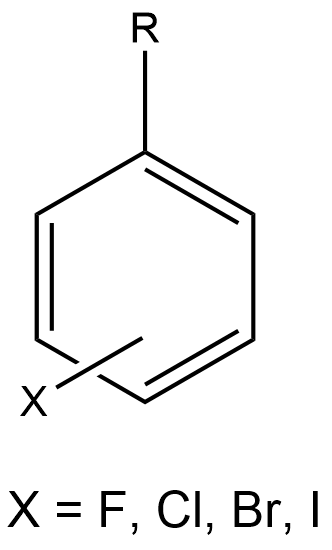
A halogen atom is rarely just a placeholder. In the right setting, the same chlorine or bromine can steer a coupling, block an unwanted position, or activate a ring for substitution. The trick lies in reading how that halogen interacts with the neighboring electron density and with the catalytic system you choose. A para-chloroarene, for instance, will behave very differently under palladium catalysis with a bulky phosphine ligand than it will in a copper-mediated Ullmann reaction.
Selectivity often comes down to subtle shifts in conditions. Swapping a solvent from toluene to DMF can invert the regiochemical preference. Lowering the temperature may freeze out a kinetic product that would otherwise isomerize. Even the halide itself matters: bromide tends to undergo oxidative addition more readily than chloride, but chloride can offer better stability during downstream transformations. Experienced synthetic chemists exploit these differences rather than fighting them.
In custom synthesis, managing that selectivity upfront saves months of downstream separation. A well-chosen halogen allows late-stage diversification from a single intermediate, so one building block can feed multiple target molecules. That keeps inventories lean and timelines short, especially when the final compound has several sensitive functional groups that would not tolerate harsh re-functionalization.
From First Gram to Full Batch: Engineering Consistency into Halogenated Intermediates
Moving a halogenated intermediate from the first gram made in a fume hood to a full-scale batch reactor rarely follows a straight line. The chemistry may look identical on paper, but heat transfer, mixing, and local stoichiometry shift as vessel geometry changes. A bromination that stays selective in a 100 mL flask can suddenly produce dibrominated side products or stall halfway when scaled to 2000 L. Early scale-up efforts often chase symptoms—longer reaction times, new impurity peaks, erratic yields—without recognizing that the root cause is usually an engineering mismatch, not a failure of the chemistry itself.
Consistency in halogenated intermediates demands that the reaction be understood as a thermodynamic and kinetic system under physical constraints. For chlorinations and brominations, the addition rate of the halogen source, the temperature profile near the dosing point, and the efficiency of gas-liquid dispersion (when using Cl2 or HBr) all influence product distribution. One approach that has proven robust is to define a design space based on calorimetry and mixing studies rather than relying on a single fixed recipe. For example, by intentionally decoupling the exotherm from the dosing rate and using in-situ FTIR or Raman to track the disappearance of starting material, operators can maintain the same local reactant ratio from pilot to production. This shifts the focus from “follow the procedure” to “control the critical parameters,” which is where batch-to-batch reproducibility is actually won.
The payoff of engineering consistency into halogenated intermediates shows up downstream. When the ratio of mono- to di-halogenated species drifts by even a few percent, subsequent coupling or substitution steps can see yield losses or require rework. Tightening the intermediate profile reduces the analytical burden on later stages and avoids the costly practice of adjusting downstream conditions to compensate for upstream variability. In practice, plants that invest in heat-flow calorimetry, real-time particle size monitoring (for crystallized halogenated salts), and multivariate batch modeling tend to reach full-batch reproducibility faster—and with fewer rejected lots—than those that treat scale-up as a simple multiplication of reagent weights.
Beyond the COA: How We Verify Every Halogenated Aromatic Intermediate
A certificate of analysis is a starting point, not the final word. For every halogenated aromatic intermediate we ship, our analytical team runs an independent verification battery that goes well beyond the printed COA. Each batch is cross-checked by at least two orthogonal methods—typically high-resolution mass spectrometry paired with quantitative NMR or HPLC-UV/ELSD—so that identity and purity are confirmed against freshly prepared reference standards, not just historical data.
We also probe what a COA rarely shows: residual solvents by headspace GC, trace metals by ICP-MS where relevant, and stability under exaggerated storage conditions. Halogenated aromatics can be prone to subtle isomer contamination or light-sensitive degradation, so we include a stress test with UV exposure and elevated temperature for sensitive intermediates. Only after these results match our internal release criteria does the batch receive its lot-specific documentation.
Finally, we archive a retained sample from every verified lot and re-test it at defined intervals. If a customer reports an unexpected result months later, we can retrieve that exact material for forensic comparison. This closed-loop approach means the verification doesn't end at the loading dock—it continues as long as your project does.
A CRO That Speaks Your Chemistry: Aligning on Goals Before Synthesis Begins
Most CROs start with a purchase order; we start with a conversation about what the molecule needs to do. Before any solvent is poured, we want to know the non-negotiables: which impurities keep you up at night, what enantiomeric excess actually matters, how the final compound will be used in your assay or formulation. That alignment shapes route scouting, reagent selection, and even the decision to run a reaction at -78°C versus room temperature.
Speaking your chemistry means we don't just accept a drawn structure. We ask about acid-sensitive groups, metal scavenging limits, residual solvent constraints, and whether the nitrogen in position 7 can be alkylated without racemizing the adjacent stereocenter. If you're working with a boronic ester that hydrolyzes on silica, we plan a workup that avoids chromatography. If your target decomposes above 40°C, we design around low-temperature workup and lyophilization instead of rotary evaporation. These details are discussed before synthesis begins, not discovered in a disappointing final report.
That early alignment changes timelines and costs because there are fewer surprises. You get a route that matches your actual needs—whether that's 100 mg of a probe for a binding assay or multi-kilogram intermediate with tight residual palladium specs. We'd rather spend an extra day on upfront planning than three weeks re-optimizing a route that never fit your chemistry in the first place.
Greener Halogenation Without Sacrificing Yield: What Modern Routes Look Like
For decades, halogenation chemistry leaned on reagents that were convenient but wasteful—stoichiometric halogens, harsh solvents, and energy-intensive conditions. The assumption was that cleaner methods would inevitably cost you in yield or selectivity. Modern routes have quietly overturned that trade-off. By rethinking activation modes and catalyst design, chemists now routinely hit the same or better isolated yields while cutting solvent volume, replacing toxic halide sources, and running reactions at ambient temperature.
One standout shift is the move toward halide salts paired with mild oxidants or photoredox cycles, where the halogen is generated in situ and consumed immediately. This avoids handling free halogens and minimizes over-halogenation. Flow chemistry has also become a workhorse, allowing precise control of mixing and residence time so that brominations or chlorinations that once required careful dropwise addition at −78°C now run safely in a continuous stream at room temperature with near-quantitative conversion.
The real measure of progress is in the process mass intensity numbers. Recent industrial案例 for aryl iodide synthesis show PMI reductions of over 40% compared to legacy Sandmeyer approaches, without any drop in purity. It is no longer a question of whether greener halogenation can compete on yield—it is simply a matter of which modern route fits your substrate best.
FAQ
They are aryl or heteroaryl rings bearing one or more halogen substituents, typically bromine, chlorine, iodine, or fluorine. The halogen acts as a temporary or permanent handle: it can be exchanged in cross-coupling reactions, direct metalation, or nucleophilic aromatic substitution. That flexibility makes these intermediates a backbone for building diverse compound libraries without redesigning the entire core.
A CRO usually takes on route design, impurity profiling, and scale-up as part of the same engagement. Instead of shipping a stock compound, they optimize the halogenation step, manage exothermic or light-sensitive reactions, and deliver material with a detailed analytical package so the client can proceed directly to the next synthetic step.
Brominated and iodinated aromatics lead because they engage smoothly in Suzuki, Heck, and Sonogashira couplings. Chlorinated derivatives are also common, particularly when the chlorine stays in the final molecule for metabolic tuning. Fluorinated rings are in steady demand because fluorine alters pKa, lipophilicity, and metabolic soft spots without a large steric change.
They often run parallel screening of directing groups, solvents, and halogen sources. In some cases, a temporary blocking group or a metalation strategy will favor one position over another. The team typically monitors the crude mixture by LC-MS or NMR at each attempt, so the best route is identified before scaling up.
Most clients request at least 95% purity by HPLC, but for advanced intermediates or late-stage fragments, 98% or higher is common. Residual palladium, copper, or iron must be controlled below specified limits. Many CROs also provide residual solvent data and water content when the material is destined for sensitive downstream chemistry.
When the chemistry requires high-pressure halogenation, handling of bromine or chlorine gas, or specialized photochemical reactors that are not available internally. It is also practical when a team needs a quick, small proof-of-concept batch without interrupting its main pipeline, or when a fresh route design might cut the step count significantly.
Look for demonstrated experience with air-sensitive organometallic steps, a well-equipped analytical lab, and transparent project communication. It helps if the CRO has handled similar scaffolds before and can share impurity profiles or previous route challenges without overpromising timelines.
Conclusion
Halogenated aromatic intermediates rarely get the attention they deserve, yet they quietly shape the properties of many clinical candidates—tuning metabolic stability, binding affinity, and even solubility. In custom synthesis, the real challenge is not simply installing a chlorine, bromine, or fluorine, but doing so at the precise position while keeping competing pathways under control. A capable CRO treats each halogenation as a selectivity problem first: mapping directing effects, choosing the right electrophilic or transition-metal-mediated route, and being ready to switch tactics if the first attempt gives the wrong isomer. This mindset turns what could be a bottleneck into a dependable step in a longer route.
Scaling from first gram to full batch demands more than repeating the same procedure in a bigger flask. It requires understanding how heat transfer, mixing, and reagent addition rates affect impurity profiles, and then engineering those parameters so each lot behaves like the last. Verification goes beyond a standard certificate of analysis—orthogonal methods such as NMR, LC-MS, and elemental analysis are used to confirm regiochemistry and trace-level byproducts, not just assay. Add to that a collaborative approach where the CRO aligns with your team on synthetic goals before any chemistry starts, and greener halogenation routes that use catalytic or electrochemical methods to cut waste without sacrificing yield. The result is a supply of halogenated aromatic intermediates that actually supports efficient, predictable drug development.
Contact Us
Contact Person: Wei Zhang
Email: [email protected]
Tel/WhatsApp: 862163529955
Website: https://www.dslchem.com