
Global Customs Data Providers Transforming Trade Intelligence
2026-07-27
In an era where every shipment tells a story, global customs data has become the silent engine driving trade intelligence. Yet the challenge isn't accessing information—it's distilling signal from noise. Enter a new breed of providers that don't just deliver raw statistics but serve as strategic co-pilots for businesses navigating volatile markets. At the forefront of this shift is Tendata, whose platform turns granular trade flows into predictive insights, helping companies spot emerging suppliers, monitor competitor activity, and pivot before the market does. This isn't your father's trade database; it's a living map of global commerce, updated in near real time and designed for decision-makers who understand that in trade intelligence, speed and context are everything.
Unveiling Hidden Trade Patterns with Real-Time Shipment Tracking
Trade data has long been a rearview mirror—monthly reports that arrive weeks after the fact, offering snapshots of a world already in motion. Real-time shipment tracking flips that perspective, turning vessel movements into a live stream of economic activity. Each container’s journey from port to port paints a granular picture of demand shifts, supply chain stress points, and emerging corridors that conventional statistics would take months to confirm. This isn’t just about knowing where your cargo is; it’s about decoding the rhythm of global commerce as it happens.
The real surprise lies in the patterns that surface when you watch enough ships. A sudden clustering of bulk carriers off an overlooked African coast might reveal a quiet pivot toward new mineral sources, while a slowdown in transshipment at a major hub could signal inventory gluts weeks before official indicators catch up. Seasonality blurs into near-real-time reaction loops—textile shipments rerouting mid-voyage in response to a viral trend, or refrigerated containers stacking up at alternate ports when a tariff rumor spikes. These narratives are invisible in historical tables but starkly clear on a live map, offering traders and strategists a way to move on signals rather than summaries.
How Customs Data Fuels Smarter Supplier Discovery Across Borders
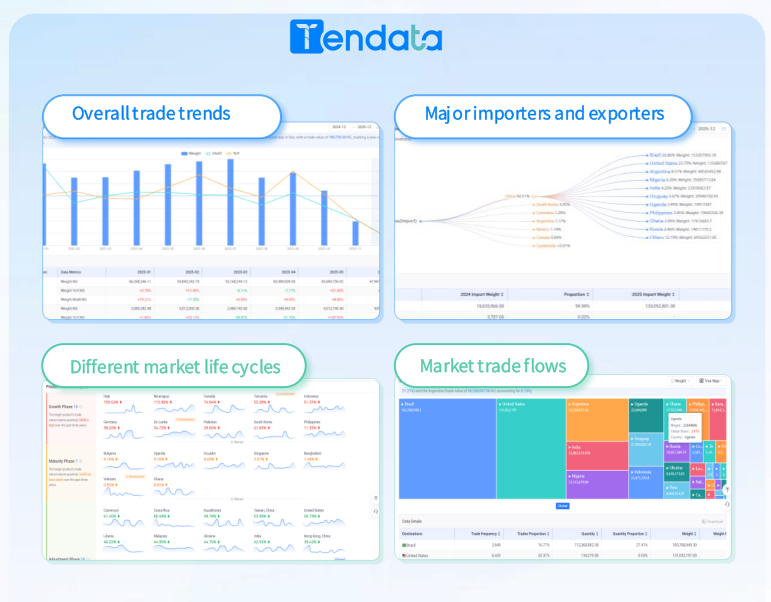
Customs data offers a direct window into real cross-border trade flows, moving beyond generic directories and self-reported company profiles. By analyzing actual shipment records—including product descriptions, volumes, and trading parties—businesses can uncover suppliers who are actively shipping to international markets. This grounded intelligence helps avoid the guesswork that often plagues online searches and trade fairs, replacing it with verified patterns of commerce.
Rather than chasing vague leads, companies can pivot toward precision. The data reveals not just who is exporting a product, but how consistently they do it, which destinations they serve, and—crucially—whether they specialize in your specific niche. This layered insight fosters smarter outreach: you contact potential partners already familiar with your target market’s regulations and demand cycles, accelerating the path from introduction to negotiated deal.
Even beyond matching products, customs records highlight relational signals. Patterns like shipment frequency, seasonal spikes, and the mix of clients a supplier serves can hint at their production capacity and reliability. A supplier diversifying into new regions, for instance, might signal ambition and scalability—exactly the kind of strategic fit that raw contact lists can’t deliver. In practice, this means fewer dead ends, more relevant conversations, and a supply chain built on observable evidence rather than polished pitches.
From Raw Records to Actionable Insights: The Analytics Shift
Data in its untouched form rarely sparks revelation. Raw records—rows of timestamps, scattered user IDs, unstructured log entries—sit dormant until they are shaped into meaning. The true shift happens when analytics stops being a passive archive of what occurred and becomes an active lens into what might happen next. This transition demands more than just tools; it requires a mindset that treats every data point as a thread in a larger narrative.
Bridging the gap between raw logs and actionable insights hinges on the ability to ask the right questions. Instead of drowning in dashboards, teams are learning to curate signals from noise, constructing frameworks that surface patterns tied directly to business levers. A spike in page views becomes less about a generic uptick and more about understanding the exact campaign that drove intent. The shift is subtle but profound: analytics moves from reporting the past to informing the present and sculpting the future.
Organizations that embrace this evolution replace hindsight with foresight. They build systems where insights flow into decision-making channels in near real-time, turning passive observers into reactive problem-solvers. The alchemy isn’t in collecting more data—it’s in transforming raw inputs into narratives that propel action. Ultimately, analytics ceases to be a departmental function and becomes part of the cultural fabric, guiding choices that feel less like guesswork and more like informed instinct.
Navigating Tariff Risks with Live Duty and Tax Intelligence
Tariff landscapes shift without warning, turning a stable import cost into a sudden budget drain. Traditional tools can't keep up—spreadsheets and periodic updates leave you exposed for days or weeks. Live duty and tax intelligence bridges that gap, streaming real-time changes and flagging risks as they emerge across geographies, so your decisions are never based on stale data.
Beyond simple alerts, modern systems parse regulatory announcements, free trade agreement amendments, and customs rulings the moment they're published. They feed directly into your procurement and logistics platforms, recalibrating landed cost calculations instantly. This means you can simulate scenarios on the fly—testing alternate sourcing routes or reclassifying goods—and lock in margins before competitors even notice the shift.
Embedding this intelligence into daily workflows transforms risk management from a reactive scramble into a strategic advantage. Teams can automatically screen every transaction against the latest tariff schedules, sidestep overpayments, and build audit-ready justifications for customs authorities. The result isn't just cost avoidance; it's a supply chain that anticipates disruption rather than absorbing its shock.
Predicting Market Demand Through Import-Export Trend Analysis
Trade data often serves as an early signal of shifting consumer appetites. When imports of a particular component or raw material surge unexpectedly, it usually indicates that manufacturers are ramping up production in anticipation of higher orders. Likewise, a sudden drop in exports of finished goods can point to softening demand overseas before it shows up in domestic sales figures. By tracking these movements across multiple categories, businesses can detect patterns that demand surveys or point-of-sale data might only confirm weeks later.
A practical way to extract insights from customs records is to focus on divergences from historical trends. For instance, if a country’s electronics imports from a key supplier rise 30% year-on-year for two consecutive quarters while its own consumer spending remains flat, there is likely inventory building for a new product launch or a seasonal promotion. Monitoring the origin and destination shifts also matters—when a trading partner suddenly reduces its share of a goods category, it could signal capacity issues, tariff changes, or a deliberate pivot toward self-sufficiency, all of which have knock-on effects for global supply and demand balance.
The value of import-export analysis grows when it is layered with other forward-looking indicators. A lumber import surge coupled with rising building permits hints at a construction boom months ahead. Conversely, sustained declines in semiconductor equipment exports often precede a slowdown in electronics manufacturing. The art lies in selecting the right trade flows to watch and resisting the temptation to extrapolate from a single data point. Markets rarely move in straight lines, and the most useful predictions account for temporary disruptions—weather, port strikes, or short-lived policy changes—that can distort trade figures without changing the underlying demand trajectory.
Breaking Down Competitor Supply Chains Without Guesswork
Mapping out a rival’s supply chain once meant piecing together fragments from trade journals, job postings, and whispered industry gossip. Today, that’s no longer the case. By analyzing public shipping records, real-time logistics data, and tier-2 supplier connections, you can build a near-complete picture of where materials originate, how they move, and where the bottlenecks live—all without setting foot in a single warehouse.
The trick is knowing which signals actually matter. A sudden spike in specialized component imports from a specific region often reveals an upcoming product release before any press announcement. Meanwhile, tracking a competitor’s customs declarations can uncover dual-use suppliers shared across your own network—so you’re not caught off guard when a single factory fire disrupts both you and your main rival. This isn’t guesswork; it’s pattern recognition at scale.
The real differentiator, though, is layering in environmental and labor data to spot hidden risks. A supplier may look perfect on paper—until you notice its energy consumption has halved while output claims remain steady, hinting at undisclosed subcontracting. Or you might find that a competitor’s “ethical sourcing” narrative crumbles when satellite imagery shows a mine operating well beyond its legal footprint. These insights don’t come from intuition; they come from treating the supply chain as a web of measurable, verifiable data points.
FAQ
They turn raw shipment records into structured insights, helping businesses spot supplier shifts, monitor competitor activity, and anticipate demand changes in near real-time—far beyond what traditional market reports offer.
A firm can adjust sourcing strategies based on actual import volumes, negotiate better freight rates by seeing lane density, or even identify new buyers in under-served regions by analyzing export patterns.
Older methods relied on surveys and aggregated statistics with long delays. Modern providers clean and link transactional data across borders, using machine learning to classify products and surface anomalies, making the intelligence granular and actionable within days.
They invest heavily in data harmonization—mapping varied HS codes, normalizing company names, and handling language differences. This behind-the-scenes work turns chaotic global filings into a unified database that users can query seamlessly.
Disruptions like port closures or tariff changes appear first in customs records as order cancellations or rerouting. Providers filter this noise and deliver alerts, letting companies pivot before their inventory lines are affected.
Free databases give raw, often outdated, and unsanitized records. Specialized providers add value by processing, enriching with counterparty data, and delivering visualization tools that let non-analysts explore trade relationships without a data science team.
The best ones have automated pipelines that refresh data within days of customs clearance, apply validation algorithms to weed out duplicates and misdeclarations, and cross-reference with shipping manifests to fill gaps.
We're seeing a move toward APIs that plug directly into ERP and risk platforms, predictive models that forecast lead times and demand shifts, and even geospatial mapping of shipments to avoid chokepoints before they cause delays.
Conclusion
Global customs data providers are reshaping the landscape of trade intelligence by turning vast streams of shipment records into a clear view of global commerce. Real-time tracking unveils hidden trade patterns, allowing companies to spot emerging supply chains and shifts in sourcing. Instead of relying on outdated reports, businesses can now access live customs filings to identify new suppliers across borders with confidence. This shift from raw data to refined analytics means that trade professionals can move beyond simple record-keeping and start uncovering genuine opportunities. The integration of advanced tools has made it possible to sift through millions of transactions, revealing relationships and flows that previously required months of manual research.
On the strategic side, the ability to navigate tariff risks with up-to-the-minute duty and tax information gives importers a critical edge. Predicting market demand becomes more accurate by analyzing long-term import-export trends, reducing the guesswork in inventory planning. Competitor supply chains can be broken down systematically, exposing vulnerabilities and strengths without relying on assumptions. Customs data providers package this complexity into dashboards and alerts, turning what was once an opaque process into a transparent, data-driven function. Ultimately, the fusion of live intelligence and historical analysis is not just enhancing trade decisions—it’s fundamentally changing how companies plan, source, and compete in the global arena.
Contact Us
Contact Person: Grace
Email: [email protected]
Tel/WhatsApp: +86 18721992033
Website: https://www.tendata.com