

Fully Automatic Rotary Concrete Reclaimer Services for Efficient Aggregate Recycling
2026-08-28
Think concrete waste is just something to haul away? A fully automatic rotary concrete reclaimer flips that idea on its head. Instead of paying to dump slurry and stone, you recover clean, reusable aggregate with minimal effort. Sinou has refined this process so that recycling concrete doesn't feel like an extra chore—it becomes a natural part of your operation. Let's break down how it works.
What Happens Inside the Rotary Drum During a Washout Cycle
The washout cycle flips the drum from steady mixing to a deliberate self-cleaning routine. As the drum rotates slowly, high-pressure nozzles mounted along the interior release a measured burst of water. That water hits the curved walls at an angle, scouring the thin layer of leftover cement paste and fine aggregate that clings after a pour. Instead of just pooling at the bottom, the spray patterns push the loosened solids toward the discharge opening, while the drum’s spiral blades keep the heavier sediment moving in a controlled loop before it exits.
What you won’t see from outside is the brief moment of controlled turbulence. The rotating drum briefly changes speed direction to break adhesion near the throat and cone sections. Chunks of semi-hardened mix slide free, not because the water dissolves them instantly, but because the water pressure works into hairline gaps behind the buildup. The resulting slurry is thin enough to flow out but dense enough to be captured and recycled, leaving the drum walls rinsed but not waterlogged.
Automated Controls That Adjust to Concrete Mix Changes
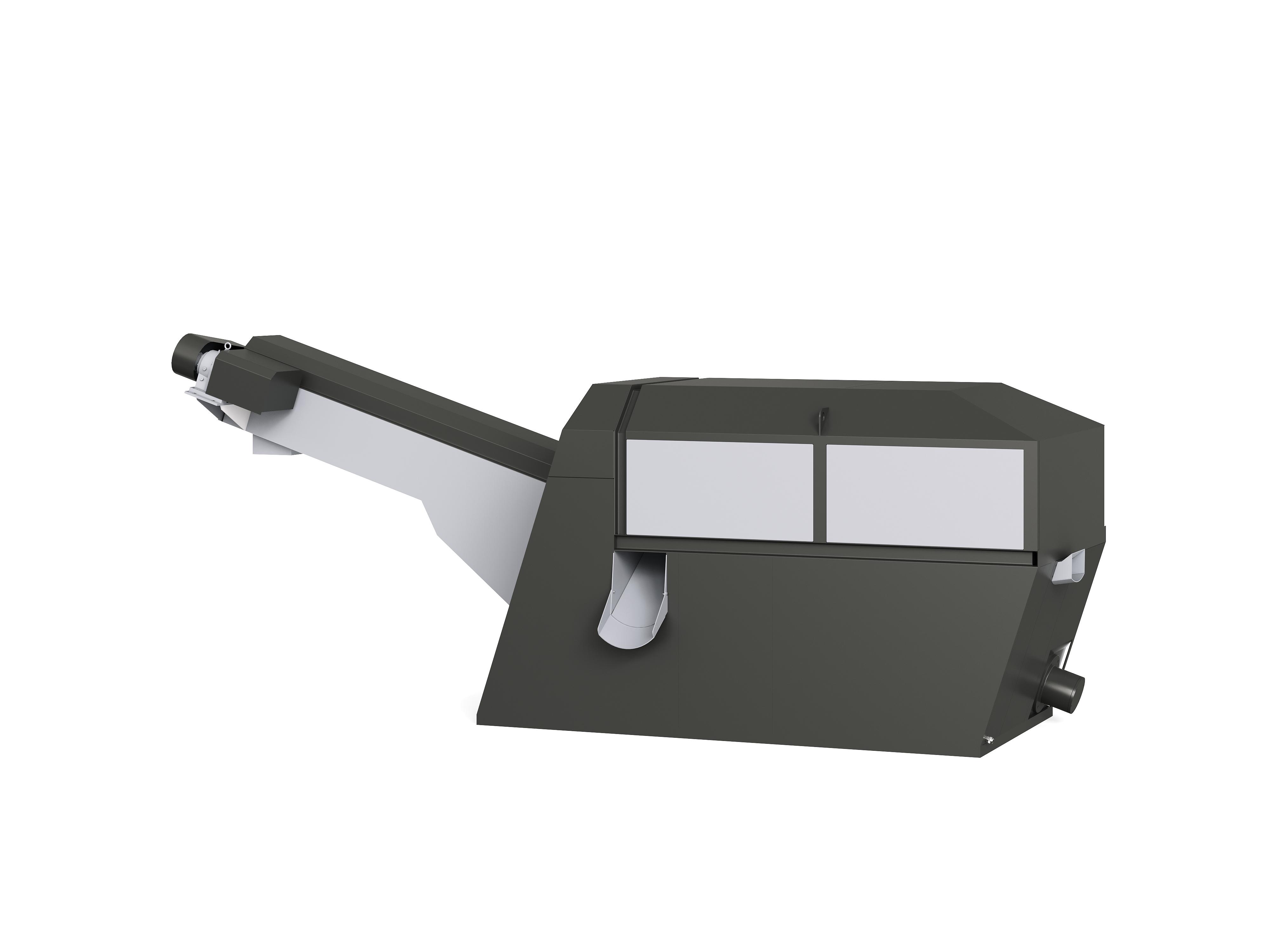
Concrete batch consistency often shifts due to moisture variations, aggregate grading, or cement source changes. Rather than relying on fixed mixing times or static water ratios, automated control systems continuously sample key parameters during the batching cycle. Sensors measure slump, temperature, and mixing energy in real time, then feed that data into adaptive algorithms that fine-tune water dosage, mixing speed, and discharge timing on the fly. This keeps the mix within spec even when raw materials drift from their nominal profile.
A common pain point in readymix plants is the lag between detecting a problem and correcting it manually. Automated adjustments eliminate that delay by linking the mixer’s torque curve to workability targets. If the aggregate moisture climbs after a rain event, the system trims added water without operator input, preserving the target water-to-cement ratio. Likewise, when air content or temperature deviates, the controls adjust admixture dosing to compensate, ensuring each batch matches the one before it.
Field data shows that plants using closed-loop mix adjustment see fewer rejected loads and less variance in compressive strength. Instead of relying on operator intuition or periodic lab tests, the system builds a live model of the current material behavior. This approach adapts to seasonal changes—like warmer aggregate stockpiles in summer or finer sand in winter—without reprogramming. The result is a smoother production flow and concrete that behaves predictably from truck to placement.
Sand and Gravel Recovery Rates You Can Actually Measure
Most operators never learn their true sand and gravel recovery because they trust design specs instead of field numbers. The gap between what a plant should recover and what it actually sends to the stockpile often comes down to a few overlooked steps: worn screens, misreported feed moisture, or simply guessing at the split between products. To get something measurable, start by taking a belt cut from the feed and a matching cut from each discharge belt over the same thirty-minute window. Dry the samples, run them through a sieve stack, and compare the mass passing each mesh against the mass in the feed. That gives you a real recovery figure for every size fraction, not a brochure number.
Once you have the raw percentages, correct for what the lab won't tell you. Moisture clings to fine sand and inflates volume, so weigh both wet and dry samples and report recovery on a dry-tonne basis. If your wash water carries silt and clay back into the sand screw, subtract the minus-200-mesh material from the product side before calculating final recovery. A simple spreadsheet can do this, but the key is repeating the test across three different shifts. Recovery changes when the feed gradation changes, and a single afternoon of sampling will mislead you just as badly as a static plant diagram.
Use the measured recovery rates to make small, specific adjustments instead of chasing a perfect number. If you find the 3/8-inch fraction recovering at 85 percent while the sand fraction sits at 60 percent, check the screen panel openings and the water pressure on the bottom deck before changing the whole circuit. Track recovery weekly on the same feed source, and you'll start seeing patterns that let you predict when a screen is about to fail or when the feed pit is shifting into a clay-heavy zone. That kind of measurement is far more useful than any theoretical yield because it tells you exactly where the tonnes are going missing.
Cutting Freshwater Use Without Adding a Settling Pond
Replacing a settling pond doesn't have to mean bigger footprints or extra earthworks. High-rate clarifiers, hydrocyclones, and membrane microfiltration can pull suspended solids out of process water in a fraction of the space, letting you reuse the same water loop for cooling or washing without tapping fresh sources.
A smarter approach is to adjust chemistry and flow at the source. By dosing coagulants or flocculants inline and using real-time turbidity sensors to trigger backwash or purge cycles, you keep solids from accumulating in tanks and pipes. This keeps water quality stable enough for continuous recycling, so freshwater intake drops sharply even if no new pond is built.
Operators often find that the real savings come from smaller, modular treatment skids placed right where the water gets dirty. These units can be installed beside existing equipment, require no civil construction, and make it easier to isolate and treat only the most contaminated streams. The result is less freshwater demand, lower disposal volumes, and a system that adapts to production changes rather than waiting for a pond to settle.
When to Schedule Wear-Part Replacement Before Output Drops
The safest window is when wear reaches 70-80% of its usable life, not when throughput starts to soften. Many operators mistake minor fluctuations for wear, but consistent drops in average tons per hour over a week are a late signal. Instead, track liner thickness, hammer tip loss, or screen panel profile at fixed intervals and use that trend to pick a replacement date before any measurable output decline.
A practical rule is to align replacement with already-planned downtime: monthly inspection stops, scheduled crusher or kiln maintenance, or shift changes with spare crew. If you wait for a full production dip, you're already eating into margin because every hour below baseline is lost revenue. Pull wear data from the last three changeouts and set a threshold that triggers a work order two to three weeks ahead.
Also watch for second-order cues: higher energy draw per ton, more recirculating load, or coarser product even when total output looks stable. These often show up before a headline drop. By scheduling replacement on trend rather than on failure, you keep the line at its designed rate and avoid the rushed, costly teardown that comes with emergency swaps.
Service Plans That Keep Reclaimers Running Through Peak Season
The busiest stretch of the year puts reclaimers under pressure that ordinary maintenance schedules simply can't handle. That's why service plans built for peak season focus on pre-emptive inspections, faster parts replacement, and priority scheduling for every machine on the line. Instead of waiting for a breakdown to slow down production, your reclaimer gets the attention it needs before the first surge hits.
A solid peak-season plan also covers wear components that usually fail under heavy loads, from cutting teeth to conveyor belts and hydraulic fittings. By swapping these parts during planned downtime, you avoid the scramble of emergency repairs and keep throughput steady when every ton counts. The result is less unplanned stoppage and more consistent recovery rates.
Finally, the right plan includes on-call technical support and overnight parts delivery, so even unexpected issues don't turn into day-long delays. With a service team that knows your reclaimer's history and operating conditions, you can push through the busiest months without gambling on reliability.
FAQ
It separates leftover concrete from mixer washout into sand, gravel, and water. The drum rotates while high-pressure spray washes the material, and the reclaimed aggregate drops out ready for stockpiling. The water is captured and recirculated, so almost nothing leaves the site as waste.
A mid-sized rotary unit typically processes 12 to 20 cubic meters of returned concrete per hour. That means a single shift can recover over 100 tonnes of aggregate depending on truck traffic. The automatic controls adjust drum speed and spray volume based on load, so there is no need to stop and recalibrate between batches.
Yes, after the washing cycle the sand and stone come out with less than 1% cement paste residue by weight. Many plants blend 10–20% reclaimed material back into fresh mixes without affecting slump or strength. For structural concrete, some engineers prefer to use it in lower-stress applications like curbs or bedding, but the quality is consistent enough for most non-prestressed work.
Rotary reclaimers keep the material moving the whole time, so fine particles don't have a chance to pack into a solid layer. That means less manual digging and less downtime. Compared to settling ponds, there is no large footprint or sludge removal cost. Compared to screw reclaimers, the rotary drum handles variable feed rates better and doesn't jam as easily when a whole truckload gets dumped at once.
Yes, that is the point of the fully automatic controls. The machine starts and stops based on material sensors, and the wash cycle runs for a set time before discharging. You still need to check the water tank level and clear any oversized debris from the hopper once a shift, but it does not need constant supervision. One plant superintendent can monitor it remotely through a simple PLC display.
The main ongoing costs are electricity for the drum and spray pump, plus occasional replacement of spray nozzles and rubber liners. There is no added water treatment because the system recycles its own wash water. If your local regulations require zero liquid discharge, you may need a small settling tank for overflow, but the reclaimer itself generates very little sludge compared to traditional washout pits.
Most plants recover the equipment cost within 14 to 22 months. That figure comes from three areas: lower aggregate purchases, reduced waste disposal fees, and less fresh water consumption. If a plant currently pays to haul away washout, payback can be under a year. The reclaimable aggregate itself is usually worth $8–15 per tonne depending on local material prices.
Conclusion
Inside a fully automatic rotary concrete reclaimer, the washout cycle begins the moment leftover concrete and wash water enter the rotating drum. The drum’s internal spiral flights and lifters continuously roll the material, breaking down cement paste while water jets scour the aggregate. Because the rotation speed and water flow are tuned to the specific drum diameter, heavier sand and gravel settle quickly while finer cement particles stay suspended and are carried out with the overflow. The result is a clean, reusable aggregate stream that doesn’t require manual raking or shoveling. What sets this apart from older reclaimers is the closed-loop design: nothing sits in a holding pit, and the aggregate is discharged directly onto a stockpile or conveyor, ready for batching.
Automated controls make the system responsive to daily mix changes. Instead of a fixed timer, the reclaimer reads the incoming slurry density and adjusts drum speed, water injection, and discharge intervals on the fly. That means a high-slump mix with extra admixtures gets a longer wash cycle, while a stiff curb mix moves through faster without wasting water. Operators can track real recovery rates on a simple dashboard—typically 90–95% for coarse aggregate and 70–85% for sand, depending on feed consistency. Freshwater use drops dramatically because the reclaimer recycles process water back into the truck washout and drum spray, eliminating the need for a settling pond. Wear parts like drum tires, scrapers, and spray nozzles follow a predictable service schedule based on tonnage throughput, not guesswork. With a service plan that includes pre-season inspections and same-week part replacement, a reclaimer keeps running through peak season without sudden output drops or aggregate contamination.
Contact Us
Contact Person: HaiYan
Email: [email protected]
Tel/WhatsApp: +86 18957325588
Website: https://www.senyoubeton.com/