

Fully Automatic Rotary Concrete Reclaimer Fabrication Process Explained
2026-08-28
Ever wondered how a fully automatic rotary concrete reclaimer is actually built? In an industry where downtime is costly, the fabrication process behind these machines makes all the difference. This article takes you inside the manufacturing steps—from precision welding to control system integration—that set Sinou equipment apart. If you're ready to see what separates a reliable reclaimer from the rest, keep reading.
Sizing Up the Steel: Material Prep for the Rotary Drum
Every rotary drum starts with raw steel plate that rarely arrives ready to roll. The first step is a careful thickness survey across each sheet—spot-checking with ultrasonic gauges and checking for lamination or mill scale that could hide stress risers. Plates that show more than a few millimeters of camber or edge wave get flattened before layout, because a drum's shell will only be as true as the plate it comes from.
Once the plate passes inspection, layout marks the shell course dimensions, nozzle openings, and any internal lifters. Cutting is usually done with plasma or oxy-fuel, but the real work is in edge preparation: grinding a clean, uniform bevel so the longitudinal seam welds can penetrate fully without trapping slag. For thicker plates, preheating to around 200–300°F before welding reduces the cooling rate and prevents hydrogen cracking at the root.
Drum heads and flanges get the same treatment, but their blanks are often cut slightly oversize and then machined to a final diameter after welding. That extra stock lets the fabricator correct for weld shrinkage and out-of-round tolerance. By the time the steel is ready for forming rolls, every piece has been sized, edged, and preheated—small steps that keep the rotary drum running straight for years.
Laser Cutting and Rolling the Main Shell Sections
The main shell sections start as large steel plates that are laid out on a cutting table. A fiber laser traces the exact profiles, slicing through the metal with a narrow kerf and leaving edges clean enough for immediate fit-up. Operators watch the cut path in real time, adjusting the assist gas flow when they see the dross buildup shift. Once the plates are cut, they are moved to a rolling station where a three-roll bender gradually curls the flat stock into a cylinder. The rolling sequence is repeated with the plate flipped end for end to avoid a flat spot at the seam.
The gaps between the rolled edges are checked with a feeler gauge before tacking, because any mismatch here will throw off the entire circumference later. When the shell diameter is small, the plate may need a light pre-bend on the leading edge using a press brake. The key is to keep the rolling pressure consistent, not too hard in one pass, so the material work-hardens evenly. After the cylinder is formed, it is set aside to cool and then measured across three diameters with a tape and a laser tracker. Any deviation above two millimeters gets corrected by re-rolling the section with a slightly tighter radius on the high spots.
Unlike the typical one-pass approach, this shop runs a second finishing pass with the rolls set only a fraction tighter. That removes the subtle waviness that shows up after the plate relaxes. The cut edges are left unpainted inside the weld zone, but everything else gets a temporary primer. Each shell section is tagged with a heat number and a sequence mark before it goes to the fit-up jig, so the next crew knows exactly which end faces the flange.
Robotic Welding Keeps the Frame Square and Strong
The frame geometry doesn’t drift when a robotic arm runs the welds. Every pass lands within a fraction of a millimeter of the programmed path, so the heat input stays even and the tubing doesn’t pull to one side as it cools. That predictable shrinkage is what lets the chassis hold its squareness from the first tack to the final bead.
Because the robot repeats the same motion thousands of times without fatigue, the weld throat stays consistent in places a human would struggle to reach comfortably for hours. Gussets, motor mounts, and suspension pickups all get full penetration without extra filler piled on to compensate for a shaky hand. The result is a frame that resists twisting under load and keeps its alignment season after season.
Strength comes from more than just thick plate. Controlling the order of welds and letting each joint cool in the right sequence matters just as much. The robotic cell locks in that sequence, preventing the kind of warping that shows up later as uneven tire wear or a door gap that opens up on rough roads.
Mounting the Screening Basket and Spray Head Assembly
Begin by aligning the screening basket with the lower support ring, making sure the locating notches engage before lowering it into position. A slight rotation may be needed to seat the basket fully against the stop. Once the basket rests evenly, place the spray head assembly on top and align its bolt holes with the corresponding lugs on the housing.
Hand-tighten the fasteners in a cross pattern to avoid uneven pressure on the basket rim. After all bolts are snug, apply the final torque gradually while checking that the spray head remains centered. If the assembly rocks or binds at any point, lift it clear and inspect for debris or a misaligned key before repeating the mounting sequence.
Shot Blast Cleaning and Epoxy Coating for Corrosion Resistance
Getting steel ready for a long service life starts with removing every trace of mill scale, rust, and old paint. Shot blasting does this by firing abrasive particles at high speed, which not only cleans the surface but also creates a sharp, angular profile. That roughness is the secret to making epoxy stick. Without it, even the best coating can peel away once moisture gets underneath.
After blasting, the surface needs to be primed quickly before flash rust appears. A two-part epoxy applied at the right thickness soaks into the profile and cures into a hard, watertight barrier. This combination works because the mechanical bond resists undercutting, while the epoxy itself blocks oxygen and chlorides from reaching the metal. The result is a system that holds up in damp, industrial, or coastal environments far longer than paint alone.
Dry Run Testing and Fine-Tuning the Auto Cycle
Before feeding any real material through the system, a dry run lets you watch the full auto cycle move through every step without the pressure of production. This is where mismatched sensor positions, awkward dwell times, and unexpected pauses become obvious. You're not just confirming that the machine turns on—you're checking whether the sequence actually matches the intended workflow and whether any transitions would cause a jam or collision.
Once the basic sequence holds up, fine-tuning begins with small adjustments rather than broad changes. For example, a cylinder that lingers too long at the end of its stroke can be tightened by a fraction of a second, while a conveyor that starts too abruptly might need a soft-start ramp. These tweaks usually come from watching several dry cycles back to back and noting which movements feel rushed or sluggish. Because there's no material in the system, you can safely push the cycle speed up or down to find where the mechanics start to complain.
The final pass in a dry run is about locking in repeatable settings. Write down the delay times, pressure values, and sensor trigger points that worked best, then run the auto cycle five or ten more times to make sure those numbers hold. If the same step drifts or occasionally faults, that's a sign something is borderline—maybe a proximity sensor is too far from its target or a valve isn't responding consistently. Fix that before introducing real product, because once the line is live, every small inconsistency turns into downtime.
FAQ
It's a machine that separates leftover wet concrete from mixing trucks or batching plants into reusable sand and aggregate while clarifying the water. You'll usually find it in ready-mix concrete plants or precast yards where daily truck washout creates large volumes of slurry that would otherwise be wasted.
The drum is usually rolled from heavy-gauge abrasion-resistant steel plate, while the frame uses welded structural I-beams and channel sections. Stainless steel may be specified for water-contact zones to slow corrosion, and polyurethane or rubber liners handle the most aggressive wear points inside the drum.
Fabricators cut the plate to size on a CNC plasma or waterjet table, roll it into a cylinder, and weld the longitudinal seam with a submerged arc process. Then they machine the tire seats and trunnion rings in a single setup on a large lathe so the drum's running surface stays concentric. Finally, a dynamic balance check is done before the drum gets mounted.
The control cabinet is built as a sealed NEMA-rated enclosure with a small positive-pressure blower and filtered vents. Level probes, pressure transmitters, and limit switches are potted or fitted with moisture-resistant housings. All cable entry points use compression glands, and wiring is labeled with heat-shrink markers that resist cement dust and washdown.
First the base frame is welded, stress-relieved, and painted. Then the trunnion rollers, drive motor, and gearbox are aligned on machined pads. The drum is lowered onto the rollers, followed by the spray bar, collection trough, and discharge chute. After that, the pump and slurry lines are connected, and the control panel is wired. Finally, the unit is run dry to check rotation, then tested with water and sand slurry.
Each welded seam on the drum and frame gets ultrasonic or dye-penetrant testing. The drum's runout is measured with a dial indicator on the tire seats. The gearbox and motor are run for a set number of hours while vibration and temperature are logged. The automatic cycle is simulated with clean water first, then with a controlled mix of aggregate and cement to confirm separation efficiency.
A settling pit needs constant manual cleaning and occupies a large footprint. A rotary reclaimer returns aggregate and water back to production almost immediately, cuts disposal costs, and lets the plant handle washout without interrupting batching. The automatic cycle also removes operator error, so it works consistently across shifts.
Conclusion
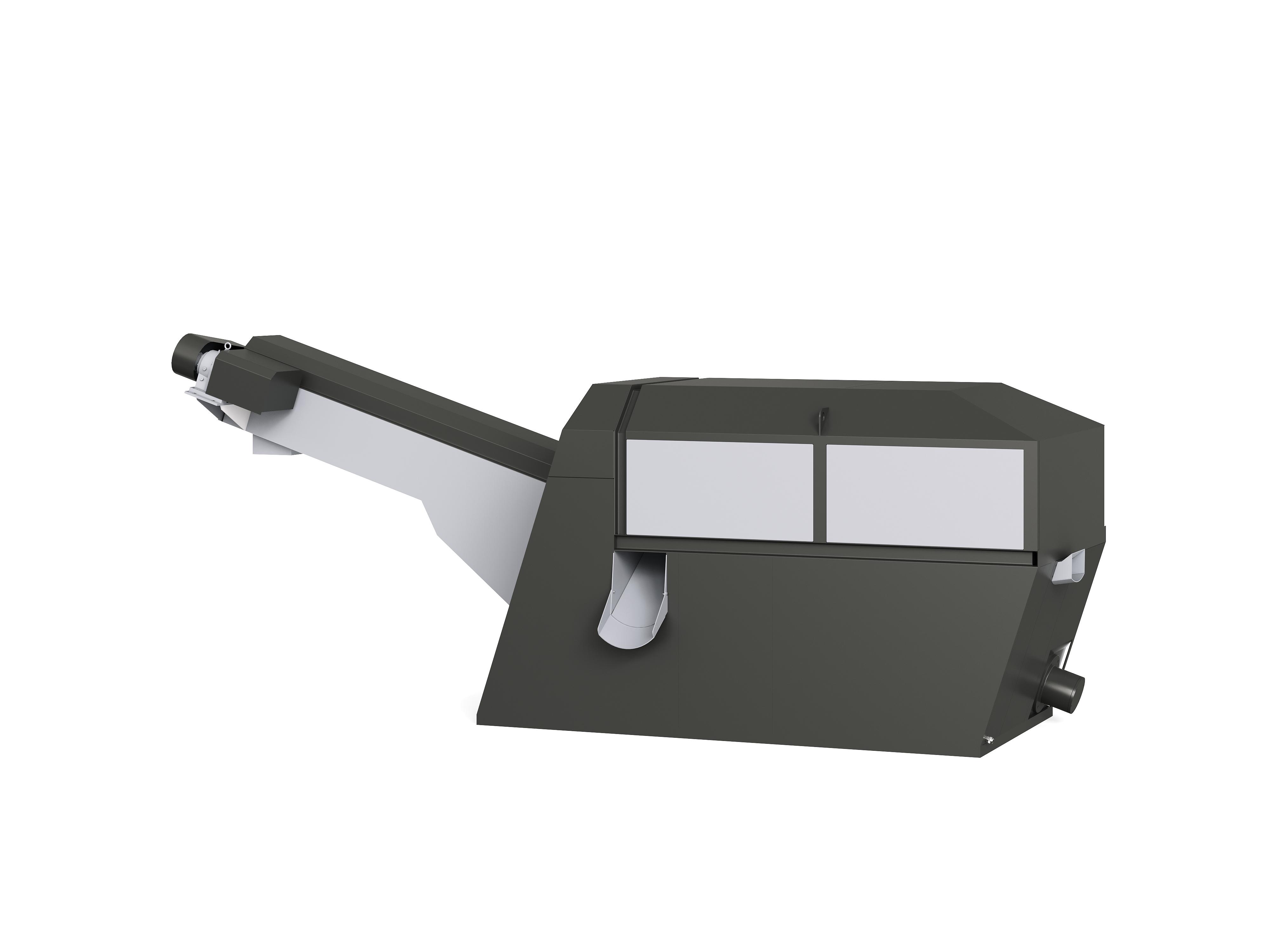
Building a fully automatic rotary concrete reclaimer starts well before any drum takes shape. The shop floor begins with careful material prep—steel plate and structural sections are measured, checked for flatness, and cut to length so every later step stays predictable. From there, laser cutting profiles the shell plates, and a heavy plate roller forms them into the drum’s curved sections. Instead of relying on manual tack welds, the team uses robotic welding to assemble the frame and main shell, which keeps the structure square and the weld legs consistent. That repeatability matters because the rotating drum, screening basket, and spray head all have to sit in tight alignment once they are mounted.
After the main mechanical assembly is in place, the unit moves into surface treatment. Shot blast cleaning strips mill scale and light rust, giving the steel a clean profile, and a two-part epoxy coating is applied for long-term corrosion resistance in wet, abrasive concrete yard conditions. The final phase is not about fabrication but about proving the automatic cycle works. The reclaimer is run dry—no concrete, just water and mechanical motion—so technicians can watch drum speed, spray timing, basket rotation, and control logic. Small adjustments are made to timers, limit switches, and valve sequencing until the cycle repeats smoothly on its own. Only then is the machine released, ready for installation and continuous reclaiming duty.
Contact Us
Contact Person: HaiYan
Email: [email protected]
Tel/WhatsApp: +86 18957325588
Website: https://www.senyoubeton.com/