

Food Grade Adsorbent Silica: The Professional Choice for Purity and Performance
2026-09-01
When purity can't be compromised, the choice of adsorbent quietly decides everything. Food grade adsorbent silica has long been the unsung hero behind crisp textures, stable flavors, and moisture-free packaging—but not all silica is engineered equal. That's where Zhonglian steps in: a professional-grade solution that pairs uncompromising safety with measurable performance. Whether you're battling caking in powdered mixes or protecting delicate nutraceuticals, the right silica does more than adsorb—it preserves integrity from first scoop to last. Curious what separates a true food-grade performer from a merely compliant one? The answer lies in how it's made, tested, and trusted.
Purity Is Not a Feature, It Is the Whole Point
Most teams treat purity like a checkbox on a spec sheet—something nice to mention in a launch post, but not the reason the thing exists. That approach misses the point entirely. When purity is treated as one feature among many, it gets compromised the moment a deadline looms or a competitor ships something flashy. You end up with a product that has a pure mode, a pure option, a pure setting—but no pure core. The result is always the same: mediocrity with a clean-looking label.
Real purity refuses to be modular. It shapes every decision, from the materials you choose to the features you deliberately leave out. Think of a single-origin coffee or a no-plugin note-taking app—the purity isn't an add-on; it's the entire reason the thing has a soul at all. If you're not willing to sacrifice convenience, speed, or even profit for it, then you don't actually believe in it. And your audience can tell.
What Food-Grade Really Means for Silica Adsorbents
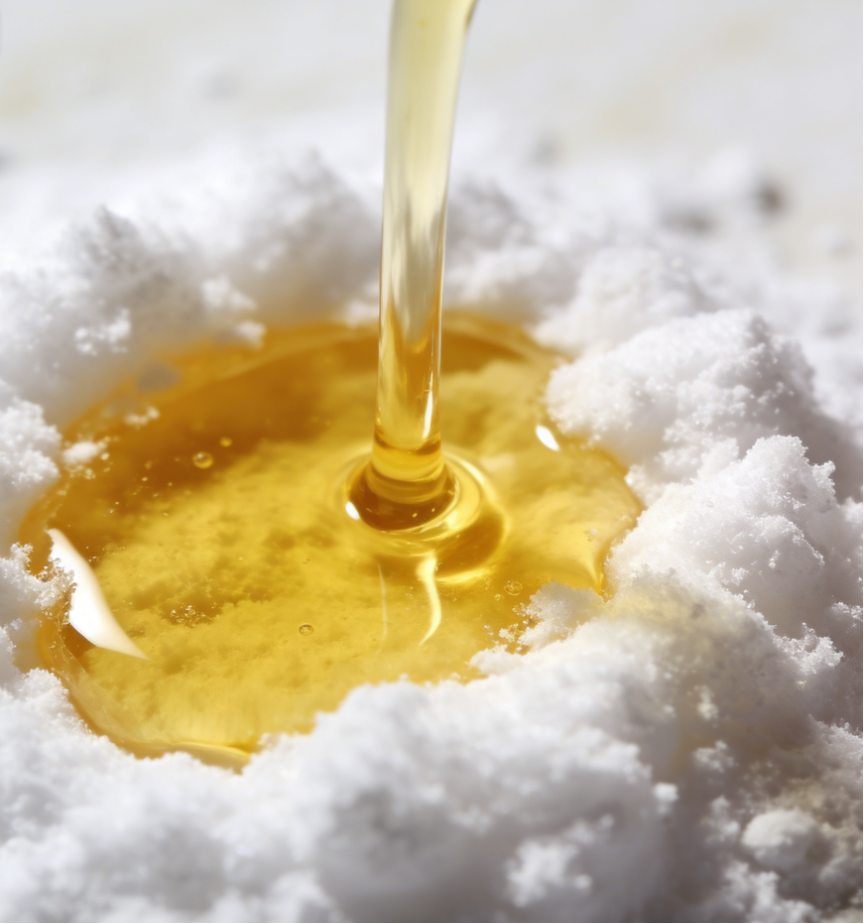
The label food-grade on a silica adsorbent carries a load that goes far beyond simple chemical purity. Under regulations such as 21 CFR 172.480 and the Food Chemicals Codex, the material must meet strict ceilings for heavy metals, leachable impurities, and residual processing aids. These thresholds are set because the adsorbent touches food or food-contact streams, sometimes directly and sometimes indirectly, and any slip in manufacturing could introduce arsenic, lead, or organic residues into a final product.
Yet the distinction also hinges on physical behavior. Food-grade silica adsorbents are engineered so that their pore structure remains stable under processing conditions, and they do not shed fines that could end up in filtrate. Batch-to-batch consistency matters as much as purity: a refiner needs confidence that the silica will remove targeted off-flavors, color bodies, or polar contaminants without altering the taste, odor, or clarity of the food itself.
In practice, this means vendors of food-grade silica adsorbents typically maintain dedicated production lines, validated cleaning protocols, and full traceability documentation. The term is not a marketing shortcut; it signals that the material has been evaluated for its intended use, not just for its composition on paper.
Moisture Control That Does Not Alter Taste or Texture
Keeping food fresh often means fighting a battle against both dryness and excess dampness. Too little moisture turns bread into croutons and cakes into chalk; too much invites mold and turns crisp crusts soggy. The trick is to manage humidity without letting the process leave its own fingerprint on what you eat. Unlike older methods that relied on salt packets or silica gel, which can leach subtle off-flavors or dehydrate the outer layer unevenly, modern moisture-control layers work invisibly. They absorb or release water vapor at a molecular level, responding to the food's own equilibrium rather than forcing a one-size-fits-all condition. The result is that an apple slice stays firm and juicy, a croissant keeps its shatter, and a block of cheese doesn't sweat or toughen.
At the heart of this approach is a buffering material—often a food-grade polymer or cellulose fiber matrix—that acts like a temperature-sensitive sponge for water molecules. It doesn't trap moisture permanently; instead, it negotiates with the headspace inside the package, releasing vapor when the air becomes too dry and absorbing it when condensation starts to form. Because the exchange happens gradually and without chemical additives that could migrate into the food, there's no aftertaste, no texture drift toward mealy or rubbery. A tomato slice remains as bright and acidic as the day it was cut, while a shortbread cookie doesn't soften at the edges. This precision matters especially for mixed-ingredient products, where one component's ideal humidity would ruin another's—think of a takeout bowl with crispy wontons next to steamed vegetables. The control layer lets both exist in the same environment without compromise.
For home cooks and food brands, the practical benefit is wasted food becoming the exception rather than the rule. You can store a dozen bagels in one container for a week, and the seventh one will still have that slight chew and glossy crust, not a stale snap or a moldy fuzz. Since the moisture buffering doesn't rely on vacuum sealing or heavy desiccants, the food's natural aroma stays intact too—herbs still smell like herbs, not like a plastic packet. There's a quiet pleasure in opening a container and finding the food exactly as you remember it, with no telltale crunch or dampness that whispers "preserved." That's the real achievement: a technology that works so unobtrusively you forget it's there, leaving only the taste and texture the food was meant to have.
From Anti-Caking to Carrier: One Silica, Multiple Jobs
It’s easy to think of silica as a one-note ingredient—sprinkled into powder blends to keep salt or spices from clumping. But look closer and the same particle size distribution that prevents caking also creates the ideal surface for loading liquids, flavors, or active ingredients. That dual personality isn’t a compromise; it’s built into the material’s porosity and silanol chemistry.
In dry beverage mixes and seasoning blends, fumed or precipitated silica coats host particles, absorbs moisture, and keeps flow smooth across production lines. Swap the formulation to a nutraceutical tablet or a powdered flavor system, and that same silica becomes a carrier—holding oils, vitamins, or volatile compounds within its pores, then releasing them gradually or protecting them from oxidation. The shift from anti-caking to carrier rarely requires re-engineering the silica itself; formulators simply lean on different parts of its surface area and pore volume.
What makes this flexibility practical is control. Grades with higher oil absorption suit high-load liquid actives, while smaller-particle options sharpen free-flow performance. Adjusting surface treatment—hydrophilic or hydrophobic—changes how the silica interacts with water vapor or nonpolar liquids. That’s why a single specification can appear in a cake mix and a pharmaceutical excipient list, doing two jobs without changing its core identity.
The Safety Net Behind Strict Food Regulations
When a batch of imported berries triggers a recall, the system rarely gets credit for catching it before the fruit reached breakfast tables. That quiet efficiency isn't luck. Behind every label checking for allergens or every rejected shipment at a port sits a layered framework of inspections, traceability protocols, and legal accountability that most consumers never see. These rules don't just punish bad actors; they create a shared expectation that food won't make you sick, and that expectation reshapes how growers, processors, and retailers behave long before a product hits the shelf.
The real strength of strict food regulations lies in their redundancy. A single oversight rarely causes harm because multiple checkpoints exist: farm audits, cold-chain monitoring, lab testing, and post-market surveillance. This overlapping design means a pathogen caught at one stage might have already been flagged upstream. It also forces companies to invest in prevention rather than damage control. For smaller producers, the compliance burden can feel heavy, but the alternative—a market where only large players can afford safety—would be far worse.
What often gets lost in debates about regulation is how it functions as a collective insurance policy. No individual shopper can test their lettuce for E. coli or verify that a canned soup's sodium claims are accurate. Strict food rules externalize those verification costs across the supply chain, making safety a baseline rather than a premium feature. That's why outbreaks, when they do occur, trigger not just a recall but a systemic review. The safety net isn't static; it gets patched and re-woven each time a gap appears, which is precisely why most meals are eaten without a second thought.
Why Consistency Matters as Much as the Spec Sheet
A spec sheet tells you what a product can do once, under ideal conditions, in someone else's lab. What it rarely shows is whether the device behaves the same way on the hundredth cycle, after an hour of heat, or when the battery dips below twenty percent. That gap between a single impressive number and trustworthy repetition is where real user experience is won or lost.
Think of a camera lens that nails focus in perfect light but drifts when shooting back-to-back bursts. The sharpness charts may look identical, yet the keeper rate falls apart. The same applies to motorized systems, audio interfaces, or even the tactile click of a button. A small drift in actuation force may not show up on a datasheet, but your fingers notice it by the end of the first week.
Consistency also compounds over time. A tiny variation in color temperature, latency, or tension might be invisible in isolation. Across a full production run or a day of heavy use, those micro-differences become the personality of the product. That is why buyers who have been burned by spec-sheet heroes start asking a different question: not just how high the number goes, but how long it stays there.
FAQ
It undergoes strict purification to meet safety limits for heavy metals and microbial contaminants, so it can be added directly to foods without introducing unwanted residues.
By adsorbing excess moisture and volatile impurities, it prevents clumping and slows down degradation reactions that could compromise the final product.
Yes. Its high surface area and fine particle size reduce inter-particle friction, allowing powders to move smoothly through hoppers, conveyors, and filling lines.
When sourced from reputable suppliers, it complies with major food additive regulations such as the FCC, EU specifications, and JECFA monographs.
Food grade silica is manufactured under controlled conditions with tighter limits on impurities like lead, arsenic, and soluble salts, while industrial grades may contain residues unsuitable for consumption.
Keep it in sealed containers away from high humidity and strong odors, since its adsorbent nature can pick up moisture or volatiles that reduce effectiveness.
Usage usually ranges from 0.1% to 2% by weight depending on the food matrix and processing conditions, but formulators should validate the exact amount through small-scale trials.
Conclusion
Purity in food-grade adsorbent silica isn’t one selling point among many; it determines whether the material belongs in a production line at all. The term “food-grade” carries weight beyond a label—it means the silica has been manufactured, handled, and tested to meet strict limits on contaminants such as heavy metals, arsenic, and microbial load. What often gets overlooked is how that purity translates into real performance: a silica that controls moisture without drawing out volatile flavor compounds or altering mouthfeel. This balance matters because an adsorbent that aggressively strips water can just as easily strip the subtle notes that define a spice blend, a powdered beverage, or a seasoning mix. The best options work quietly, preserving the product’s intended taste and texture while keeping clumping and degradation at bay.
Silica’s role rarely stops at anti-caking. The same particle structure that keeps powders free-flowing also serves as a carrier for liquid flavors, vitamins, or oils, allowing manufacturers to turn sticky or volatile ingredients into stable, easy-to-dose dry forms. Behind that versatility sits a regulatory framework—FDA 21 CFR 172.480, EU E 551, and similar standards—that sets clear limits and purity criteria. But a spec sheet alone doesn’t guarantee day-to-day reliability. Consistency across batches, lot after lot, is what separates a professional choice from a commodity powder. Particle size distribution, pore volume, and surface chemistry have to stay within tight ranges; otherwise downstream blending, dosing, and shelf life shift in ways that are costly and hard to trace. That is why experienced formulators treat silica not as a minor additive, but as a functional ingredient that quietly protects quality from the first mix to the final consumer.
Contact Us
Contact Person: Levin Wang
Email: [email protected]
Tel/WhatsApp: 8618668999988
Website: https://www.silicaplant.com/