
Corrugated Box Company: Delivering Durable, Custom Packaging Solutions for Every Industry
2026-10-26
When product safety meets brand identity, the right corrugated box does more than just hold items—it delivers a statement. At Imagine Craft Packaging, we’ve spent years perfecting the balance between durability and custom design, so every industry from e-commerce to electronics can ship with confidence. This post unpacks what truly makes a corrugated box company stand out in today’s competitive market, and why our tailored solutions keep customers coming back.
Where Odd Shapes and Heavy Loads Get a Second Chance
Standard crates and pallets have a way of assuming every load is a neat rectangle. The moment a casting has an odd lug, or a machine base carries most of its weight on one side, the usual handling playbook falls apart. We've built our whole approach around that gap.
Instead of telling you to modify your equipment to fit a standard skid, we study the actual footprint and weight map. Then we fabricate load-bearing supports, bolsters, and cradles that match the awkward reality of what you're shipping or storing. That bent frame from the 1960s, the hydraulic fixture with the offset center of gravity, the fabricated weldment that never had a proper lifting point—they all get the same careful treatment here.
The goal isn't just to move something from point A to point B. It's to give unusual loads a legitimate second chance: safely lifted, properly supported, and ready for whatever comes next without causing damage or downtime.
Boxes Built for the Way You Actually Ship
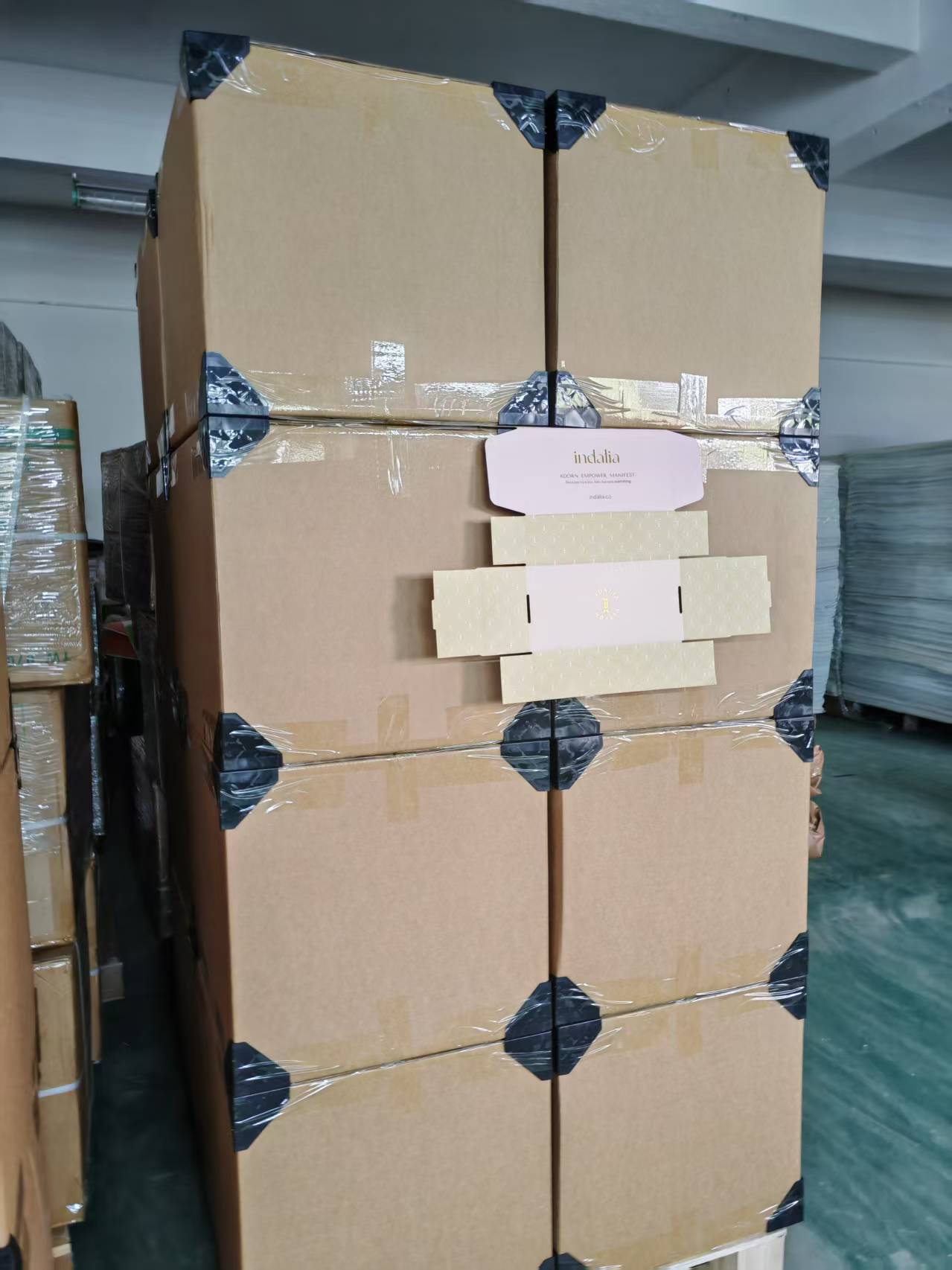
Real shipping isn’t gentle. Packages get wedged under heavier boxes, slid across concrete, and stacked in ways that would make a designer cringe. These corrugated boxes are built for that abuse, with reinforced corners and board combinations that hold their shape through the last mile.
Sizing matters just as much as strength. Instead of forcing your products into a handful of generic cartons, the range follows the dimensions of what people actually send—oddly shaped tools, apparel bundles, small electronics, and everything in between. That means less filler, fewer split seams, and fewer returns caused by crushed or rattled contents.
The result is packaging that doesn’t need special handling instructions, because it’s already matched to the way your orders move through the real world.
No More Bubble Wrap Roulette
Every shipping room has that one person who treats bubble wrap like a lottery ticket—layering on a few extra sheets just in case while leaving the corners completely exposed. It feels productive, but really it is just hoping the box survives the trip. No more of that. Break the cycle by matching the wrap to the actual item: small voids for small shifts, full enclosure for anything with edges that can bite.
The real problem is not the bubble wrap itself; it is the random application. A single layer can work if it is tight and complete. Six layers will not help if the item slides around inside. Start with the weakest point of the item, cover that first, then build outward until nothing rattles. That is not roulette—that is a decision.
Once you stop guessing, you will notice fewer crushed boxes and fewer apologetic replacement orders. The goal is not to use the most bubbles, it is to use the right amount for the trip ahead. And that is a game you can actually win.
From Assembly Line to Front Door, We’ve Got It Covered
Every order starts on our own floor, where each unit is assembled, tested, and packed by the same crew that designed it. No third-party handlers, no black-box outsourcing. If a bracket needs adjusting or a cable rerouted after final inspection, that happens before the box is sealed—not in a customer's living room.
From there, the shipment moves through carriers we've personally audited for handling fragile freight, not just parcels. Real-time tracking updates go out at every transfer point, and our dispatch team steps in the moment a package sits idle beyond the expected window. You're never waiting on a generic 'in transit' status; you get a named contact who can reroute or reschedule while the truck is still rolling.
At the doorstep, we don't consider the job finished when the pallet drops. Every delivery includes a 15-minute guided unboxing call if requested, plus a remote check of the unit's first power-on within 48 hours. If something survived the factory but not the forklift, we ship a replacement part that same day from a regional hub—no return authorization forms, no waiting on a claims department.
When Off-the-Shelf Just Costs You More
The sticker price on a ready-made tool rarely reflects what you'll actually spend. A generic CRM, for example, might force your sales team to duplicate data across three screens because it can't map to how your pipeline actually works. Those extra clicks aren't free; they compound into hours of lost focus every week, and the real expense shows up in payroll, not on the vendor's invoice.
Then there's the customization trap. You buy a platform that claims to be flexible, but every tweak requires a specialist or a paid add-on. When the vendor ships an update, your carefully built workarounds break, and suddenly you're paying again just to restore what already worked. A cheaper upfront cost can quietly turn into a subscription to your own inefficiency.
In the end, the premium you avoided often lands in your operating budget under less visible labels: overtime, retraining, lower output, or the cost of maintaining brittle integrations. That's how an off-the-shelf choice can end up costing more than a solution shaped around the way your company actually runs.
One Supplier for Every Aisle of Your Warehouse
Keeping a warehouse running means restocking more than just fast movers. From dock bumpers and stretch wrap to safety signage and aisle markers, every zone pulls from its own list of essentials. Ordering from separate vendors creates gaps, delays, and extra paperwork. A single source that spans all those aisles changes how smoothly the whole operation runs.
Our catalog is built around the way warehouses actually work. Packaging, material handling, janitorial, safety, and storage products sit side by side, so one order can cover receiving, picking, packing, and shipping. You won't need to juggle multiple portals or reconcile different invoices at month-end. Fewer purchase orders means your team spends less time on procurement and more time moving inventory.
That consistency also simplifies reordering and budgeting. When you know one supplier carries everything, you can set standard items, negotiate better terms, and keep backup stock without overcomplicating your shelves. Every aisle stays supplied, every shift keeps moving, and your warehouse operates as one connected flow instead of a patchwork of vendors.
FAQ
We start by looking at the item's weight, dimensions, and fragility. Then we adjust the flute size, wall thickness, and add internal dividers or foam inserts if needed. It's less about a one-size-fits-all formula and more about matching the box to how it's actually handled in your supply chain.
We've made boxes for electronics, fresh produce, auto parts, medical devices, e-commerce, and even craft breweries. If a business needs something shipped safely, we'll usually take it on. The only projects we turn down are ones where the material spec doesn't support the product's weight or environmental conditions.
Yes, we can do short-run prototypes or pilot batches. That way you can check the fit, stacking strength, and print quality without sitting on thousands of unused boxes. There's a slight per-unit cost increase, but it beats discovering a problem after a full production run.
Strength comes more from flute geometry and paper grade than just adding layers. We often use high-performance liners or a different flute profile to boost stacking strength while keeping the box light enough for reasonable shipping rates. It’s about finding that balance for each product.
We handle flexographic and digital printing, so you can get your logo, handling instructions, or even full-color graphics on the outside. If you don't have artwork ready, our in-house team can work from a rough sketch or previous packaging files to get something production-ready.
For a standard custom size with existing tooling, it’s usually about two to three weeks after the artwork is approved. If we need to create new cutting dies or do complex multi-color printing, add another week or so. Rush options are available, but they depend on our current production schedule.
We can treat the liners with moisture-resistant additives or use wax-coated alternatives for wet or frozen conditions. It's not something every box needs, but if you're shipping produce or storing in a walk-in freezer, we'll recommend a board grade that won't turn to mush.
The basics help: rough dimensions, product weight, how far it ships, and any special handling needs. If you have photos of your current packaging or a sample you're trying to improve, that's even better. We can fill in the technical gaps from there.
Conclusion
Corrugated Box Company has built its reputation on a simple truth: packaging should never feel like an afterthought. From handling awkward, oddly shaped machinery parts to reinforcing cartons for heavy industrial loads, their team treats every box as a structural problem worth solving properly. Instead of forcing customers into generic stock sizes that leave products rattling around or crushed under their own weight, they design each container around the actual item being shipped. That means less filler, fewer damage claims, and no more guessing games with layers of bubble wrap hoping something survives transit.
Their approach extends far beyond the box itself. They map the entire journey—from the assembly line where a carton is first packed, through the warehouse aisles, onto trucks, and finally to a customer's front door. That end-to-end perspective helps identify weak points before they become costly returns. And because they supply everything from heavy-duty corrugated shippers to dividers, inserts, and protective packaging, operations managers stop juggling multiple vendors with mismatched lead times. Off-the-shelf options often seem cheaper until you factor in wasted space, damaged goods, and the labor of making a bad fit work. Corrugated Box Company offers one accountable partner who understands that durable, custom packaging is not an expense—it's the quiet difference between a one-star review and a repeat order.
Contact Us
Contact Person: Sunnie
Email: [email protected]
Tel/WhatsApp: +8615818596517
Website: https://www.imagine-craft.com/