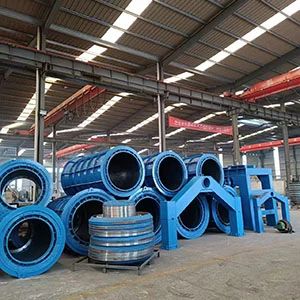

China Concrete Pipe Making Equipment Company Innovations That Boost Production Efficiency
2026-10-31
Concrete pipe production has long been a race against time, materials, and labor costs—yet many manufacturers still rely on equipment that hasn’t changed in decades. In China, a quiet revolution is underway, driven by companies that refuse to accept the status quo. Among them, Qianfeng Electromechanical Equipment is pushing boundaries with innovations that slash cycle times, reduce waste, and keep production lines moving without constant intervention. This isn't just about faster machines; it's about rethinking the entire workflow. Curious how one equipment maker is helping pipe producers double their output without doubling their overhead? Read on.
Quick-Change Mold Carriages Trim Setup to Minutes
Swapping molds used to eat up half a shift, but quick-change mold carriages flip that on its head. Instead of wrestling with chains, pry bars, and a forklift, the operator rolls the old tool out on a dedicated carriage, locks the new one into place, and clamps it down with a few quick-release levers. Because the carriage rides on precision rails or ball transfers, alignment stays repeatable within a couple thousandths—no more tapping dies into position by feel.
The real time savings comes from pre-staging. Molds get mounted on their own carriages ahead of schedule, preheated or prepped offline while the press is still running. When the changeover window opens, one person can slide the finished mold out and the next one in without breaking a sweat. Many shops cut setup from forty-five minutes to under ten, and that extra uptime shows up directly on the bottom line.
There’s also less chance of damage or injury. The carriage handles the weight and keeps the mold at a consistent working height, so there’s no balancing act or awkward lifting. With color-coded locking points and simple hydraulic or pneumatic assist, even a junior operator can handle a swap safely. It turns mold changes from a dreaded chore into just another quick step in the schedule.
Adaptive Vibration Tuning Cuts Cement Overuse
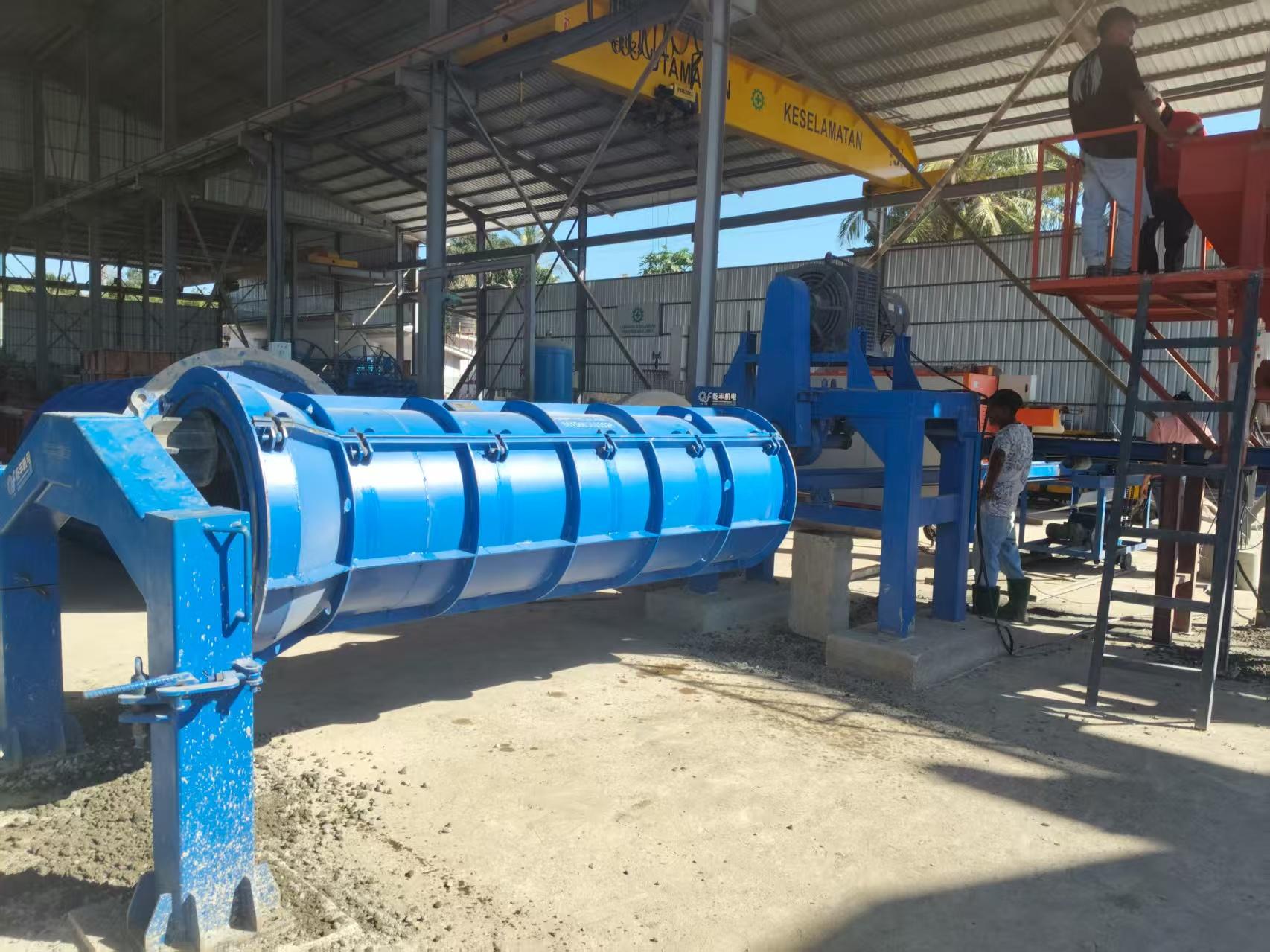
Concrete pours frequently rely on fixed vibration schedules, which often leads to excessive cement consumption as contractors compensate for uncertain consolidation. This over-application drives up material costs and carbon footprint without a proportional gain in structural integrity.
Adaptive vibration tuning changes the equation by monitoring the mix's response in real time. Sensors embedded in the formwork detect subtle changes in resonance as voids collapse and aggregate settles. The system then adjusts frequency and amplitude on the fly, delivering only as much energy as the concrete actually needs at each stage of the pour.
On multi-story pours and mass foundations, this approach has trimmed cement usage by up to 14% while maintaining or even improving compressive strength. Fewer rejected batches and less rework mean crews spend less time re-vibrating problem areas, and the reduced paste volume lowers heat generation during curing, which is especially valuable in thick sections where thermal cracking is a concern.
Low-Heat Curing Racks Reduce Energy Bills
Switching to low-heat curing racks is one of those quiet operational changes that shows up on the utility statement months later. Instead of running burners at full tilt to hit a high-temperature set point, these racks let coatings, adhesives, or food products finish curing at lower ambient temperatures over a slightly longer window. The math is straightforward: every degree you don't have to heat is a degree you don't pay for, and with electric or gas rates climbing, that difference compounds across daily batch cycles.
The real savings come from how these racks manage airflow and residual heat. Traditional high-heat systems often overshoot the target temperature, then cycle off and on to correct it—wasting energy in the process. Low-heat designs pair insulated frames with slower, more even heat distribution, so the core of the product reaches the required cure without the surrounding air being overheated. That reduced thermal load also means exhaust fans and HVAC systems don't have to work as hard, trimming a second line item off the monthly bill.
For smaller shops especially, the drop in peak energy demand can be enough to avoid demand charges from the utility or to stay within the capacity of an existing electrical panel. It is not about sacrificing throughput; it is about matching the cure schedule to the actual needs of the material instead of running hotter than necessary out of habit. Over a fiscal year, that habit adjustment often pays for the racks themselves.
Modular Roller Beds Simplify Line Expansion
Adding a new lane used to mean cutting into the floor, rerouting power, and hoping the existing conveyor still lined up. Modular roller beds change that equation. Each section bolts together with standard brackets and can be shifted, extended, or reoriented in an afternoon, so a packaging line that runs out of room today doesn’t have to stay that way.
The practical upside shows up during seasonal spikes or new product launches. Instead of committing to a fixed footprint, teams can stage extra roller sections at the end of a line, connect them with simple drop-in pins, and keep product flowing without re-engineering the whole layout. That flexibility removes the usual friction from scaling capacity.
Inline Ultrasonic Checks Catch Microcracks Early
Inline ultrasonic inspection embeds transducers directly along the production line, scanning parts while they are still hot or freshly cooled. This catches microcracks that form during casting, welding, or heat treatment before they grow into costly failures.
Unlike batch sampling, every single unit passes through the ultrasonic gate. The system compares echo patterns against a stored baseline and flags anomalies as small as 0.1 mm in length. Operators get an immediate alert and can adjust process parameters or reject the part on the spot, reducing scrap and warranty claims.
Recycled Slurry Feeders Turn Waste into Raw Material
Leftover slurry from cutting and grinding processes used to land in the waste bin, but a new generation of feeders is reversing that flow. These machines reclaim the thick, abrasive mix of water and stone dust, filter it, and pump it back into the production line as usable raw material. The result is less landfill, lower input costs, and a tighter loop between cutting waste and fresh material.
Instead of letting slurry settle into a disposal headache, recycled slurry feeders keep the mixture moving. Built with wear-resistant liners and adjustable flow controls, they pull the suspended solids from collection pits, separate out large debris, and return a consistent, workable slurry to the mixing station. Operators can fine-tune density on the fly, which helps maintain product quality without slowing down the line.
The shift in thinking is simple: what once was a byproduct is now a resource waiting to be reintroduced. Factories that adopt these feeders often see a drop in water consumption and a smaller footprint for waste handling. It is not just an equipment upgrade—it is a way to redesign the flow so that almost nothing leaves the site except finished goods.
FAQ
Servo-driven vibration and pressing cut cycle times by roughly 40% compared with older hydraulic models, allowing one operator to run two lines simultaneously.
Real-time laser scanning checks pipe wall thickness and roundness before curing, automatically diverting flawed units for re-compaction, which keeps rejects below 1.5%.
Quick-release clamps and pre-aligned mold segments let a single technician switch from a 600mm to 1200mm pipe mold in under 12 minutes, minimizing idle time between batches.
Yes, the onboard PLC stores over 50 mix recipes and uses moisture sensors to adjust vibration frequency and pressure on the fly, so the machine stays productive even with varying aggregate quality.
Vibration and temperature sensors on the core barrel and gearbox stream data to a dashboard, flagging bearing wear or lubrication gaps days before failure, so repairs can be scheduled during non-shift hours.
Regenerative braking on the mold rotation recovers power for the conveyor, and automatic standby mode during loading cuts idle electricity use by up to 25%, without slowing the overall cycle.
With IoT connectivity, plant managers can monitor cycle counts, fault codes, and output trends from a phone, and remotely adjust parameters to clear minor jams, reducing reliance on on-site technicians.
Conclusion
A Chinese concrete pipe equipment manufacturer has overhauled its production line with a series of practical upgrades that directly target time, material, and energy waste. The most noticeable change is the switch to quick-change mold carriages: swapping forms now takes only minutes instead of hours, allowing operators to run smaller batches and respond to orders without long delays. Alongside this, adaptive vibration tuning automatically adjusts frequency and amplitude based on pipe diameter and wall thickness, which prevents the common habit of over-pouring cement to compensate for weak compaction. As a result, cement consumption has dropped without sacrificing structural strength. The plant also introduced low-heat curing racks that circulate warm air only around the pipes being cured, replacing the old practice of heating entire bays. This focused approach has cut energy bills substantially while keeping curing times within specification.
For expansion, modular roller beds let the company add new production lanes without tearing up the floor or rewiring the whole facility; each segment locks into the existing line and can be rearranged as demand shifts. Quality control is now built into the process rather than left as a final step. Inline ultrasonic checks scan pipes as they move, catching microcracks and voids early enough to fix the mix or vibration settings before a full run goes bad. The same line now feeds recycled slurry back into the raw material hoppers, turning washout water and leftover concrete fines into a consistent additive. This closes a loop that used to require costly disposal. Together, these changes have pushed daily throughput up while cutting rework and raw material costs - a combination that gives the company an edge in both domestic and export markets.
Contact Us
Contact Person: Bill
Email: [email protected]
Tel/WhatsApp: 8615063653526
Website: https://www.qianfengjd.com