

Bespoke Industrial HVLS Fans Deliver Custom Airflow for Large Work Environments
2026-06-23
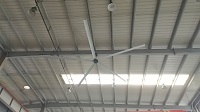
In vast industrial spaces, poor air circulation can stifle productivity and compromise worker comfort. That’s where VINDUSFAN’s bespoke HVLS fans step in—precision-engineered to move massive volumes of air with whisper-quiet efficiency. Rather than settling for one-size-fits-all, each system is tailored to the unique demands of your facility, ensuring targeted, energy-saving airflow. Discover how custom HVLS solutions transform challenging work environments into havens of year-round comfort.
Tailoring Airflow to Your Facility’s Unique Layout
Every facility comes with its own spatial quirks—beams that disrupt laminar flow, unusually tall ceilings, or oddly placed equipment clusters. Cookie-cutter airflow plans rarely account for these nuances, often leading to dead zones where contaminants linger or uncomfortable drafts where employees work. A tailored approach starts with mapping how air actually moves through the space, using smoke studies or computational fluid dynamics to visualize the invisible. That data reveals exactly where to adjust vent placement, add local exhaust, or even introduce subtle pressure gradients to steer air where it’s needed most.
In practice, this might mean staggering supply diffusers to work around overhead obstructions rather than following a fixed grid. Or it could involve segmenting a large open area into microzones, each with its own airflow profile based on heat loads and occupancy patterns. The payoff isn’t just energy savings—it’s a workspace where temperature and air quality remain consistent from the production line to the breakroom, without overworking the HVAC system. Small tweaks, like angling louvers to bounce air off a column instead of into it, can make a surprisingly large difference.
The best custom solutions often emerge from a blend of on-site observation and modeling. Facilities with high ceilings, for instance, benefit from destratification fans that can be toggled seasonally; spaces with sensitive processes may need displacement ventilation designed around the exact footprint of the equipment. It’s about respecting the building’s architecture while meeting the real-world demands of the people inside. When airflow is truly tailored, you stop fighting the layout and start working with it.
Quiet Power That Keeps Employees Productive
A calm workspace can do more for focus than any motivational poster ever could. When noise drops, the mind stops bracing for interruptions, and that subtle shift lets people sink into deep, meaningful tasks without even realizing it. It's not about silence alone, but about creating a current of concentration that carries everyone forward.
This kind of environment also fosters quiet leadership—the colleague who sets a pace without saying much, the manager who listens before deciding. In these spaces, employees feel less pressure to perform busyness and more freedom to contribute genuinely. The result isn't just output; it's work that feels sustainable and human, day after day.
Sometimes the most productive move is to stop managing every minute and start trusting the gentle rhythm a team builds together. Simple things like a thoughtful layout, an unspoken agreement to guard deep work hours, or leaving room for reflection can spark more creativity than any brainstorming session. Productivity, at its best, whispers rather than shouts.
Cut Energy Costs Without Compromising Comfort
Many people assume that saving on energy bills means shivering in winter or sweating through summer, but that’s a false trade-off. Simple upgrades like weatherstripping doors and windows keep conditioned air inside without affecting your daily routine. A smart thermostat learns your schedule and adjusts temperatures when you’re asleep or away, so you barely notice the change while savings climb steadily.
Another overlooked strategy is optimizing airflow. Ceiling fans set to spin clockwise in winter push warm air down, letting you lower the thermostat a degree or two without feeling colder. In summer, a counterclockwise breeze can make a room feel several degrees cooler, reducing the need for constant AC. These adjustments work silently in the background, preserving that just-right feel.
Even larger investments, such as adding insulation or upgrading to a high-efficiency heat pump, pay off in comfort and cost. Modern systems run whisper-quiet and maintain more consistent temperatures than older units, eliminating hot and cold spots. When combined with small behavioral shifts—like using curtains to block summer sun or opening windows on cool nights—you create a home that’s both cozy and remarkably efficient.
Built to Last in Demanding Industrial Settings
Industrial environments don't play nice. Dust, vibration, moisture, and temperature swings are daily realities that punish anything less than rugged. That's why every component, from the hardened exterior to the sealed connectors, is chosen to shrug off conditions that send lesser equipment to an early grave. It's not about surviving a spec sheet test; it's about the quiet confidence that comes from years of continuous duty without a hiccup.
We've seen units come back caked in grime, still ticking after a decade beside conveyor belts or stamping presses. The secret isn't one big fix—it's a hundred small decisions: thicker PCB coatings, wider temperature tolerances, and mounting points that don't crack under vibration. In a world where downtime isn't an option, being built to last isn't a luxury; it's the whole point.
Effortless Integration with Your Existing Systems
We built our platform to slide right into your current setup without any heavy lifting. You don't need to abandon the tools your team already relies on, whether it's a well-loved CRM, an email platform you've fine-tuned over the years, or a bunch of spreadsheets tracking your day-to-day. The idea is simple: keep what works and let our system fill the gaps quietly in the background.
What really makes the integration feel natural is that it picks up on your existing workflows rather than forcing you to learn a new way of doing things. If you're used to receiving updates via Slack or managing tasks in Asana, that flow stays intact. The data moves across services without you having to babysit it, so you can focus on the work that matters instead of playing middleman between apps.
Getting started is surprisingly low-key, too. There's no lengthy implementation period or need to rope in a developer for every little connection. Most of our users have things up and running in an afternoon, and by the next day, it's just a normal part of how they operate. It's the kind of integration that you almost forget is there – until you realize how much smoother everything runs.
Real-World Examples of Comfort in Action
A bustling coffee shop on a rainy morning might not seem like a hub of comfort, but watch closely. The barista remembers a regular’s order without asking, sliding a perfectly made latte across the counter with a warm nod. Over by the window, mismatched armchairs invite strangers to linger, their worn cushions telling stories of countless quiet moments. It’s not about luxury—it’s about the unspoken rhythm of belonging that turns a simple café into a sanctuary.
Consider the subtle genius of a well-designed airport lounge. Beyond the obvious perks of free snacks and quiet seating, the real comfort lies in the little things: a charging station tucked right where you’d naturally rest your elbow, lighting that mimics the time of day to ease jet lag, and a view of the tarmac that’s framed not as chaos, but as a moving tapestry. It’s design that whispers, “we knew you’d be tired,” without a single sign saying so.
Even in digital spaces, comfort finds surprisingly human forms. A meditation app that sends reminders phrased as gentle suggestions rather than chirpy commands, or a project management tool that playfully congratulates you when you clear a daunting task—these are quiet acknowledgments that we’re not machines. The best examples don’t just solve a problem; they sit with you in the messiness of being human, offering a moment of genuine relief.
FAQ
They are high-volume, low-speed ceiling fans specifically engineered to match the dimensions, layout, and airflow requirements of a particular workspace. Unlike off-the-shelf models, every aspect—from blade design to motor power—is tailored.
By slowly moving massive columns of air from ceiling to floor, they eliminate stagnant zones, balance temperatures, and provide a gentle, consistent breeze across huge areas, making the space feel more comfortable year‑round.
A custom fan accounts for obstructions, ceiling height, and heat sources unique to a facility. This means it can direct air exactly where it’s needed, avoiding dead spots and saving energy that a generic fan might waste.
Engineers consider building shape, structural supports, existing ventilation, and even machinery placement. Airflow simulations and on‑site measurements ensure the final design maximizes circulation without disruptive drafts.
Absolutely. In winter, they gently push rising warm air back to the floor, reducing heating demands. In summer, the airflow creates a cooling effect that can make a space feel up to 10°F cooler, cutting air‑conditioning use.
Yes, they consume surprisingly little power for their size—often comparable to a few household ceiling fans. Their ability to reduce reliance on HVAC systems leads to significant long‑term energy cost reductions.
Warehouses, manufacturing plants, aircraft hangars, and distribution centers with high ceilings and vast open areas see the biggest benefits, but any large-volume space can profit from the customized airflow.
Conclusion
Industrial spaces rarely fit a one-size-fits-all formula when it comes to climate control. Bespoke HVLS fans address this by shaping airflow precisely around obstacles, workstations, and high-traffic zones, making every corner of the facility feel balanced. The gentle, broad circulation operates at a noise level so low it fades into the background, allowing teams to concentrate without distraction. At the same time, these systems slash energy consumption by leveraging natural air movement instead of overworking HVAC units. The result is a workplace that remains comfortable through sweltering summers and chilly winters without a spike in utility bills.
Beyond performance, these fans are engineered for harsh industrial realities—built with corrosion-resistant materials and robust motors that shrug off dust, humidity, and heavy use. Installation works with what you already have; they slip into existing layouts without demanding structural changes, often tying into BMS or smart thermostats for seamless control. The impact isn't theoretical. Warehouses, manufacturing plants, and aircraft hangars report steadier temperatures, fewer complaints, and happier crews. Customized airflow isn't a luxury—it's a practical investment that pays back in productivity and longevity.
Contact Us
Contact Person: Michael Danielsson
Email: [email protected]
Tel/WhatsApp: +1 951 565 7769
Website: https://www.vindusfans.com