

Auto Flavoring Machine Factory: Revolutionizing Food Production Efficiency
2026-06-05
In the fast-paced world of snack manufacturing, every second counts. Yet traditional flavoring methods still cling to time-consuming, inconsistent manual processes that hold back productivity. Imagine a single system that transforms seasoning from a bottleneck into a seamless, high-speed advantage. Enter the MINGDE auto flavoring machine—a breakthrough engineered to shatter efficiency barriers. By automating precision coating with minimal waste, it’s not just keeping up with demand; it’s rewriting the rules of food production. Curious how this shift can future-proof your line? Read on for the inside story.
Rethinking Factory Flows with Smart Seasoning Tech
Traditional seasoning processes in food factories have long relied on manual adjustments and fixed recipes, often leading to inconsistencies and waste. Smart seasoning technology introduces real-time monitoring and adaptive controls that respond to variations in raw materials and production conditions. By embedding sensors and machine learning algorithms directly into the production line, flavor profiles can be fine-tuned on the fly, ensuring each batch meets precise taste standards without constant human intervention.
The core of this innovation lies in its ability to gather and analyze data from multiple points—moisture levels, ingredient density, and even ambient temperature. This data feeds into a centralized system that dynamically adjusts seasoning dispensers, eliminating the lag between detecting a deviation and correcting it. Unlike static programs, smart systems learn from every production run, continuously refining their models to anticipate shifts and prevent over-seasoning or under-seasoning before they occur.
Beyond quality control, rethinking factory flows with this technology unlocks measurable operational gains. Production lines become more agile, switching between product variants with minimal downtime, while material usage is optimized to reduce excess. The result is a streamlined process where human expertise is augmented rather than replaced—workers focus on strategic oversight, while the system handles the repetitive precision work, creating a balanced and efficient manufacturing environment.
Where Speed Meets Consistency in High-Volume Mixing
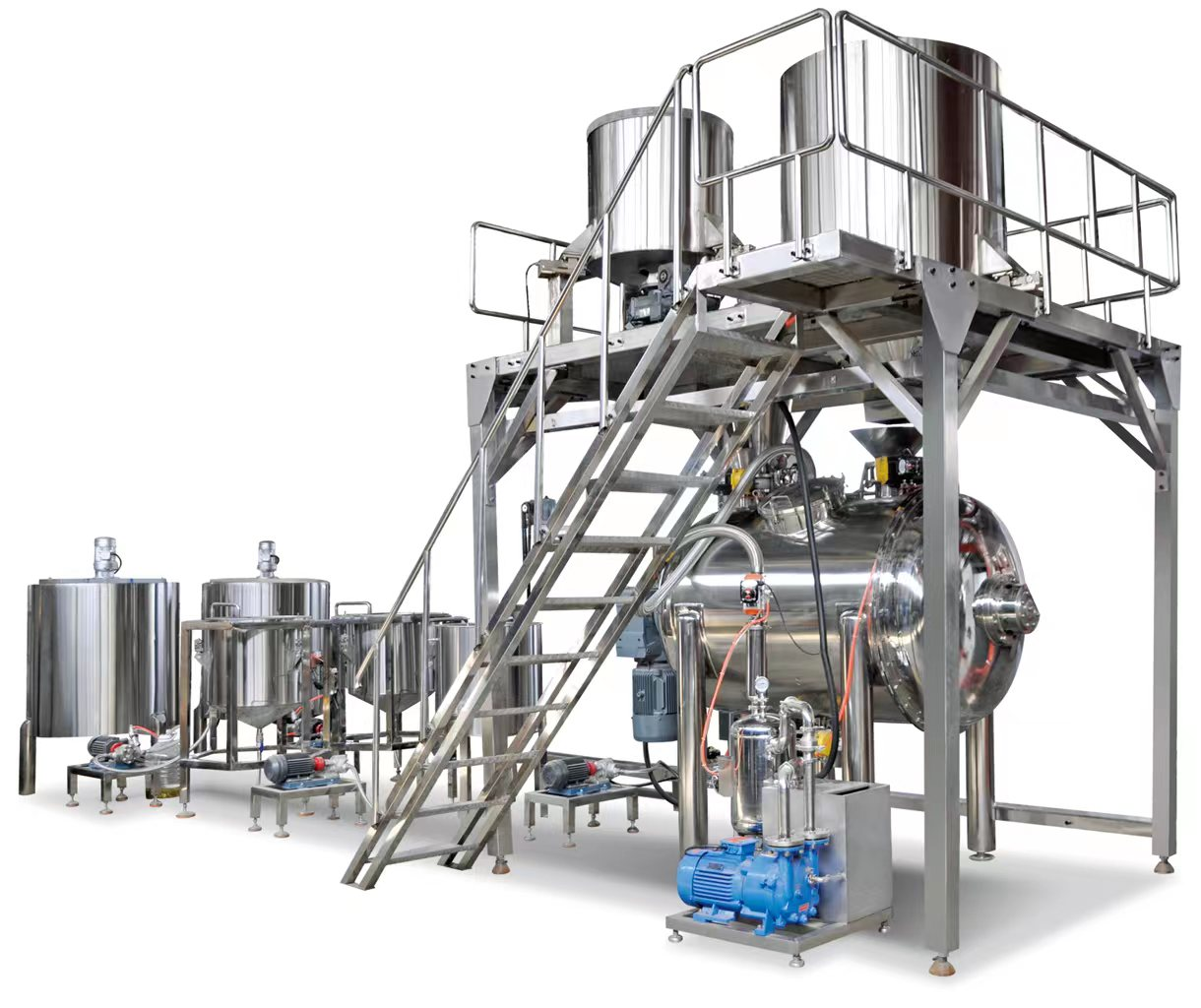
In high-volume mixing operations, the true challenge isn't just about how fast you can move material—it's about maintaining that speed without sacrificing the uniformity of every batch. When production demands peak output, even minor fluctuations in blend consistency can lead to downstream problems, wasted resources, and costly rework. The sweet spot lies in systems engineered to synchronize rapid throughput with unwavering precision, ensuring that the hundredth batch is as reliable as the first.
Achieving this balance often calls for mixing technologies that eliminate the guesswork. Advanced impeller designs, combined with real-time monitoring, allow operators to maintain a tight grip on variables like shear, temperature, and dispersion—even as line speeds soar. Instead of pitting speed against quality, these setups treat them as complementary forces, using automation and responsive controls to adapt instantly to shifts in viscosity or ingredient behavior. The result is a process where speed actually reinforces consistency, rather than threatening it.
Ultimately, the payoff comes down to confidence at every scale. When a mixing platform can handle high volumes without constant recalibration or manual intervention, it transforms the production floor from a firefighting exercise into a smoothly orchestrated rhythm. Operators spend less time troubleshooting and more time optimizing, while the integrity of the end product remains uncompromised—batch after batch, shift after shift.
Crafting Custom Blends Without Human Intervention
Imagine a process where recipes formulate themselves—drawing from vast libraries of raw materials, sensory profiles, and real-time data feeds. Through closed-loop systems, machines now orchestrate the entire blending sequence, from precise ingredient dosing to adaptive mixing. The result is a bespoke product that emerges without a single hand touching the materials, guided purely by algorithmic intuition and in-line sensors that adjust viscosity, aroma, or color on the fly.
Conventional blending often relies on trial and error or master blenders with decades of experience. But autonomous systems bypass that entirely. They map flavor landscapes and functional requirements through iterative simulation, then execute the physical blend in micro-batches or continuous streams. Parameters like temperature, shear, and aging time are tuned not by guesswork, but by predictive models that learn from each production run, ensuring consistency across every batch without ever needing a human palate to sign off.
Beyond speed and repeatability, this approach unlocks nuance that manual methods might overlook. Subtle ratios—a fraction more resilience in a polyblend, an unexpected but harmonious botanical note—emerge from unbiased pattern recognition. No preconceived limits, no fatigue, no subjective drift. It’s craftsmanship redefined, where the creation feels personal even though the creator is a constellation of code and sensors.
Inside the Sensors That Perfect Every Pinch of Flavor
It starts with a strip of nano-coated ceramic that flexes ever so slightly under the weight of a single salt crystal. Inside the dispenser, a laser interferometer tracks that deflection down to the micron, translating mechanical stress into a digital count of grains. This isn't guesswork—it's precision engineering that treats seasoning like pharmaceutical dosing.
But counting granules is only half the story. A tiny IR spectrometer sniffs the volatile compounds wafting from your dish, building a real-time aroma profile. The algorithm then cross-references that against a flavor library, adjusting the next pinch to account for the dish's evolving fragrance. The result? A machine that seasons not just by taste, but by scent—mimicking the intuition of a seasoned chef.
Energy-Saving Moves That Also Boost Output
Trimming energy waste often uncovers hidden inefficiencies that drag down both your utility bills and your team's momentum. Simple changes like recalibrating equipment run times or sealing compressed air leaks don't just slash power consumption—they stabilize production rhythms and cut unplanned downtime. When machines run only when needed, they often last longer and perform more consistently, turning a cost-cutting exercise into a quiet driver of throughput.
Rethinking lighting and climate control can have an outsized impact on the people side of productivity. Swapping harsh overheads for layered, task-specific LED setups reduces eye strain and midday slumps, while smarter HVAC zoning keeps workspaces comfortable without overcooling empty corners. The result is a more alert, focused workforce that sustains higher output with fewer errors—gains that rarely show up in a typical energy audit but hit the bottom line just as hard.
Investing in variable speed drives and smart sensors might sound like a textbook upgrade, but the real payoff comes from how they reshape daily decisions. Operators gain real-time visibility into power spikes and can trace them directly to bottlenecks or overprocessing steps. Fixing those issues often simplifies workflows, shrinks cycle times, and lifts overall capacity—so the same wattage ends up doing more actual work. It's a feedback loop where saving energy and accelerating output feed each other, rather than competing for attention.
The Quiet Shift Toward Hands-Free Taste Calibration
Behind the scenes of food production, a subtle transformation is taking root. Traditional taste testing—often reliant on human panels and manual adjustments—is gradually giving way to automated systems that fine-tune flavor profiles without a single hand touching a dial. Sensors now analyze aroma compounds and chemical signatures in real time, feeding data into algorithms that adjust recipes with precision once reserved only for master chefs.
This move toward automated calibration isn’t just about efficiency; it’s reshaping how consistency is achieved across batches. Instead of relying on the subjective palates of QA teams, manufacturers are embedding continuous feedback loops into their production lines. The result is a quieter, more reliable approach to flavor management that operates in the background, rarely noticed but constantly at work.
FAQ
The factory is dedicated to engineering automated seasoning systems that take the guesswork out of food production. They design equipment that applies precise amounts of liquid or powder flavorings directly onto snacks, meats, or baked goods, slashing manual labor and boosting consistency.
By integrating continuous seasoning drums and high-precision spray nozzles, they can coat thousands of product pieces per hour. The process eliminates bottlenecks where workers would normally stop to mix or sprinkle flavorings, so the line runs nearly nonstop.
Absolutely. The factory offers modular designs with interchangeable drums, adjustable belt speeds, and programmable flavor distribution patterns. Whether you’re working with fragile chips or sticky meat strips, the system adapts without major retooling.
They’re built for harsh, dusty factory environments with sealed bearings and quick-release panels. Daily cleaning takes under 15 minutes with washdown-ready components, and the factory provides remote diagnostics to catch issues before they cause downtime.
There are compact models specifically for mid-sized operations. They’re floor-space friendly and can be leased or financed, making the technology accessible to growing brands that want to automate without a massive upfront investment.
Each machine uses closed-loop control with sensors that monitor flow rates, temperature, and humidity in real time. If a parameter drifts, the system self-adjusts or alerts an operator, so every bag or tray tastes identical from morning to night.
They don't just sell equipment—they partner with clients to optimize entire seasoning workflows. Their team includes food scientists who help tweak recipes for machine application, resulting in less waste and better taste adherence, which typical suppliers rarely offer.
Conclusion
The auto flavoring machine factory is reshaping how large-scale food producers approach seasoning, moving well beyond simple automation into a full rethinking of production flows. Smart seasoning tech doesn’t just speed up mixing; it reorders the entire line so that high-volume batches maintain precise taste profiles from start to finish. Where once operators manually tweaked ratios and hoped for consistency, now synchronized motors and intelligent dispensing heads deliver split-second, repeatable bursts of spice, sauce, or powder. This shift means enormous runs of snacks, sauces, or ready meals no longer sacrifice character for quantity. The machines learn from each cycle, fine-tuning droplet size or tumble rotations to match a golden standard, effectively merging speed with an almost artisanal level of consistency without human hands ever touching the product.
Behind this transformation sits a quiet army of sensors and energy-conscious engineering. Inside every hopper and mixing chamber, real-time aroma scanners, weight cells, and moisture detectors track the minutiae of flavor dispersion, adjusting on the fly to humidity or ingredient clumping. The result is a perfect pinch of flavor every time, delivered while using less power—heat recovery from motors and smart idle modes trim utility costs and actually lift overall output. Custom blends once requiring a lab technician’s careful hand are now dialed in via a simple interface; the machine recalls past recipes, scales them, and even suggests improvements. The quiet shift toward hands-free taste calibration means factories can switch between a smoky barbecue chip and a zesty herb cracker in minutes, not hours, with zero cross-contamination risk. It’s a new era where flavor machines don’t just follow orders—they actively safeguard taste, savings, and the planet’s resources simultaneously.
Contact Us
Contact Person: LILY SUN
Email: [email protected]
Tel/WhatsApp: 0086-13969103791
Website: https://www.snackfoodmachinery.com/