

Anti-theft Nuts Exporter for High-Security Industrial Fastening Needs
2026-10-15
Industrial theft and tampering cost businesses billions every year—yet most fasteners can be removed with a standard wrench in seconds. That’s where anti-theft nuts change the game. As a leading anti-theft nuts exporter, Peak Fasten designs security fastening solutions that keep high-value equipment, public infrastructure, and sensitive machinery locked down. But not all anti-theft nuts are created equal. In this post, we’ll break down what to look for in a supplier, the engineering behind tamper-resistant designs, and why more industries are making the switch.
Tamper-Proof by Design, Not by Chance
Most tamper-evident features look impressive until someone with a steady hand and a heat gun gets involved. The difference with this design is that the barriers aren't just added on after the fact—they're woven into the core structure. Each seam is placed where stress naturally concentrates, each adhesive is chosen for how it tears rather than how it sticks, and each circuit path is routed so that any interruption triggers a permanent state change. There is no single "secret" to defeat because the protection is the architecture itself.
That approach flips the usual threat model. Instead of trying to hide the weak points, the system assumes every cover will be opened, every code read, every sensor probed. So it builds in redundancy: a cut trace can't be bridged without leaving a visible scar, a removed chip leaves behind a telltale residue pattern, and a forced reset logs the attempt in a way that survives power loss. Attackers aren't stopped by obscurity; they're stopped by having to destroy the very thing they hoped to use.
The practical result is a package, device, or document that doesn't depend on users being suspicious or technicians being thorough. Anyone can check integrity at a glance, because a failed seal looks unmistakably failed. And because the tamper response is part of the original layout, it stays consistent across batches, temperatures, and years of handling. That's what "by design" means: not a lucky combination of materials, but a deliberate refusal to leave any silent path from outside to inside.
Engineered for Critical Fastening Environments
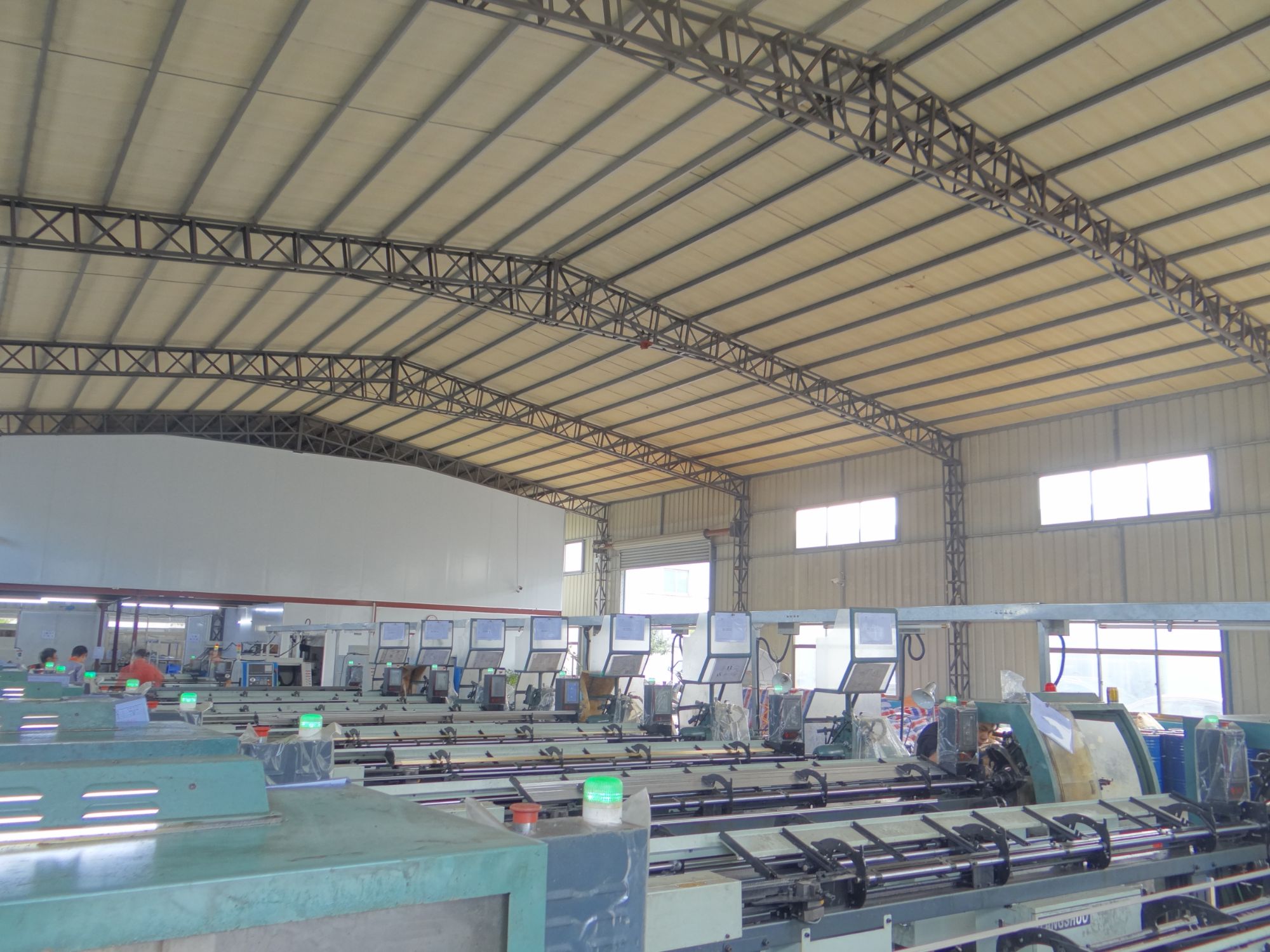
Critical fastening environments leave no room for compromised joint integrity. Every thread profile, underhead geometry, and surface treatment is evaluated against real failure modes—vibration loosening, hydrogen embrittlement, galling, and stress corrosion cracking. Rather than relying on generic torque specs, designs are validated through finite element analysis and physical testing on assemblies that mirror field conditions, including thermal swings and dynamic loading.
Material selection follows the application, not the other way around. High-strength alloy steels, nickel-based alloys, and precipitation-hardening stainless grades are matched to specific exposure conditions, whether that means sour gas, salt spray, or elevated temperature. Coatings and lubricants are treated as part of the fastening system, with friction coefficient control as a design input, so achieved clamp load stays predictable from first installation to repeated service cycles.
Production controls extend beyond dimensional inspection. Heat lot traceability, thread form verification, and periodic destructive testing create a closed loop between manufacturing and field performance. This approach supports maintenance teams who need consistent behavior when replacing fasteners in critical joints, reducing the guesswork that often accompanies mixed inventory or undocumented substitutions.
One-Way Tightening, Zero Unauthorized Removal
The design philosophy here is straightforward: once a fastener is driven in, it stays put. There is no reverse thread, no slotted head for a standard screwdriver to bite into, and no easy way to back it out. This one-way tightening approach forces any would-be tamperer to either destroy the fastener or leave visible evidence of the attempt.
In practice, this translates into hardware that protects itself. From public seating in transit hubs to outdoor electrical enclosures, the moment a component is secured, unauthorized removal becomes a physical challenge rather than a simple twist of a tool. The fastener does not invite removal; it resists it by design.
What sets this apart from conventional security screws is the absence of a secondary locking mechanism. There is no key to lose, no special bit to keep track of, and no extra step for the installer. The security is built into the geometry itself, making it both simpler to use and harder to bypass.
Small Batch or Container Load: We Export Both
Every shipment gets the same care, whether it’s a few cartons headed to a boutique or a full forty-foot container bound for a distribution hub. We don’t layer on arbitrary minimums or push you toward one size just to make our own logistics easier. If your market tests require a modest air freight parcel, that’s fine. If your shelves are already turning and you need a sea container every three weeks, we slot that in without reshuffling your production schedule.
What changes between a small batch and a full load is mostly paperwork nuance, not our attention to detail. Palletizing, labeling, export documentation, and loading supervision stay consistent across order sizes. Smaller volumes usually ship by air or LCL, while container loads move FCL to cut per-unit freight cost. You tell us the volume, destination, and timeline; we’ll suggest the mode that won’t wreck your margins.
That flexibility matters for brands that are growing unevenly — a spike in one country, a slow burn in another. You aren’t forced to hold inventory you don’t need just to hit a factory quota. And when demand shifts, you can swing from trial orders to regular container cycles without renegotiating terms or getting bumped down the priority list.
Material and Finish Options That Match Your Spec
From brushed stainless steel to powder-coated aluminum, every material we offer is selected for its ability to hold tight tolerances while surviving real-world wear. You won't find a one-size-fits-all list here—instead, we map your load requirements, exposure conditions, and aesthetic targets to a shortlist of options that actually make sense for the job.
Finishes go beyond looks. Anodized surfaces resist corrosion without adding bulk, while bead blasted textures hide fingerprints on high-touch components. If your spec calls for a specific RAL number or a custom etch, we match it rather than pushing you toward whatever is already in stock.
We also keep lead times honest by pairing each material with the finishing process it was designed for. No surprise delays from re-plating or re-coating—just a build that arrives looking and performing the way your drawings intended.
Documented Traceability for High-Security Supply Chains
High-security supply chains hinge on the ability to reconstruct every handoff, inspection, and custody transfer with absolute certainty. Documented traceability turns that idea into a working discipline, capturing serial numbers, tamper-evident seal identities, and time-stamped sign-offs at each node. Instead of relying on memory or informal logs, operators maintain a chain of evidence that can be audited down to the individual component or container. This approach does more than satisfy regulators—it creates a shared operating picture where gaps become visible before they turn into breaches.
A practical traceability system pairs physical records with digital counterparts that are hard to alter. For example, a secure shipment might carry a paper manifest, but that manifest is cross-checked against an encrypted ledger entry the moment a crate moves from a vault to a transport vehicle. Any mismatch triggers an immediate hold, forcing a manual resolution. What separates robust programs from superficial ones is the depth of detail: photographs of seal placement, badge numbers of personnel present, and environmental readings from the container are all logged, not just the fact that a transfer occurred. That level of granularity makes it possible to pinpoint exactly where a compromise may have originated.
Over time, documented traceability becomes a deterrent in itself. Insiders know that every action leaves a timestamped, attributable record, which discourages casual tampering or collusion. External auditors, meanwhile, can walk through a shipment's history in minutes rather than days, because the trail is complete and consistent. The goal is not merely to have documents, but to have documents that tell a coherent, unforgeable story from source to final destination.
FAQ
Each nut uses an off-center tapered slot that only mates with our custom driver bits. The drive surface is hardened to 48-52 HRC, so standard pliers or sockets cannot get a grip, and the taper angle visually exposes any tampering attempt before it succeeds.
We export primarily to telecom tower operators, railway signal enclosures, solar farm racking, water treatment plants, and public infrastructure projects where field theft and vandalism create real maintenance costs.
Yes. We regularly produce fine-pitch variants, reduced head heights, and metric or imperial threads from customer drawings. The anti-theft slot geometry stays consistent across all custom sizes.
Standard options include hot-dip galvanizing, zinc-nickel alloy, and geomet coating. For coastal or chemical exposure, we can apply a duplex system with a top coat rated for 1,000+ hours salt spray resistance.
Each production lot is tested on a calibrated torque rig. We record the maximum torque before the slot deforms and the minimum torque needed to break the collar, then issue a batch-specific test certificate with the shipment.
Absolutely. We consolidate different diameters, lengths, and finishes into one container as long as each SKU meets the minimum carton quantity. This keeps inventory flexible without inflating freight costs.
You receive a mill test report for raw material, a dimensional inspection report, the anti-torque test summary, and a certificate of origin. For European customers we also include REACH and RoHS declarations when requested.
Conclusion
Security fastening is not a feature you can bolt on after the fact. It has to be part of the thread geometry itself. Our anti-theft nuts use a one-way tightening profile that lets installation crews torque them down quickly, but gives thieves, vandals, or unauthorized personnel nothing to grip for reverse rotation. That shift from relying on covers or caps to building tamper resistance directly into the product changes how field teams approach high-value equipment. The nuts are produced for critical fastening environments where vibration, weather exposure, and attempted removal all work against standard hardware. Whether you need a small batch for a prototype run or a full container load for national infrastructure, the same tooling discipline applies. Tamper-proof by design means no add-on shields or fragile breakaway heads that can fail under load.
Material and finish options are matched to your specification rather than pulled from a generic stock list. Carbon steel, stainless grades, zinc-nickel plating, hot-dip galvanizing, and custom coatings are all available with documented lot-level traceability. For high-security supply chains, that means every carton can be tied back to a heat number, test report, and production date. No anonymous bulk bins, no mixed-source inventory. Export documentation is handled the same way: packing lists, certificates of origin, and compliance paperwork follow the fasteners without needing repeated follow-ups. The result is a supply chain where one-way tightening, zero unauthorized removal, and full accountability are not separate promises but one continuous process.
Contact Us
Contact Person: Mason Lv
Email: [email protected]
Tel/WhatsApp: +86 13027998452
Website: https://www.peakfastentech.com